Categories
News

Mass Pardon For Drug Traffickers, Murderers A National Disgrace – ADC Slams Tinubu

The African Democratic Congress (ADC) has criticized President Bola Ahmed Tinubu’s recent decision to grant presidential pardons to several convicted murderers, drug traffickers, and smugglers.

Recall that the Bola Ahmed Tinubu administration released a list of all 175 beneficiaries of the President’s pardon and clemency. The list was released in a press statement on Saturday by Tinubu’s Special Adviser on Information and Strategy, Bayo Onanuga.

In a statement on Sunday signed by its National Publicity Secretary, Mallam Bolaji Abdullahi, the ADC described the action as “pathetic and a national disgrace.”

It warned that the move undermines Nigeria’s anti-drug efforts, encourages crime, and further tarnishes Nigeria’s image in the eyes of the world.

The statement read: “The African Democratic Congress (ADC) finds as pathetic and an act of immense national disgrace the recent presidential pardon and clemency granted to several convicted criminals by President Bola Ahmed Tinubu.

“It amounts to a most irresponsible abuse of the presidential power of prerogative of mercy to grant express pardon to dozens of convicts held for drug trafficking, smuggling, and related offences, especially when most of these convicts have barely served two years in jail for offences that carry a penalty of life imprisonment.

“According to official media statements, it appears that all it takes to get presidential clemency for even the worst of crimes in Nigeria, including drug trafficking, gun running, and murder, is to “show remorse and learn skills.”

“Pardons and clemency are granted for their social utility and to correct perceived miscarriages of justice, and to convicts who have paid their debts to society. But we wonder what Nigeria stands to benefit from this act of clemency to convicts serving life sentences who have barely served two years.

“For the avoidance of doubt, Nigeria is still regarded as a major transit point for illicit drugs while we face a serious national pandemic of drug use, especially among our youths. Several reports have it that Nigeria’s drug use stands at an estimated 14.4%, almost three times the global average of 5.5%.

“For years, the National Drug Law Enforcement Agency (NDLEA) and other security agencies have risked life and limb to combat this problem, dismantle illicit drug networks, intercept consignments, prosecute offenders, and secure convictions. The men and women in these agencies have laboured under enormous risk and pressure to protect the public from the scourge of addiction, trafficking, and related crimes that carry some of the harshest penalties in Nigerian law, precisely because of their devastating impact on public health, youth development, and national security. Granting clemency to individuals convicted under such laws therefore strikes at the very foundation of Nigeria’s legal and moral stance against narcotics and makes a mockery of the gallant efforts of officers fighting the battle against narcotics and illicit drugs.

“These pardons also send reverberations beyond Nigeria’s borders. They undercut our standing among global partners in the fight against drug trafficking and give the unfortunate impression to the rest of the world that our country, under President Tinubu, has particular sympathy for drug dealers and that Nigeria is a risk-free jurisdiction for traffickers in narcotics.”

The party pointed out that with the mass clemency for drug dealers, Tinubu and the APC are redefining the standard of morality in Nigeria.

According to the ADC, they are gradually transforming Nigeria into a country where anything goes, where even the worst of crimes attract no punishment beyond a few months of inconvenience for the criminal to, by their assessment, “show remorse.”

The ADC stated that its mission is to rescue Nigeria from the APC, to whom public opinion or accountability means nothing, and power and impunity mean everything.

Categories
News

ASUU Declares Two-Week Nationwide Warning Strike To Begin Monday As Ultimatum To Tinubu Govt Expires

The Academic Staff Union of Universities (ASUU) has announced a two-week nationwide warning strike, instructing all its branches across the country to withdraw their services starting from midnight on Monday, October 13, 2025, SaharaReporters has learned.

A copy of a circular issued by the ASUU National Executive Council (NEC), and signed by its president, Prof. Chris Riwuna, obtained by SaharaReporters, confirmed the directive.

The statement read: “Compatriots of the Press, it goes without saying that there is nothing sufficient on ground to stop the implementation of ASUU-NEC’s resolution to embark on a two-week warning strike at the expiry of the 14 days’ notice given on 28th September, 2025.

“Consequently, all branches of ASUU are hereby directed to withdraw their services with effect from midnight (12.01a.m.) on Monday, 13th October, 2025. The warning strike shall be total and comprehensive as agreed at the last NEC meeting.”

The latest action follows the expiration of a 14-day ultimatum issued by the union to the Nigerian Government.

The union demanded the implementation of agreements reached during previous negotiations, including issues surrounding earned academic allowances, revitalization funds for public universities, withheld salaries, and the government’s failure to review lecturers’ welfare packages.

In a circular titled “Strike Bulletin No. 1” issued on October 5, 2025, and signed by the union’s President, Piwuna, ASUU’s National Executive Council (NEC) said it reached the decision after evaluating the results of a referendum conducted across its branches.

The union said the ultimatum followed a referendum across its branches and resolutions reached at an emergency National Executive Council (NEC) meeting on September 29, 2025.

ASUU accused the Bola Tinubu-led administration of failing to implement key agreements, including the renegotiation of the 2009 FGN-ASUU Agreement, revitalization of public universities, payment of earned academic allowances, and other welfare-related demands.

The union lamented that despite notifying the Ministers of Labour and Education, as well as the Nigeria Labour Congress (NLC), there had been no meaningful response from the government.

ASUU described the negotiation process as “tortuous” and unnecessarily prolonged for over eight years, warning that its planned action is meant to compel the government to sign and implement the renegotiated agreement and tackle the ongoing brain drain (“Japa syndrome”) that continues to strip universities of qualified lecturers.

Categories
News

Tinubu Nominates New INEC Chairman

President Bola Tinubu has nominated Professor Joash Ojo Amupitan (SAN) from the North-Central as the new Chairman of the Independent National Electoral Commission (INEC).
Amupitan’s nomination has now been confirmed by the National Council of State.
President Bola Ahmed Tinubu presented Amupitan as the nominee to fill the vacant position, following Professor Mahmood Yakubu’s exit.
Recall that Yakubu served from 2015 till October 2025.
This was disclosed in a statement on Thursday by Tinubu’s Special Adviser on Information and Strategy, Bayo Onanuga.
According to the statement, President Tinubu told the council that Amupitan is the first person from Kogi, North-Central state, nominated to occupy the position and is apolitical.
Council members unanimously supported the nomination, with Governor Ahmed Usman Ododo describing Amupitan as a man of integrity.

In compliance with the constitution, President Tinubu will now send Amupitan’s name to the Senate for screening.

Amupitan, 58, from Ayetoro Gbede, Ijumu LGA  in Kogi State, is a  Professor of Law at the University of Jos, Plateau. He is also an alumnus of the university.
He specialises in Company Law, Law of Evidence, Corporate Governance and Privatisation Law. He became a Senior Advocate of Nigeria in September 2014.
Amupitan was born on April 25, 1967.
After completing primary and secondary education, he attended Kwara State Polytechnic, Ilorin, from 1982 to 1984, and the University of Jos from 1984 to 1987. He was called to the bar in 1988.
He earned an LLM at UNIJOS in 1993 and a PhD in 2007, amid an academic career that began in 1989, following his National Youth Service at the Bauchi State Publishing Corporation in Bauchi from 1988 to 1989.
Currently, he serves as the Deputy Vice-Chancellor (Administration) at the University of Jos, a position he holds in conjunction with being the Pro-Chancellor and Chairman of the Governing Council of Joseph Ayo Babalola University in Osun State.
Among the academic positions he has held at UNIJOS are: Chairman of the Committee of Deans and Directors (2012-2014); Dean of the Faculty of Law (2008-2014); and Head of Public Law (2006-2008).
Outside of academics, Amupitan serves as a board member of Integrated Dairies Limited in Vom, a member of the Nigerian Institute of Advanced Legal Studies Governing Council, and a member of the Council of Legal Education (2008-2014), among other roles. He was a board member of Riss Oil Limited, Abuja(1996-2004).
Amupitan is the author of many books on law, such as Corporate Governance: Models and Principles(2008); Documentary Evidence in Nigeria (2008); Evidence Law: Theory and Practice in Nigeria(2013), Principles of Company Law(2013)  and an Introduction to the Law of Trust in Nigeria (2014).
He is married and has four children.
Categories
Uncategorized

139 million Nigerians Living In Abject Poverty – Presidency Reacts to World Bank’s Poverty Report

The Presidency has reacted to the latest economic report from the World Bank stating that 139 million Nigerians are living in abject poverty.
Reacting through its Special Adviser on Media and Public Communication, Sunday Dare, Tinubu rejected the report.
In a post his official X handle on Wednesday, Dare claimed that the poverty figures must be “properly contextualised” within the limits of global poverty measurement models.
“While Nigeria values its partnership with the World Bank and appreciates its contributions to policy analysis, the figure quoted must be properly contextualised. It is unrealistic,” Dare said.
The Presidency explained that the 139 million figure was derived from the global poverty line of $2.15 per person per day, set in 2017 using Purchasing Power Parity, and should not be mistaken for an actual headcount of poor Nigerians.
It noted that when converted to nominal terms, the $2.15 benchmark equals about N100,000 per month at current exchange rates, which is well above Nigeria’s new minimum wage of N70,000.
“There must be caution against interpreting the World Bank’s numbers as a literal, real-time headcount. The estimate is derived from the global poverty line of $2.15 per person per day, a benchmark set in 2017 Purchasing Power Parity terms. If converted nominally, that figure equals about $64.5 per month, or nearly N100,000 at today’s exchange rate, well above Nigeria’s new minimum wage of N70,000. Clearly, the measure is an analytical construct, not a direct reflection of local income realities.
 
“Poverty assessment under PPP methodology uses historical consumption data (Nigeria’s last major survey was in 2018/19) and often overlooks the informal and subsistence economies that sustain millions of households. The government, therefore, regards the figure as a modelled global estimate, not an empirical representation of conditions in 2025. What truly matters is the trajectory, and Nigeria’s is now one of recovery and inclusive reform,” the statement added.
Categories
News

Tinubu’s Reforms Have Not Reduced Poverty – World Bank

The World Bank has given a verdict on President Bola Tinubu’s economic reforms.
According to the World Bank, despite the expansion of the Nigeria’s economy and the revenue increase, poverty rate remains alarmingly high.
The Bretton Woods institution declared that 139 million Nigerians are living in poverty in 2025 despite the economic reforms embarked upon by President Bola Ahmed Tinubu.
Country Director, World Bank Nigeria, Mathew Verghis, spoke in Abuja at the launch of the Nigerian Development Update where the bank also projected that Nigeria’s economy would grow by 4.4 per cent in 2027.
The World Bank’s verdict is coming a few weeks after Tinubu praised his government for the economic rebound being witnessed in the country.
Tinubu had declared that Nigeria has “turned the corner” on its economic and social challenges, assuring citizens that the sacrifices of the past two years were beginning to yield measurable results.

During a live nationwide broadcast to commemorate Nigeria’s 65th Independence anniversary, Tinubu stressed that his administration’s reforms were already repositioning the country on the path of stability, growth and self-sufficiency.

“I am pleased to report that we have finally turned the corner. The worst is over. Yesterday’s pains are giving way to relief. I salute your endurance, support and understanding,” the president said. “I will continue to work for you and justify the confidence you reposed in me to steer the ship of our nation to a safe harbour.”
The removal of subsidy from premium motor spirit (PMS), otherwise known as petroleum, has freed more revenues to the coffers of the federal government with states also getting more allocations.
The monetary policy reforms have also seen the foreign reserves rising to over $43 billion; while the exchange rate market has stabilised. Inflation eased for the fifth consecutive month to 20.12 per cent in August.
But the World Bank’s Country Director said:“So, these results are exactly what you need to see in a stabilisation. These are big achievements. However, despite these stabilisation gains, many Nigerians are still struggling. Most households are struggling with eroded purchasing power.
 
“In 2025, we estimate that 139 million Nigerians live in poverty. So, the challenge is clear: how to translate the gains from the stabilisation reforms into better living standards for all.”
 
He stated that the federal government must reduce inflation, particularly food inflation, ensure effective use of public funds and expand safety nets, to address the high rate of poverty in the country and ensure that citizens enjoy the gains of reforms.
“Food inflation affects everybody but particularly the poor and has the potential to undermine political support for the reforms. Use public resources more effectively ensuring that spending drives real development results that benefit people and three, expanding the safety net so that the poorest and vulnerable get support,” he added.
The World Bank projected that Nigeria’s economy would grow by 4.4 per cent in 2027, compared to the 4.2 per cent earlier projected for the year 2025.
It explained that the growth would be driven by services and supported by agriculture and non-oil industry.
Samer Matta, the World Bank’s Senior Economist for Nigeria, in a presentation titled, ‘From Policy to People: Bringing the Reform Gains Home’, said inflation is expected to gradually ease but remain elevated, requiring sustained monetary discipline and structural reforms to tackle food prices, the “biggest tax on the poor”.
The senior economist noted that the outlook for Nigeria’s economy remains cautiously optimistic.
According to the NDU, Nigeria’s economy expanded by 3.9 per cent year-on-year in the first half of 2025, up from 3.5 per cent in the same period of 2024.
“Growth was driven by strong performance in services and non-oil industries, alongside improvements in oil production and agriculture.
 
“The country’s external position has strengthened, with foreign reserves exceeding $42 billion and the current account surplus rising to 6.1% of GDP, supported by higher non-oil exports and lower oil imports.
 
“On the fiscal side, despite lower oil prices, the federal deficit is projected at 2.6% of GDP in 2025, broadly unchanged from 2024, while public debt is expected to decline for the first time in over a decade — from 42.9% to 39.8% of GDP,” the report said.
It cautioned that the macroeconomic gains had yet to translate into tangible improvements in people’s lives, adding that many households continued to face hardship, with poverty and food insecurity remaining high.
The NDU noted that Nigeria’s poor households, who spend up to 70 per cent of their income on food, have seen the cost of a basic food basket rise fivefold between 2019 and 2024, highlighting the need for continued efforts to reduce inflation and support the vulnerable.
Categories
News

If God Wants To Remove Tinubu, He Knows How To Do It  — Tunde Bakare

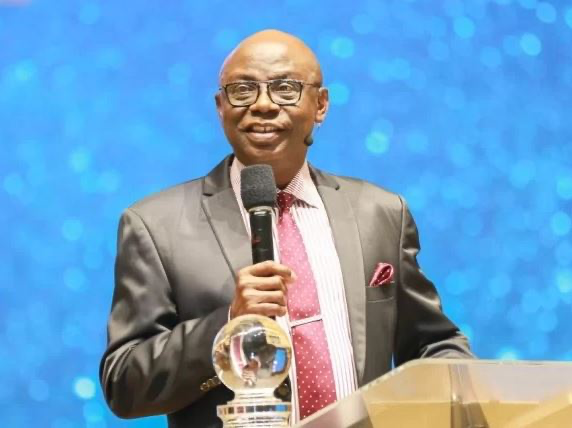
The founder of Citadel Global Community Church, Pastor Tunde Bakare, has stated that only God can remove President Bola Tinubu from office when the appointed time comes.

Bakare made this statement on Saturday during the inaugural edition of the Citadel School of Governance Dialogue Series in Lagos.

He insisted that Tinubu’s emergence as Nigeria’s leader was divinely ordained.

“If God wants to remove ‘Emilokan,’ He knows how to do it. You can’t get the kind of thing Tinubu has brought without God’s support,”
Bakare declared.

According to the cleric, Tinubu’s ascent to power was not accidental but a product of divine orchestration.

“You can’t deny that his rise and what he has achieved came through the hand of God,”
he added.

Categories
News

2027: You Can’t Match Tinubu – Jandor Tells Jonathan

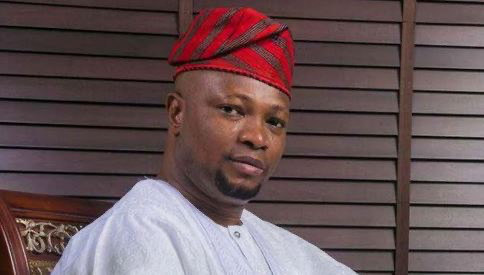
The Peoples Democratic Party (PDP) governorship candidate in Lagos State during the 2023 general elections, Dr. Abdul-Azeez Adediran, popularly known as Jandor, has urged former President Goodluck Jonathan to disregard calls for him to contest the 2027 presidential election.

Jandor, Lead Visioner of the Lagos4Lagos Movement, gave this advise in an interview with the News Agency of Nigeria on Sunday in Lagos.

According to him, Jonathan would be taking a political risk by contesting, predicting he would be reduced to a minnow by President Bola Tinubu at the polls.

Jandor urged the ex-president to stay in retirement.

He further told Jonathan that those telling him to run against Tinubu were deceiving him, reiterating that Tinubu is a master in the game of politics, who cannot be defeated by Jonathan or any other figure in 2027.

“I disagree with people calling on Jonathan to re-contest, people saying Jonathan is the only person who can challenge Tinubu, citing his popularity and experience.

“It was this same man (Tinubu) who defeated him (Jonathan) from the outside. So, they are not the same. If you accidentally found yourself at the Aso Villa as President, it is different from somebody who gave his all to get there.

“It is different from somebody who, against all odds, got there. They did all sorts for him not to get there, and he got there. Such a man, cannot be put side by side with somebody who just slept and woke up and found himself on the seat of President,” he said.

Categories
News

I Inherited Islam From My Family, But My Wife Is A Pastor – President Tinubu Preaches Peace In Plateau

President Bola Tinubu on Saturday stressed the importance of religious tolerance, urging Nigerians to promote unity and peaceful coexistence across the nation.

Using a personal example, President Tinubu drew an inference from his family, noting that despite inheriting and practising Islam, he is married to a pastor and they live together happily.

The President, who spoke in Jos at the burial programme of the late Nana Lydia Yilwatda, mother of the All Progressives Congress (APC) National Chairman, Prof. Nentawe Yilwatda, appealed to the residents of Plateau State and Nigerians as a whole to shun religious and ethnic differences.

“I inherited Islam from my family; I didn’t change, but my wife is a pastor, and she prays for me at all times.

“I have never convinced or converted her; I believe in the freedom of religion.

“We are praying and answerable to the same Almighty God. We will account to Him for our deeds and character.

“So, our love for others is what matters; we must learn to live together as one people,” he said.

Also speaking at the event, Yilwatda described his late mother as a dedicated, committed and loving wife who dedicated her life to the service of humanity.

“She was a strong, loyal and determined woman; she led an exemplary lifestyle full of sacrifice and humility.

“My parents, particularly my mother, lived for others; whatever I give her, she shares it with our neighbours.

“That is the woman that we are celebrating today,” he said.

Categories
News

Independence Day: The Worst Is Over, Nigeria Has Turned The Corner – Tinubu Assures

President Bola Tinubu has assured Nigerians that the worst is over.
According to him, Nigeria is better than it was ten years ago.
Speaking at the commissioning of projects during his one-day working visit to Imo State, President Tinubu said Nigeria has achieved a great milestone as it celebrates its 65th independence anniversary on October 1.
He also commended the nation’s founding fathers for making sacrifices that strengthened the unity of the country.
The President assured Nigerians that they would soon start enjoying the full benefits of various reforms implemented by the government and urged those speaking ill of the country to refrain from doing so.
“Nigeria has just turned the corner. You will see prosperity; you will have it. Those who are talking ill of this country should stop doing so. Sixty-five years of independence is not a joke.
 
“We are proud of our forefathers—we are proud of what they believed: that Nigeria should be one, that it should be an all-inclusive government, that we must take care of the elderly, care for the vulnerable, educate our children, and build a welfare system that will strengthen our healthcare.”
 
“Nigeria is no longer where it was 10 years ago, we have passed that. We promised change, and today I can confidently tell you that the worst is over,” Tinubu declared.
Categories
News

Google Celebrates Nigeria’s 65th Independence With Doodle

Google has celebrated Nigeria on its 65th independence.
Google featured a special doodle on its homepage, adopting the green-white-green colours of the national flag and an eagle motif to commemorate the day.
A click on the doodle directs users to key historical facts and milestones about Nigeria’s journey to nationhood.
Meanwhile, in his Independence Day address, President Bola Tinubu expressed confidence that the nation is turning a corner, insisting that the “worst is over” after the pains of economic reforms.
Tinubu pointed to Nigeria’s second-quarter GDP growth of 4.23%, the strongest in four years, inflation easing to 20.12%, rising foreign reserves, and increased oil output as proof of recovery.
He also announced that the government has distributed N330 billion to eight million vulnerable households under its social investment programme and affirmed its commitment to accelerated infrastructure development.
Tinubu urged citizens to embrace peace, tolerance, and cooperation across all divides, stressing that differences are natural but must not hinder collective progress.