Categories
News

Igbos In Nigeria Cannot Get Away With A Lot Of Things – Omoyele Sowore

Human rights activist and former presidential candidate, Omoyele Sowore has lamented the plight of the Igbos in Nigeria.
According to him, the Igbos have suffered great marginalisation in the country.
Sowore, during an appearance on Arise TV on Thursday night condemned what he described as double standards in the treatment of citizens from different ethnic backgrounds, particularly targeting the Igbos of the South-East.
He argued that most Nigerians often get away with things that Igbo people would be held accountable for.
He said, “If you are a Nigerian, you can get away with a lot of things, but if you are Igbo in Nigeria, you cannot.
 
“It was in this country that a Yoruba Nation movement was done, they even went and attacked a radio station in 2024. Did you hear of any arrest? Did you hear of any trial?”
The activist clarified that he was not calling for the persecution of any group, but insisted that justice must be applied equally.
“I am not saying that should be the case, but we must tell ourselves the truth,” he continued. “It just doesn’t look good that things are marginalised in every sector, including the justice sector.”
Sowore made the remarks while discussing the continued detention of the leader of the proscribed Indigenous People of Biafra (IPOB), Nnamdi Kanu.
He argued that Kanu’s ordeal reflects deeper issues of inequality and selective justice in Nigeria’s political system.
The former presidential candidate intensified his calls for Kanu’s release, accusing some South-East political leaders of sabotaging efforts to secure his freedom for fear of losing political influence in the region.
Categories
News

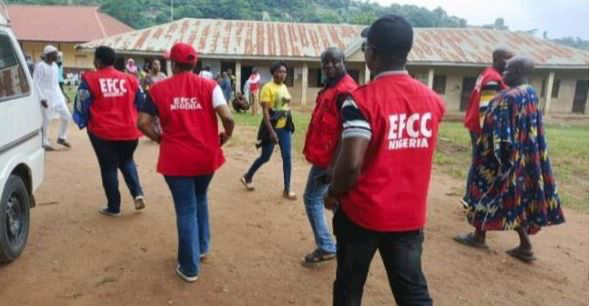
Court Gives Update In Yahaya Bello’s N110 Billion Fraud Trial

The trial of former Kogi State governor, Yahaya Bello on money laundering has been shifted to November 12.
The adjournment was ordered by Justice Maryann Anenih of the High Court of the Federal Capital Territory after taking six witnesses.
The witnesses mainly officials of banks were called by the Economic and Financial Crimes Commission, EFCC, to give evidence in the trial.
At Thursday’s proceedings, the Prosecution first called its fifth witness, Victoria Oluwafemi, a compliance officer with Polaris Bank.
The witness told the court the total credit to the account in question, which came from different senders, adding that the transfers from the account were in multiples of N10 million.
She said the total credit in November, 2021 was N450 million.
While being cross-examined by the Counsel to Yahaya Bello (1st Defendant), Joseph Daudu, SAN, the witness admitted that she was not the accounts officer for the two accounts with her bank.

She admitted also that, because she was not the accounts officer or relationship manager, she did not know how the transactions on the accounts were carried out.

Counsel to the 3rd Defendant, AM Aliyu, while cross-examining the witness, said, “Look at the portion my learned brother showed you in Exhibit M, the name Abdulsalam Hudu did not feature there?”
 
“That is correct. Abdulsalam Hudu’s name did not feature,” she responded.
The Sixth Prosecution Witness (PW6), Mshelia Arhyel B, was then called for evidence in Chief
Daudu, SAN told the court that he had not concluded the cross-examination of the same witness in another court on a similar subject matter.
The court, however, held that the matter before it was independent and that the Defence Counsel held the discretion to cross-examine or not.
During the proceedings, the prosecution sought to tender certain documents through the subpoenaed witness.
Counsel to the 1st and 2nd Defendants Joseph Daudu SAN objected to the admissibility of the documents, arguing that they did not comply with the provisions of Sections 83 and 84 of the Evidence Act.
He further indicated his intention to address the Court more extensively on the points of objection at a later stage.
Counsel to the 3rd Defendant, Aliyu, also objected, relying on the same statutory grounds.
The prosecution counsel, Kemi Pinheiro, SAN, urged the court to discountenance the objections raised by the defence team and admit the documents in evidence.

The court admitted the document, a 218-page statement of account of Alusha Services, signed by the witness, Mshelia Arhyel, and marked P1 en bloc.

The prosecution asked similar questions posed to the same witness at the June 26, 2025 examination before Justice Emeka Nwite of the Federal High Court.
He reiterated that, prior to 2023, there was no strict withdrawal limit as long as the amount written on the cheque did not exceed ₦10 million.
The EFCC counsel told the witness to examine the transactions of the 22nd, 23rd, and 25th of February, as well as the 3rd of March, 2016, up to 6th May, 2022.
He confirmed multiple transactions of N10 million each but admitted they were within the approval threshold, putting the total transactions as at January 31, 2018 at N707,267,000.
“Please confirm that, notwithstanding the multiple withdrawals made on the same day, they were all within the approved withdrawal threshold,” prosecution counsel said.
 
“Yes, my Lord,” the witness responded.
On the account statement of Aleshua Solutions Services and transactions from May 6, 2022, the witness said the first entry was a transfer in favour of Aleshua Solutions Services by B.O. Rosemary Chukwuma, in the sum of $2,500.
“The second is a transfer in favour of Yau for $5,000. The third is also a cash transfer of $5,000 to Yau,” he stated.
The witness also confirmed certain transactions in December 2016 from the Kogi State Internal Revenue Service, totalling N202 million.
The judge indicated that the session must end at 3pm and adjourned the case to November 12 and 13, 2025, for continuation of examination of the sixth witness.
The third prosecution witness had, at the preceding hearing, said no banking regulation was breached by the defendants.
The witness, Williams Abimbola, a Compliance Officer with UBA, had also admitted not being the relationship or account manager of the Kogi Government House account, noting that the transactions were in line with stipulated guidelines.
Categories
News

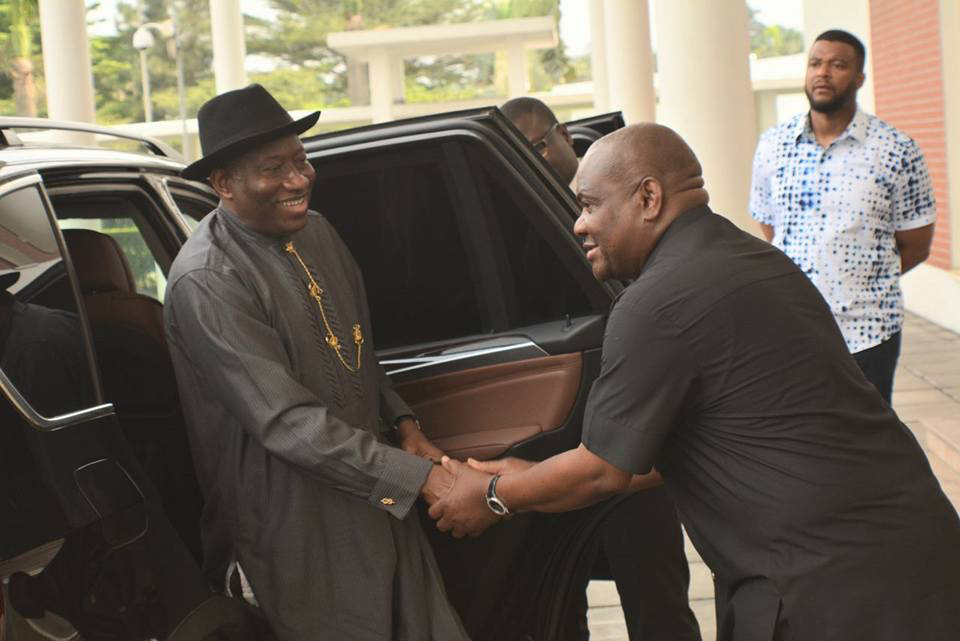
FCT: Fayose Is My Younger Brother – Wike Claims

On Thursday, Nyesom Wike, the Minister of the Federal Capital Territory, FCT, described former governor of Ekiti State, Ayodele Fayose as his elder brother.

Wike disclosed this at the flagging off ceremony of the construction of Collector Road CN2 (Emmanuel I. Ogala Street) from Arterial N16 (Yemi Osinbajo way) to N20 (Wole Soyinka way) including road ILS 5 within Katampe District.

According to Wike: “Fayose is my younger brother and I’m always happy anytime he comes to witness what his elder brother is doing.”

Fayose and Wike are members of the Peoples Democratic Party, PDP, and were members of the G-5 Integrity Group.

They group worked against the victory of former Vice President Atiku Abubakar in the 2023 presidential election.

Categories
News

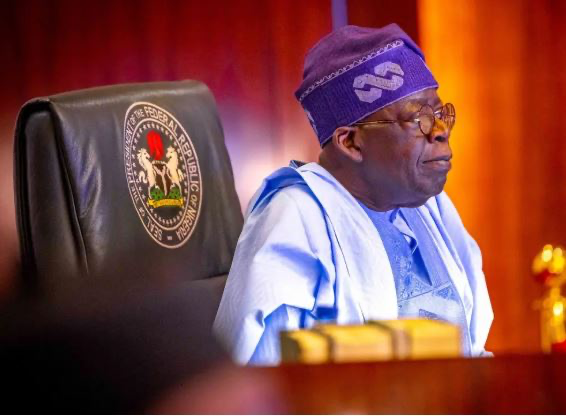
Tinubu Nominates New INEC Chairman

President Bola Tinubu has nominated Professor Joash Ojo Amupitan (SAN) from the North-Central as the new Chairman of the Independent National Electoral Commission (INEC).
Amupitan’s nomination has now been confirmed by the National Council of State.
President Bola Ahmed Tinubu presented Amupitan as the nominee to fill the vacant position, following Professor Mahmood Yakubu’s exit.
Recall that Yakubu served from 2015 till October 2025.
This was disclosed in a statement on Thursday by Tinubu’s Special Adviser on Information and Strategy, Bayo Onanuga.
According to the statement, President Tinubu told the council that Amupitan is the first person from Kogi, North-Central state, nominated to occupy the position and is apolitical.
Council members unanimously supported the nomination, with Governor Ahmed Usman Ododo describing Amupitan as a man of integrity.

In compliance with the constitution, President Tinubu will now send Amupitan’s name to the Senate for screening.

Amupitan, 58, from Ayetoro Gbede, Ijumu LGA  in Kogi State, is a  Professor of Law at the University of Jos, Plateau. He is also an alumnus of the university.
He specialises in Company Law, Law of Evidence, Corporate Governance and Privatisation Law. He became a Senior Advocate of Nigeria in September 2014.
Amupitan was born on April 25, 1967.
After completing primary and secondary education, he attended Kwara State Polytechnic, Ilorin, from 1982 to 1984, and the University of Jos from 1984 to 1987. He was called to the bar in 1988.
He earned an LLM at UNIJOS in 1993 and a PhD in 2007, amid an academic career that began in 1989, following his National Youth Service at the Bauchi State Publishing Corporation in Bauchi from 1988 to 1989.
Currently, he serves as the Deputy Vice-Chancellor (Administration) at the University of Jos, a position he holds in conjunction with being the Pro-Chancellor and Chairman of the Governing Council of Joseph Ayo Babalola University in Osun State.
Among the academic positions he has held at UNIJOS are: Chairman of the Committee of Deans and Directors (2012-2014); Dean of the Faculty of Law (2008-2014); and Head of Public Law (2006-2008).
Outside of academics, Amupitan serves as a board member of Integrated Dairies Limited in Vom, a member of the Nigerian Institute of Advanced Legal Studies Governing Council, and a member of the Council of Legal Education (2008-2014), among other roles. He was a board member of Riss Oil Limited, Abuja(1996-2004).
Amupitan is the author of many books on law, such as Corporate Governance: Models and Principles(2008); Documentary Evidence in Nigeria (2008); Evidence Law: Theory and Practice in Nigeria(2013), Principles of Company Law(2013)  and an Introduction to the Law of Trust in Nigeria (2014).
He is married and has four children.
Categories
News

University of Ibadan Emerges Nigeria’s Best University for 2026

The University of Ibadan (UI) has been declared the best university in Nigeria.
This is according to the Times Higher Education (THE) World University Rankings 2026.
UI claimed the position ahead of 50 other Nigerian institutions.
According to the ranking, published on Thursday, October 9, UI now sits within the 801–1000 global band, a major improvement from its fourth-place position in 2025. The prestigious Ibadan-based federal university last held the top spot in 2023.
The assessed 2,191 institutions from 115 countries, using 18 performance indicators across five key areas: teaching, research environment, research quality, industry, and international outlook.
UI’s resurgence dethroned Covenant University (CU), which had been ranked Nigeria’s best in 2024 and 2025. Following UI in the 2026 rankings are the University of Lagos (UNILAG), Bayero University, Kano (BUK), and Covenant University, ranked second, third, and fourth respectively.

The report revealed a global reshuffle in higher education performance, drawing from 174.9 million citations across 18.7 million research publications and survey responses from over 108,000 scholars worldwide.

Among Nigerian universities, UNILAG ranked highest for research quality, scoring 66.7, while BUK led in international outlook. Covenant University achieved the top industry score, reflecting strong links with the private sector.
Out of the 51 Nigerian institutions featured, only UI and UNILAG fall within the 801–1000range globally. BUK, Covenant University, and Landmark University placed between 1001–1200, while five others — Ahmadu Bello University (ABU), Federal University of Technology, Minna (FUTMinna), University of Ilorin (UNILORIN), University of Jos (UNIJOS), and University of Nigeria, Nsukka (UNN) — ranked between 1201–1500.
A further 14 Nigerian universities were placed above 1501, while 27 institutions were listed but not ranked.
Full list of ranked Nigerian universities (THE 2026):
University of Ibadan (801–1000)
University of Lagos (801–1000)
Bayero University (1001–1200)
Covenant University (1001–1200)
Landmark University (1001–1200)
Ahmadu Bello University (1201–1500)
Federal University of Technology, Minna (1201–1500)
University of Ilorin (1201–1500)
University of Jos (1201–1500)
University of Nigeria, Nsukka (1201–1500)
Babcock University (1501+)
Delta State University, Abraka (1501+)
Ekiti State University (1501+)
Federal University of Agriculture, Abeokuta (1501+)
Federal University of Technology, Akure (1501+)
Federal University of Technology, Owerri (1501+)
Federal University Oye-Ekiti (1501+)
Ladoke Akintola University of Technology (1501+)
Lagos State University (1501+)
Nnamdi Azikiwe University (1501+)
Obafemi Awolowo University (1501+)
University of Benin (1501+)
University of Calabar (1501+)
University of Port Harcourt (1501+)
Other participating institutions include Admiralty University of Nigeria, Akwa Ibom State University, Baze University, Bowen University, Redeemer’s University, Nasarawa State University, and Rivers State University, among others.
The noted that for a university to qualify, it must teach undergraduates, conduct multidisciplinary research, and have published at least 1,000 research papers between 2020 and 2024 (a minimum of 100 annually).
Categories
News

ASUU Reacts to Federal Government’s Appeal To Suspend Strike

The Academic Staff Union of Universities has reacted after the Federal Government begged it to shelve its proposed warning strike.
According to ASUU, FG’s intervention is “a little too late.”
ASUU President, Professor Chris Piwuna, made the comment on Thursday during an interview on Channels Television’s The Morning Brief, accusing the government of failing to treat the union’s demands with urgency.
 
“The problem we have with this government and this Ministry of Education is that they are slow in responding to our demands,” Piwuna said.
He recalled that the union had given the government a three-week deadline after a previous meeting in Sokoto, but said no follow-up communication came from the authorities within that period.
 
“We went for a meeting in Sokoto, and at that time we were about to embark on a strike action,” he explained. “They gave us three weeks, we accepted the three weeks, but we never heard a word from them until the three weeks elapsed, not a word from them, courtesy to even say, ‘Oh gentlemen, we think we are running short, three weeks is around the corner, we are unable to meet with you on so-and-so date.’ Nothing, until we threatened action.”
According to Piwuna, it was only two working days before the proposed strike that the government reached out to appeal for suspension of the planned action.
“Yesterday, they appealed to us not to embark on action. Our 2009 agreement, which is still being renegotiated after eight years, remains undone. We have not concluded on it, and two working days before a strike action, you come to appeal to us. I think the appeal has come a little too late,” he said.
The ASUU President maintained that the union’s members would proceed with their planned warning strike once the current ultimatum expires on Sunday unless the government presents tangible solutions.
 
“Their ultimatum expires on Sunday, and after that, there will be a warning strike unless something substantial comes out from the government,” Piwuna warned. “So, in the next 48 hours, we expect to receive something substantial from the government. Then, we can go back to our members and ask, ‘Do you think this is sufficient for us to hold on?’ and we will do what our members ask us to do.”

ASUU had earlier directed its branches across the country to prepare for a two-week warning strike expected to commence on October 13.

The latest standoff between the union and the Federal Government adds to a long list of disputes over university funding, lecturers’ welfare, and the still-unresolved 2009 ASUU-FGN Agreement.

Meanwhile, the Minister of Education, Dr Tunji Alausa, said on Wednesday that the government had entered the final stage of talks with ASUU and other university unions to find a lasting solution to the lingering crisis in the country’s tertiary education system.
Categories
News

Tinubu’s Reforms Have Not Reduced Poverty – World Bank

The World Bank has given a verdict on President Bola Tinubu’s economic reforms.
According to the World Bank, despite the expansion of the Nigeria’s economy and the revenue increase, poverty rate remains alarmingly high.
The Bretton Woods institution declared that 139 million Nigerians are living in poverty in 2025 despite the economic reforms embarked upon by President Bola Ahmed Tinubu.
Country Director, World Bank Nigeria, Mathew Verghis, spoke in Abuja at the launch of the Nigerian Development Update where the bank also projected that Nigeria’s economy would grow by 4.4 per cent in 2027.
The World Bank’s verdict is coming a few weeks after Tinubu praised his government for the economic rebound being witnessed in the country.
Tinubu had declared that Nigeria has “turned the corner” on its economic and social challenges, assuring citizens that the sacrifices of the past two years were beginning to yield measurable results.

During a live nationwide broadcast to commemorate Nigeria’s 65th Independence anniversary, Tinubu stressed that his administration’s reforms were already repositioning the country on the path of stability, growth and self-sufficiency.

“I am pleased to report that we have finally turned the corner. The worst is over. Yesterday’s pains are giving way to relief. I salute your endurance, support and understanding,” the president said. “I will continue to work for you and justify the confidence you reposed in me to steer the ship of our nation to a safe harbour.”
The removal of subsidy from premium motor spirit (PMS), otherwise known as petroleum, has freed more revenues to the coffers of the federal government with states also getting more allocations.
The monetary policy reforms have also seen the foreign reserves rising to over $43 billion; while the exchange rate market has stabilised. Inflation eased for the fifth consecutive month to 20.12 per cent in August.
But the World Bank’s Country Director said:“So, these results are exactly what you need to see in a stabilisation. These are big achievements. However, despite these stabilisation gains, many Nigerians are still struggling. Most households are struggling with eroded purchasing power.
 
“In 2025, we estimate that 139 million Nigerians live in poverty. So, the challenge is clear: how to translate the gains from the stabilisation reforms into better living standards for all.”
 
He stated that the federal government must reduce inflation, particularly food inflation, ensure effective use of public funds and expand safety nets, to address the high rate of poverty in the country and ensure that citizens enjoy the gains of reforms.
“Food inflation affects everybody but particularly the poor and has the potential to undermine political support for the reforms. Use public resources more effectively ensuring that spending drives real development results that benefit people and three, expanding the safety net so that the poorest and vulnerable get support,” he added.
The World Bank projected that Nigeria’s economy would grow by 4.4 per cent in 2027, compared to the 4.2 per cent earlier projected for the year 2025.
It explained that the growth would be driven by services and supported by agriculture and non-oil industry.
Samer Matta, the World Bank’s Senior Economist for Nigeria, in a presentation titled, ‘From Policy to People: Bringing the Reform Gains Home’, said inflation is expected to gradually ease but remain elevated, requiring sustained monetary discipline and structural reforms to tackle food prices, the “biggest tax on the poor”.
The senior economist noted that the outlook for Nigeria’s economy remains cautiously optimistic.
According to the NDU, Nigeria’s economy expanded by 3.9 per cent year-on-year in the first half of 2025, up from 3.5 per cent in the same period of 2024.
“Growth was driven by strong performance in services and non-oil industries, alongside improvements in oil production and agriculture.
 
“The country’s external position has strengthened, with foreign reserves exceeding $42 billion and the current account surplus rising to 6.1% of GDP, supported by higher non-oil exports and lower oil imports.
 
“On the fiscal side, despite lower oil prices, the federal deficit is projected at 2.6% of GDP in 2025, broadly unchanged from 2024, while public debt is expected to decline for the first time in over a decade — from 42.9% to 39.8% of GDP,” the report said.
It cautioned that the macroeconomic gains had yet to translate into tangible improvements in people’s lives, adding that many households continued to face hardship, with poverty and food insecurity remaining high.
The NDU noted that Nigeria’s poor households, who spend up to 70 per cent of their income on food, have seen the cost of a basic food basket rise fivefold between 2019 and 2024, highlighting the need for continued efforts to reduce inflation and support the vulnerable.
Categories
News

Gold Pushes Past $4,000 For The First Time

Gold has pushed past $4,000 an ounce for the first time on Wednesday.
Information gathered revealed that this new milestone is being fueled by investors seeking refuge from mounting economic and geopolitical uncertainty.
The new record is also as a result of expectations of further interest rate cuts by the U.S. Federal Reserve.
The metal’s record-breaking rally has made it one of the best-performing assets of 2025, up 54% year-to-date after gaining 27% in 2024. Spot gold was last trading up 1.58% at $4,047.28 per ounce, with U.S. gold futures for December delivery also gaining 1.58% to $4,067.70.
Gold has surpassed advances in global equity markets and Bitcoin while outpacing losses for the dollar and crude oil.
The safe-haven appeal of gold stems from a perfect storm of factors. Mounting global crises, including the Middle East conflict, the war in Ukraine, and political turmoil in France and Japan, are stoking demand. Domestically, the U.S. government shutdown, now in its eighth day, is delaying the release of key economic data, forcing investors to lean on expectations for Fed rate cuts. Markets are currently pricing in a 25-basis-point reduction at the upcoming Fed meeting, with a similar cut anticipated in December.
Beyond the headlines, the rally is fortified by strong central bank buying and “hefty inflows” into gold-backed Exchange Traded Products (ETPs). Globally, these inflows reached a total of $64 billion year-to-date, with a record $17.3 billion flowing in during September alone. Analysts also noted that a “fear of missing out” is compounding the upward momentum.
Matthew Piggott, director of gold and silver at Metals Focus, commented that gold’s strength “reflects an extremely positive macroeconomic and geopolitical background for safe-haven assets.” He sees no immediate catalyst for a significant drop and expects gold to continue pushing up throughout the year, attempting a challenge of $5,000/oz.
Silver joined the rally, gaining 3.24% to $49.37 per ounce, sitting just below its all-time high of $49.51.
The metal is up more than 69% this year, benefiting from the same drivers as gold, in addition to tightness in the spot market. Suki Cooper, Global Head, Commodities Research at Standard Chartered Bank, noted that the silver market is tightening due to rising lease rates, record-high Comex stocks, and seasonal demand in India. HSBC has since raised its average silver price forecast for 2026 to $44.50.
The strong momentum also lifted other precious metals: platinum gained 2.10% to $1,652.20, and palladium climbed 7.35% to $1,435.53. However, on a technical note, gold’s Relative Strength Index (RSI) stands at 88, which suggests the metal is currently overbought.
Categories
News

FG Reacts As ASUU Begins Mobilizing Members For Nationwide Strike

The federal government has reacted to the Academic Staff Union of Universities (ASUU) planned nationwide strike.
The government begged ASUU to shelve its strike, assuring that all outstanding issues will be addressed.
The assurance was given by the Minister of Education, Tunji Alausa, during a press briefing on Wednesday, noting that President Bola Tinubu has the political will to meet the demands of the union.
He added that President Tinubu has directed that all necessary efforts must be put in place to ensure that university and other public tertiary institution students remain in schools and the school doors remain open for activities.
Alausa submitted that there is no basis for the proposed ASUU strike, as their grievances are already receiving attention.
The Minister disclosed that by Thursday, the Yayale Ahmed-led Federal Government Tertiary Institutions Expanded Negotiating Committee would meet with the leadership of ASUU to present the government’s offer to them.

He revealed that the committee has reached out to ASUU and other unions in tertiary institutions to start giving dates and times when they will meet.
“The directive of President Bola Ahmed Tinubu to us is that our children must be in school; that we should do everything humanly possible to avert a strike. That’s why what we’ve been working behind the scenes to ensure a holistic resolution of the issues. We’ve not been talking about everything we’re doing.
 
“People at the highest level of government have been working several hours intensely to get a robust but affordable response back to our trade unions. These are issues that predate 10-15 years ago. They’ve not been surmounted, but this President has given us the political will to resolve these issues once and for all.
 
“In the past, things were done in silos. There were three different Negotiating Committees that were set up. One for universities, one for polytechnics and one for the College of Education and those committees worked in silos. That’s not an efficient way to negotiate.
 
”Despite the slight delay that we’ve had in putting the Expanded Committee together, we now have one Negotiating Committee that will talk with all tertiary institutions. That same committee will negotiate with academic staff and non-academic staff unions so that they can have a full grasp of what their needs are.
 
“I have seen all the requests from all these unions at the universities, polytechnics and colleges of education; 80% of those requests are about the same, while the 20% of the requests are based on particular needs of the universities, polytechnics and colleges of education,” Alausa said.
Alausa disclosed that the expanded negotiation committee was inaugurated on Monday and that the members held their inaugural meeting on Tuesday.
He appealed for calm on the part of ASUU, assuring that the government is committed to resolving all issues, stressing that the contending issues have been ongoing for about two decades.
“And as I’ve said repeatedly, we will resolve it in a holistic, comprehensive manner that is mutually respectful to the unions in an affordable manner. Something the government can afford,” he said.
The Minister noted that the government had commenced the implementation of the demands of the lecturers and other staff unions, saying the current administration of President Tinubu released ₦50 billion Earned Academic Allowance some months ago.
He added that N150 billion was allocated in the 2025 budget as a revitalisation fund for tertiary institutions, while the issues of promotion arrears would be captured in the 2026 budget.
Categories
News

I Took Him to Tanzania, Senegal – Obasanjo Reveals How He Helped Dangote Succeed

Former President Olusegun Obasanjo has revealed how he helped Africa’s richest man, Aliko Dangote make it in business.
Obasanjo spoke on Wednesday.
According to him, he created an enabling environment to ensure that Dangote built his cement factory in Nigeria, he took him to Tanzania, Senegal, and other African countries.
Speaking at the Bauchi State economic and investment summit, Obasanjo stressed the need for public, private sector partnership.
He said: “So Aliko then planned to produce 5 million tons of cement a year. Since we started producing cement in 1956 up to 2003, we’ve never produced 5 million tons.
 
“So when Aliko made that projection, the people in the ministry said he was telling a lie. He wants to be making it up. I said alright, let’s see how his lie will work.
 
“So I put two people on Aliko’s construction site and they are reporting to me every day. The day Aliko the contractor did not work, they will phone and tell me. And I will immediately phone Aliko.
 
“So one day Aliko came to me and said, Mr. President, I’m getting worried about you. I said what have I done? He said you know about this cement project more than myself. And it is not a government project. I’m getting worried about you. I said my brother Aliko, this is a Nigerian project. So anything Nigerian is a government project.
 
“Not only did Aliko succeed in the first 5 million, he succeeded in the second 5 million. He succeeded in the third 5 million. I started taking him out to other countries in Africa.
 
“I took him to Tanzania. I took him to Senegal. That’s how Aliko made it. Partnership between the private and the public. Partnership between leadership at every level.”