Categories
News

“Naira vs Dollar: Calm at ₦1,360… But Black Market Surge Signals Brewing Storm

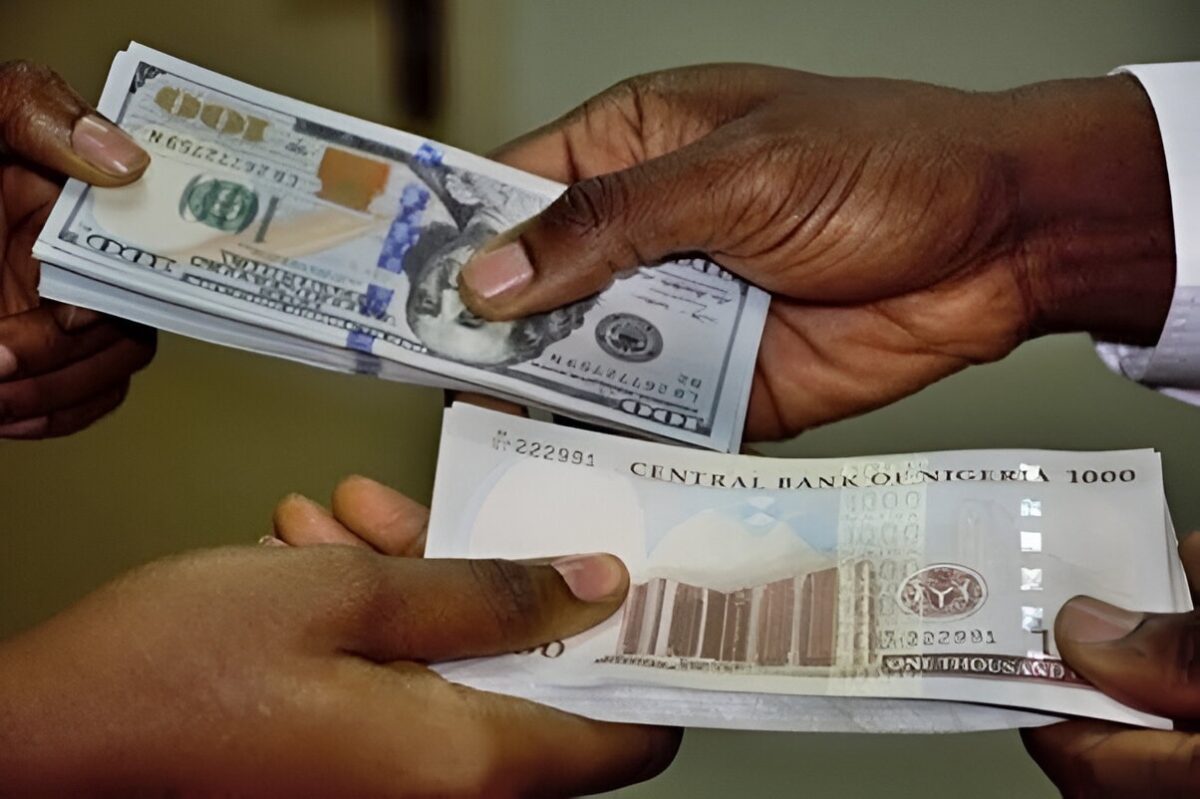
As the market opened for trading today, Tuesday, April 28, 2026, the Nigerian Naira remained stable but cautious in relation to the US dollar. Localized variations in liquidity are being seen by financial analysts in both the parallel market segments and the official Nigerian Foreign Exchange Market (NFEM).

Activity in the Official Market (NFEM)

The Naira demonstrated strength in the early trading hours of the official session, trading at about 1,360.19 NGN per USD. As the FMDQ Securities Exchange tracks continuing transactions by institutional buyers and sellers, there has been a trend of small modifications.

Since the market started, the rate has fluctuated somewhat, going from its starting price of 1,359.23 NGN to its present level as supply and demand forces work to reach a daily balance.

The Central Bank of Nigeria continues to monitor the official window closely, ensuring that the transparency of the “willing buyer, willing seller” model supports price discovery while mitigating drastic shocks to the local currency.

Concurrent Market Trends

Due to the immediate retail demand for the US dollar, the unofficial parallel market is still operating at a premium. Currency dealers are putting the dollar between 1,480 and 1,495 NGN in key cities including Lagos, Kano, and Port Harcourt.

Economic watchers continue to focus on the difference between the NFEM and the parallel market since it frequently reveals the degree of unmet demand in the official sectors. The main forces behind the current activity in the informal sector this morning, according to traders in the parallel market, are individual travelers and small-scale imports.

Factors Influencing the Current Rate

A number of important macroeconomic issues are influencing the performance of the market today. Global oil prices continue to be a major factor, supplying the foreign cash reserves required to sustain the Naira. Seasonal demand for overseas payments and the clearing of corporate foreign exchange backlogs also influence internal market liquidity.

Unless there is a major intervention or a change in the mindset of the global market, participants anticipate that the market will stay within the present range as the day goes on. In order to determine the Naira’s final performance for the midweek trading period, stakeholders are urged to monitor the closing rates later today.

Categories
News

Nigeria’s gambling market is estimated at ₦5.6 trillion

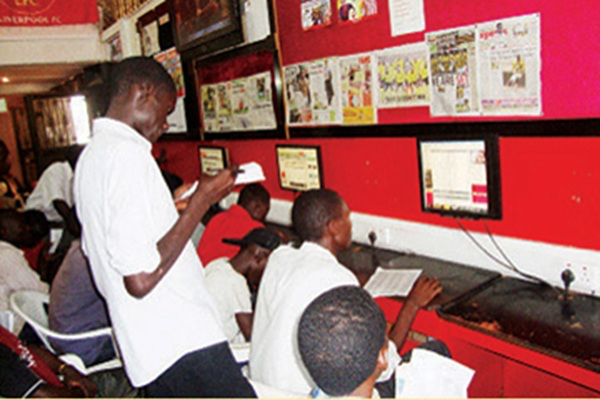
Nigeria’s gambling market is booming, reaching an estimated ₦5.6 trillion. The main growth driver has been the online segment, fuelled by the widespread adoption of smartphones, digital payment services, and mobile apps. A special role is played by young audiences, for whom betting and online casinos have become both a form of entertainment and a way to try to earn money amid a challenging economic situation.

How Nigeria’s market compares with global leaders

The scale of Nigerian gambling is increasingly being ranked alongside the world’s largest markets. Analysts compare Nigeria with the U.S., the UK, South Africa, and Canada across several parameters: market size and dynamics, popular betting formats, technological growth factors, and regulatory maturity.

Such a comparison makes it possible to see not only the impressive potential of Nigeria’s market, but also its vulnerabilities, primarily in regulation and the transparency of financial flows.

Comparison of Nigeria with other African countries in the gambling sector

Nigeria rightly ranks first in Africa by the scale of its gambling market, followed by South Africa in second place and Kenya in third. At the same time, many note Rwanda’s potential, which for now still lags far behind the leaders across all metrics. However, regulatory changes have led to the online casino segment and betting in Rwanda receiving a boost. The country is now seen as a small, tightly regulated market, which also has its advantages.

Kenya is considered the leader in mobile betting in Africa, while South Africa is the most developed and regulated market. Nigeria has for some time maintained its lead in mass participation, which is what drives high profitability figures.

What is driving Nigeria’s market into the trillions

The ₦5.6 trillion market estimate primarily reflects the dominance of the online format. Mobile access has become the key channel: a significant share of bets is placed via smartphones rather than in brick-and-mortar betting shops.

Young Nigerians, who make up the core audience, are actively adopting betting apps and digital payments. It is this demographic group that drives the main demand, and the broad penetration of mobile internet only accelerates the process.

The U.S. market: casino records and an iGaming surge

Data from the American Gaming Association for January 2026 paint an impressive picture:

  • Total GGR (gross gaming revenue) amounted to $6.74 billion, up 3.4% from a year earlier
  • Traditional casinos generated $4.03 billion (+0.9%), setting an all-time record
  • The iGaming segment reached $1 billion, showing explosive growth of +21%
  • Sports betting showed a slight decline of 0.1%, to $1.61 billion

Accessibility and a variety of formats are pushing American players, especially younger ones, online. Slots, poker, and sports betting form the core of preferences. The outlook is positive: the expected compound annual growth rate (CAGR) of the online segment is estimated at 9.8% for 2025–2030, and online casinos may grow even faster, up to 10.5% per year.

The UK: maturity and a culture of cautious betting

The British market is the complete opposite of Nigeria’s “breakneck” one. Strict regulation and high competition among operators make growth more moderate, noticeably lagging behind U.S. and Nigerian rates. At the same time, sports betting remains the undisputed leader, as in Nigeria.

British players’ preferences form a characteristic set: slots, blackjack, roulette, live-dealer games, poker, and bingo; interest in esports betting is growing. Notably, players tend to prefer low stakes and minimal risk, favouring extended play sessions with frequent small wins. Nigerian players show similar patterns, although classic, animal-themed, and Asian-themed slots are especially in demand among them.

South Africa: an unexpected heavyweight

South Africa’s online market is growing at a pace that surprises even seasoned analysts:

  • The revenue forecast for 2030 is 2,663.1 million
  • The CAGR for 2025–2030 is estimated at 10.8%, which exceeds the U.S. figure
  • Total market turnover in recent financial years exceeded ZAR 1 trillion

Sports betting is the largest and fastest-growing segment. Slots hold the position of the most popular gaming vertical, and players are increasingly interested in more immersive formats: live-dealer games and esports. Mobile betting and smartphone penetration remain the main technological drivers of growth.

Structured growth under provincial oversight—echoing the Kenyan model

Canada’s market stands out for its maturity and orderliness. Provincial oversight sets the rules in each region, and certain territories, such as Ontario, have opened licensing to private operators, which has stimulated competition and innovation.

Unlike Nigeria, where growth has been largely organic and unstructured, Canada’s momentum is built on consumer protection and responsible gambling practices. Canadian users show a balanced interest in sports betting and online casinos, including slots, table games, and live dealer. A characteristic feature of the audience is close attention to bonus terms and return to player (RTP) metrics, which indicates a high level of awareness.

Economics vs. entertainment

Player motivation differs noticeably by country. In Nigeria and South Africa, economic reasons come to the fore: betting is seen as a potential source of income. In the U.S. and the UK, the entertainment component dominates.

This difference in motivation directly shapes product choice. Where betting is viewed as “earning,” sports betting, low amounts, and formats with frequent wins that let players extend their sessions and feel a streak of victories are more popular.

Three-quarters of sports bets in Nigeria are on football

One figure says more about Nigeria’s market than any analytical reports: almost 75% of all sports bets are on football. A cultural obsession with the sport, combined with the accessibility of mobile betting, creates a funnel effect, channeling a colossal flow of money into a single segment.

Where Nigeria still has gaps

The UK and the U.S. show what an effective regulatory environment can look like. The UK Gambling Commission regularly publishes market statistics, applies uniform standards to all operators, and oversees their enforcement. The U.S. state-by-state, multi-layered system covers licensing, taxation, and reporting at the level of each state, ensuring a transparent path for revenues into the budget.

In Nigeria, the picture is different: oversight is uneven across regions, enforcement has significant gaps, and the flow of money from players into the public treasury remains opaque.

What Nigeria can learn from mature markets

Other countries’ experience suggests several specific directions:

  • Strengthening and coordinating regulation at the federal level
  • Introducing transparent reporting and systematic revenue collection
  • Expanding consumer protection mechanisms
  • Bringing order to the online-operator market with clear licensing requirements

In the UK, regular monitoring and public reporting make it possible to track the industry’s health in real time. The U.S. state model ensures formal revenue capture, making every dollar of gambling turnover visible to tax authorities. Given the scale of participation that Nigeria’s market demonstrates, the absence of such mechanisms means the loss of significant budget revenues and increased risks for players.

Nigeria’s gambling market is expanding rapidly thanks to mobile online gambling and a large youth audience, but the key risk remains uncoordinated regulation and non-transparent revenue collection. The next critical step for the country will be to tighten and harmonise rules, reporting, and player-protection mechanisms.

Categories
News

US, UN Team Up With Nigeria and West Africa to Boost Fight Against Drug Trafficking Networks

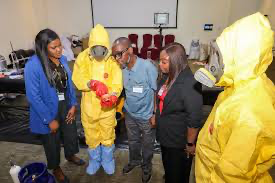
In an effort to fight transnational drug trafficking throughout the area, the US government has teamed up with the UN to educate drug enforcement officials from Nigeria and nine other West African nations.

Officers of Nigeria’s National Drug Law Enforcement Agency and their equivalents from nine other West African countries were the intended audience for the training, which was conducted by the UN Office on Drugs and Crime and the US Department of State’s Bureau of International Narcotics and Law Enforcement Affairs.

This was revealed in a statement released by the US Mission in Nigeria on Friday. According to the statement, the program encompassed everything from demolishing covert drug labs to honing investigative methods.

The mission states that the practical training was intended to strengthen intelligence sharing and cooperation between the NDLEA and its regional counterparts while increasing their combined ability to dismantle criminal networks.

The statement said, “The United States supports West African drug enforcement agencies in their fight against transnational drug traffickers that harm Americans and Africans alike, from dismantling clandestine drug labs to sharpening investigative techniques.”

According to the mission, by preventing drugs at their source and safeguarding communities throughout West Africa, the program will improve the region’s capacity to fight drug gangs.

It further stated that the program would increase member agencies’ ability to thwart criminal networks operating throughout the area.

The ultimate goal, according to the US administration, is to reduce the threat of international drug trafficking to both the US and West Africa.

“By strengthening cooperation and intelligence-sharing between NDLEA and its counterparts and boosting their capacity to disrupt criminal networks, stop drugs at source, and protect communities across West Africa, this hands-on program strengthens the region’s ability to confront drug cartels, making the region and America safer,” the statement said.

Categories
News

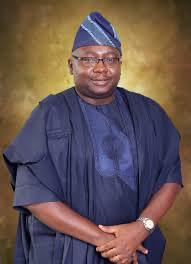
Oyo 2027: Adelabu Dismisses Endorsement Rumours, Says APC Governorship Race Still Open

President Bola Tinubu and the Olubadan of Ibadanland, Oba Rashidi Ladoja, have not backed any candidates ahead of the 2027 election, according to Bayo Adelabu, an All Progressives Congress candidate for governor in Oyo State.

Shortly after returning from Abuja, Adelabu made this statement on Thursday while speaking to party members and supporters in Ibadan.

He urged party members to ignore rumors that the two had supported a particular candidate.

“President Tinubu has not endorsed any consensus candidate, and the gubernatorial contest is open to anyone who is interested,” Adelabu stated. As Nigeria’s president, Asiwaju is in charge of 36 states as well as the Federal Capital Territory. 774 local governments have him as their president. He is in charge of about 3,000 wards. He will therefore not support or have a particular interest in anyone.

He noted that party stakeholders had been encouraged by the President to either have primaries or come to an agreement.

He stated, “He (Tinubu) said we should all go and meet as a party, reach consensus among ourselves as a party with critical stakeholders on the ground, and if we can’t reach consensus, we go for a direct primary.”

Adelabu rejected reports that the Olubadan had supported a certain candidate.

“I consider the allegation about Olubadan supporting a candidate to be a rumor, and I don’t think it’s true. He declared, “Olubadan is the father of everybody, regardless of status or political allegiance.

Adelabu recently resigned as Minister of Power to pursue his goal of becoming the state’s governor, according to The PUNCH.

Speaking about his aspirations, he asked locals to back him and pledged inclusive administration if he was elected.

He said, “My goal in running for governor of Oyo in 2027 is to serve the general public, not to enrich myself, favor, or benefit APC members.” The poor, underprivileged, women, young people, indigenous people, and state citizens in general will all benefit from my administration.

Categories
News

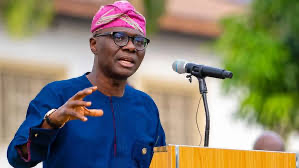
Sanwo-Olu Celebrates Alebiosu at 90, Hails Him as ‘Stabiliser’ of Lagos Politics

Otunba Busura Alebiosu, an elder statesman and member of the Governance Advisory Council, was congratulated on his 90th birthday by Lagos State Governor Babajide Sanwo-Olu.

Alebiosu, popularly known as Otunba Gbelegbuwa of Ijebuland and the Chairman of the Council of Otunbas of Ijebuland, will turn 90 on Friday, April 24.

Sanwo-Olu referred to Alebiosu as a “stabiliser and leader of leaders” who has made important contributions to Lagos State politics and governance in a statement released on Thursday by his Special Adviser on Media and Publicity, Gboyega Akosile.

Additionally, the governor commended the nonagenarian for his decades-long participation in public service and party politics, noting his influence in shaping the political landscape of the state since the beginning of the Fourth Republic.

“On behalf of my wife, Ibijoke, family, the government and the people of Lagos State, as well as leaders and members of our dear party, All Progressives Congress, I celebrate our elder statesman and member of the Governance Advisory Council (GAC), Otunba Busura Alebiosu, on his 90th birthday,” Sanwo-Olu said.

He recalled Alebiosu’s political journey, including his time as a member of the Lagos State House of Assembly representing Somolu/Kosofe State Constituency, and his participation in Lagos politics from the era of Sir Michael Otedola through the aborted Third Republic to the present democratic dispensation.

Since he was chosen to serve in the Lagos State House of Assembly, Baba Alebiosu has maintained faith in the political system. From the Sir Michael Otedola era through the failed Third Republic to the current Fourth Republic, he has actively participated in Lagos politics,” the governor stated.

Alebiosu is “one of our leading lights,” according to Sanwo-Olu, who also noted that he possesses unique leadership traits.

He is one of our brightest stars. Baba Bush is a man with a great deal of experience and understanding, and I regard him as a stabilizer. More significantly, he is composed, honorable, and modest. He said, “I see leadership qualities in him that are uncommon among political leaders.”

The Governor prayed for the celebrant’s sustained health and mental clarity.

He said, “I hope you stay well for the rest of your life, have a clear head, and be able to continue leading us effectively. You’ll keep living with your head held high as you become older.”

Categories
News

FG Plans N700bn Bond Sale as Borrowing Costs Stay High in Nigeria

As it continues to manage high borrowing rates, the Federal Government intends to raise N700 billion from the domestic bond market in April 2026, extending a steady decline in offer size.

According to information from the Debt Management Office’s April 2026 Federal Government of Nigeria Bond Offer Circular, the auction is set for April 27 and will be settled on April 29.

In order to increase the liquidity of benchmark securities, the issuance will be carried out by reopening existing instruments across three maturities.

According to the circular, the offer consists of N100 billion for the 17.95 percent FGN June 2032 bond, N300 billion for the 22.60 percent FGN January 2035 bond, and N300 billion for the 17.945 percent FGN August 2030 bond.

The bonds, which are intended for institutional investors including pension funds, banks, and asset managers, would be issued in N1,000 units with a minimum subscription of N50.001 million.

The DMO also pointed out that the instruments are tax-exempt under current legislation and are eligible as liquid assets for banks, both of which sustain investor interest.

The April offer reflects an additional cut to the government’s monthly borrowing target, according to a study of prior issuances.

From N900 billion in January to N800 billion in February, N750 billion in March, and now N700 billion in April, the offer has steadily decreased, indicating a calibrated adjustment rather than a change in overall strategy.

A total of N750 billion was offered by the government in March, consisting of N250 billion in a five-year bond, N200 billion in a seven-year bond, and N300 billion in a ten-year bond.

In addition to changing the allocation across maturities and reducing the overall amount by N50 billion, the most recent revision drastically cuts the seven-year component.

The April issuance’s coupon structure emphasizes the current high-yield climate even more. The 10-year bond is priced much higher at 22.60 percent, while the five-year and seven-year contracts bear rates of roughly 17.945 percent and 17.95 percent, respectively.

In comparison to comparable long-term instruments provided in prior months, this marks a significant rise, showing investor demand for higher returns to offset risks related to inflation, exchange rate pressure, and global uncertainty.

However, final yields will be decided at the auction, where winning bidders would pay according to their yield-to-maturity bids plus interest.

The Central Bank of Nigeria’s strict monetary policy, which has kept interest rates high to reduce inflation, is consistent with the ongoing high-rate environment. This thus increases the cost of borrowing domestically and puts further strain on the government’s debt payment commitments.

According to data analysis from the Debt Management Office, Nigeria’s total debt service increased to almost N16 trillion in 2025, as previously reported by The PUNCH.

The amount increased by N2.98 trillion, or 22.9%, from over N13.02 trillion in 2024, indicating mounting fiscal strain as debt service continues to consume a greater portion of public funds.

Categories
News

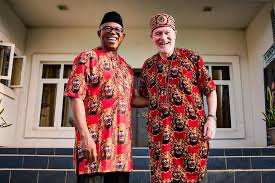
Peter Obi Hosts EU Ambassador in Onitsha

The European Union’s ambassador to Nigeria, Mr. Gautier Mignot, was hosted by former Anambra State governor Peter Obi on Wednesday at his home in Onitsha.

They had “useful conversations,” according to Obi, who shared pictures from the meeting on his X Twitter.

“I had the honor and privilege of hosting the European Union Ambassador to Nigeria, His Excellency, Mr. Gautier Mignot, at my residence in Onitsha today, Wednesday,” he wrote. We had some insightful discussions during the meeting, which was enriching.

Obi, who lost the 2023 presidential election to President Bola Tinubu, has expressed readiness to give the presidency another shot in 2027.

He is expected to clinch the African Democratic Congress, ADC, ticket with the former governor of Kano State, Rabiu Kwankwaso as his running mate.

Categories
News

NAFDAC Cracks Down on Fake Alcohol Factories in Lagos, Seizes ₦350 Million Worth of Goods

In Lagos State, the National Agency for Food, Drug Administration and Control (NAFDAC) discovered and destroyed two illicit establishments engaged in the manufacture of contaminated and counterfeit alcoholic beverages, confiscating goods worth around N350 million.

In a statement released through its official X Twitter, the agency revealed the operation and stated that the enforcement acted on reliable intelligence regarding the syndicates’ operations.

More than 1,800 cartons of counterfeit alcoholic drinks were found during coordinated searches by NAFDAC’s agents at Zamfara Plaza in the Trade Fair Complex and other locations on Lagos Island.

Officials reportedly discovered homemade filtration systems, plastic mixing tanks, empty branded bottles, corks, and packaging supplies needed to create and package the fake drinks at the Trade Fair Complex.

One suspect was detained in connection with the illegal manufacture and sale of counterfeit alcohol through a retail establishment in a different operation on Lagos Island. According to the agency, every item that was found had been seized and taken away for additional regulatory action.

Adulterated alcoholic beverage intake has serious health hazards, including as organ damage, poisoning, and even death, according to NAFDAC.

Categories
News

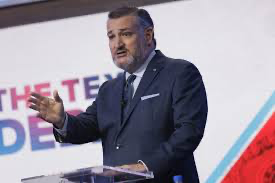
Ted Cruz vs Lai Mohammed: Clash Over Claims of Christian Killings Rocks Nigeria Security Debate

Ted Cruz, a senator from the United States, has charged Nigerian government officials with being involved in atrocities against Christians in the nation.

Cruz made the accusation on Tuesday at a Senate Foreign Relations subcommittee meeting that was centered on the US counterterrorism policy in Africa.

Lai Mohammed, the former communications minister under the late President Muhammadu Buhari, stated in the United Kingdom yesterday that Boko Haram was killing more Muslims than Christians, but attempts to gain a response from the federal government yesterday were unsuccessful.

Speaking at the session, the legislator asserted that Nigeria had the largest number of Christians slain worldwide due to their faith.

He claimed that since 2009, over 20,000 churches, schools, and other places of worship had been destroyed and over 50,000 Christians had been slain.

Cruz stated, “Unfortunately, Nigerian officials had been complicit in facilitating these atrocities.”

In addition to criticizing Nigerian authorities for their delayed response to the nation’s insecurity, he connected some of the violence to the application of Sharia law in some northern states.

Cruz recalled that guarantees that the violence would be dealt were offered during a prior meeting with Nigerian security and defense personnel.

But he claimed that those assurances have not yet yielded outcomes.

He said, “I informed them that I would assess their dedication based on the outcomes. “Those outcomes have not yet materialized.”

Additionally, the senator disclosed that he introduced the Nigeria Religious Freedom Accountability Act of 2025 in October.

He claims that the purpose of the law is to make Nigerian government officials answerable for their alleged role in attacks against Christians.

Cruz questioned Nick Checker, a senior official in the US State Department’s Bureau of African Affairs, at the meeting about whether interactions between Nigeria and the US had resulted in significant advancements, particularly in light of moves taken under US President Donald Trump.

In response, Checker stated that Nigeria has demonstrated some degree of collaboration with the United States and cited modifications to the nation’s security framework, including as leadership changes, increased soldier recruitment, and the deployment of forest guards to problematic areas.

He stated, “We’ve seen some positive movements, including leadership changes in Nigerian security services, recruitment of additional troops, and deployment of forest guards to areas affected by violence.”

The prosecution of suspected terrorists has increased, he continued, citing the formation of a bilateral high-level working group following talks between US Under Secretary of State Allison Hooker and Nigeria’s National Security Advisor Malam Nuhu Ribadu.

Checker said that the United States’ recent assistance to Nigerian security forces demonstrated the two nations’ ongoing collaboration.

“We’ve seen positive steps by the Nigerians, but certainly more can be done,” Checker stated, adding that the US would keep pushing for more initiatives.

Lai Mohammed: Boko Haram is killing more Muslims than Christians.

In the meantime, militant groups have killed more Muslims than Christians, according to former Minister of Information and Culture Lai Mohammed, who has rejected allegations of a targeted genocide against Christians in Nigeria.

Yesterday, Mohammed gave a speech in the UK while answering inquiries from Abbey College, Cambridge students.

The purpose of the workshop was to provide students from various backgrounds with a chance to discuss developments in Nigeria, namely youth involvement in politics and government.

The former minister remarked that reports of a “Christian genocide” in Nigeria were false in response to a question about religious persecution, particularly against Christians.

“The developed world needs to show greater understanding.” These days, there are claims of genocide against Christians and religious persecution in Nigeria. It is untrue. He declared, “It’s fake news.”

Mohammed argued that Nigeria’s security challenges were complex and not driven by a deliberate campaign to eliminate any religious group.

“Nigeria as a country has challenges that will not be resolved by genocide against any religion,” he added.

He said Boko Haram initially emerged as a movement targeting Muslims who embraced Western education, noting that early victims were largely Muslims.

“At the beginning, the victims of Boko Haram were largely Muslims, not Christians. Boko Haram started as a revolt by extreme Muslims against conventional Muslims like me.

“Look at the meaning of Boko Haram — ‘haram’ means forbidden or illicit, ‘boko’ means Western education. So for Boko Haram, I, Lai Mohammed, having gone to school, am an enemy.

“They realised that Muslims killing one another doesn’t gain traction. When Muslims start killing Christians, it causes uproar. That is the honest truth,” he said.

The former minister also dismissed claims that banditry in Nigeria was driven by religion, describing it instead as a criminal enterprise affecting people of the same ethnic and religious backgrounds.

He insisted that records showed Muslims account for the largest number of victims of insurgent attacks in Nigeria.

He said: “The bandits are Muslims, they are Hausa-Fulanis. Their victims are Muslims, they are Hausa-Fulanis. So how can you now talk about religion? It has nothing to do with religion.

“We have a spirit of religious tolerance in Nigeria and I challenge anyone to say it is not true. People can hide under anything to commit crime but one, it is not a policy. Number two, the average Nigerian is not bothered about your religion or ethnicity.

The main point of contention between Muslims and Christians in Nigeria is money. They won’t disagree over theology. They are more concerned about the economy and ways of life. That is why you have many Christians marrying Muslims and vice versa.

“Therefore, we must vigorously use public communication to challenge this narrative about Christian genocide, which is untrue.”

Categories
News

Naira Slips Again Amid Rising Dollar Demand and Forex Shortage

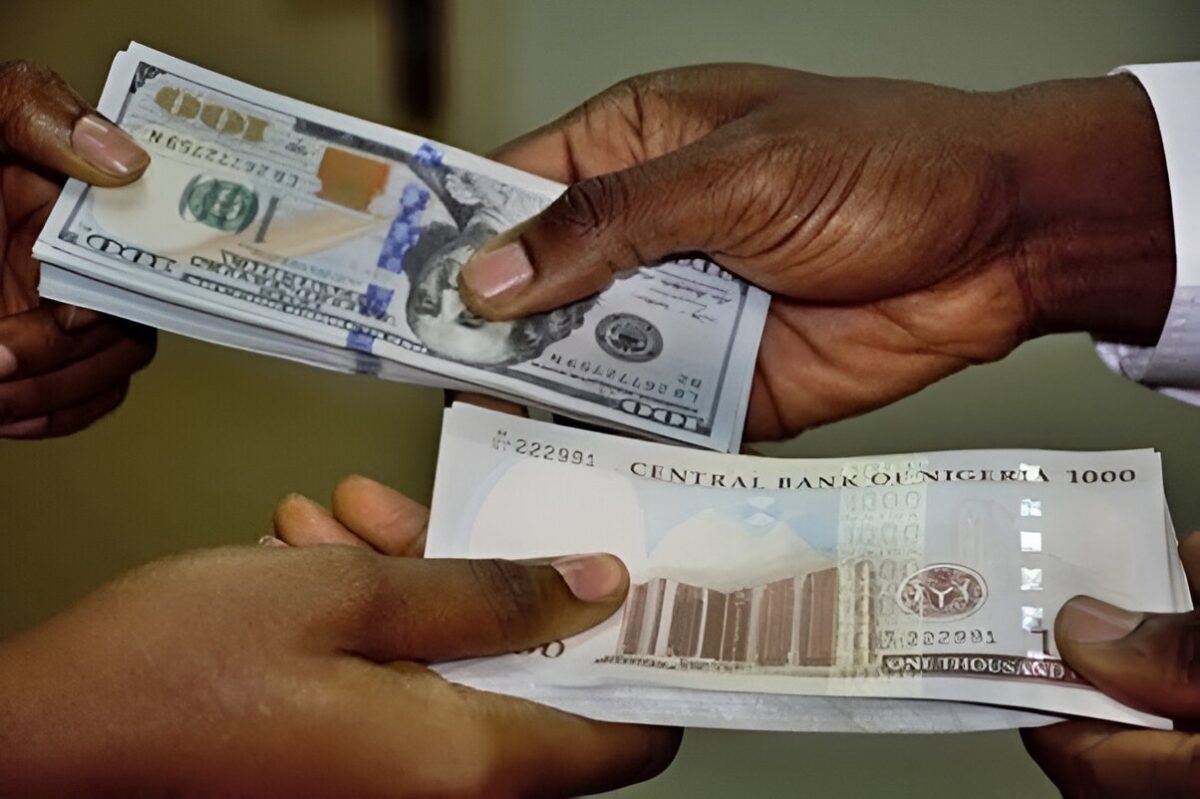
Early on Thursday, April 23, 2026, the Nigerian Naira showed a minor weakening versus the US dollar on both the official and unofficial foreign currency markets. As midweek demand for the US dollar continues to impact rate stability, financial professionals are closely monitoring the market.
Performance of the Official Market (NFEM)

The Naira began trading on the Nigerian Foreign Exchange Market (NFEM) with a little decline. The Naira is now trading at an average of 1,351.59 NGN per 1 USD, according to real-time data from the FMDQ Securities Exchange.

When compared to the opening prices recorded earlier in the week, when the currency had found support close to the 1,347 NGN level, this indicates a slight fall.

Market turnover at the official window remains a key point of focus for investors, as the Central Bank of Nigeria (CBN) maintains its policy of managed float to curb excessive volatility while ensuring essential sectors have access to foreign currency.

Parallel Market Trends

In comparison to the official rate, the informal or parallel market still trades at a substantial premium. The dollar is being exchanged at prices between 1,465 and 1,480 NGN, according to early morning reports from Bureau De Change (BDC) operators in major hubs like Lagos (Ikeja and Broad Street), Abuja (Wuse Zone 4), and Kano.

Experts explain the present 113 Naira disparity between the NFEM and the parallel market to the unfulfilled demand from small-scale importers and people looking for personal travel allowances (PTA), who frequently find the official channels more restrictive.

Economic Factors and Outlook

The persistent demand for the dollar to meet international trade obligations and pay off foreign debt is a major factor in the current pressure on the naira. Furthermore, the strength of the country’s external reserves is still determined by the recent changes in the price of oil, which is Nigeria’s main source of foreign money.

Participants anticipate that the rate will level off as the trading session moves into the afternoon, but any major intervention from the top bank or changes in market liquidity could affect the day’s closing numbers. It is recommended that market observers keep an eye on official closing data to get a complete picture of the day’s performance.