Categories
News

Naira Down To N1,540 In Parallel Market

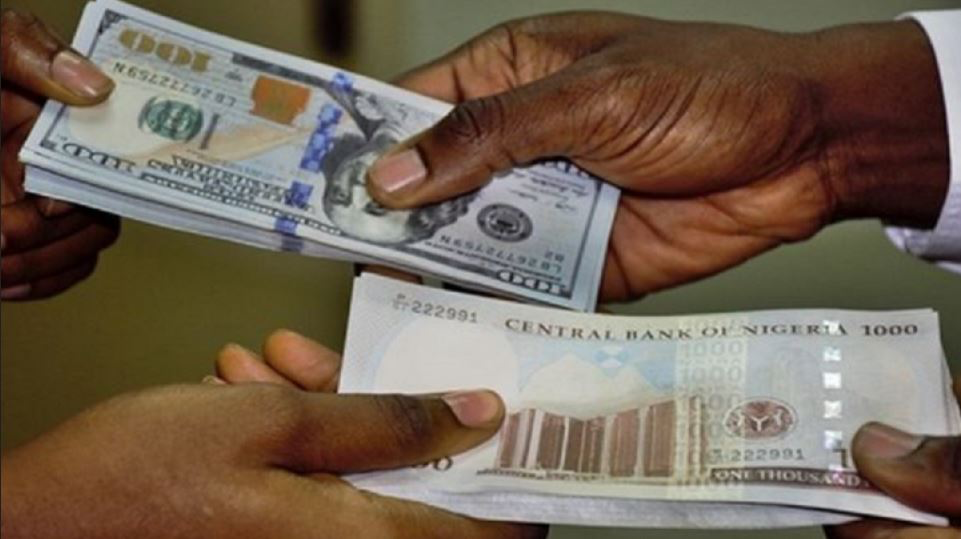
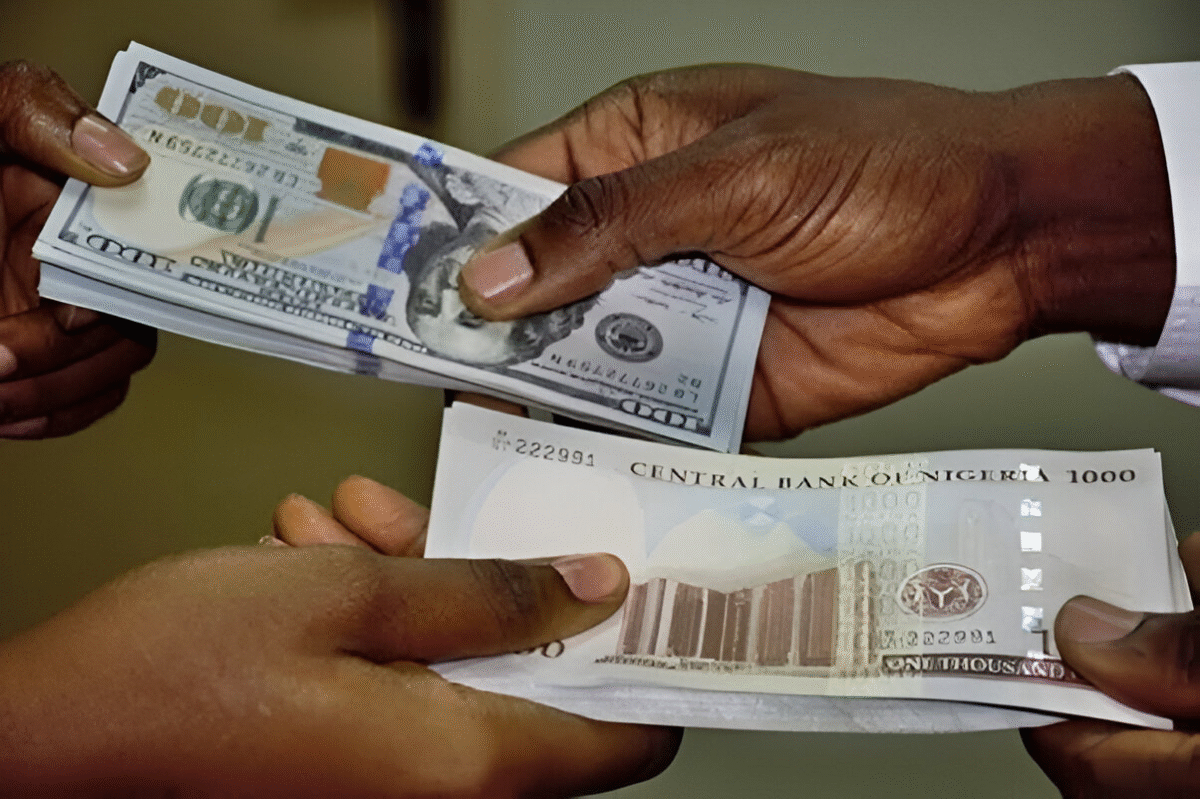
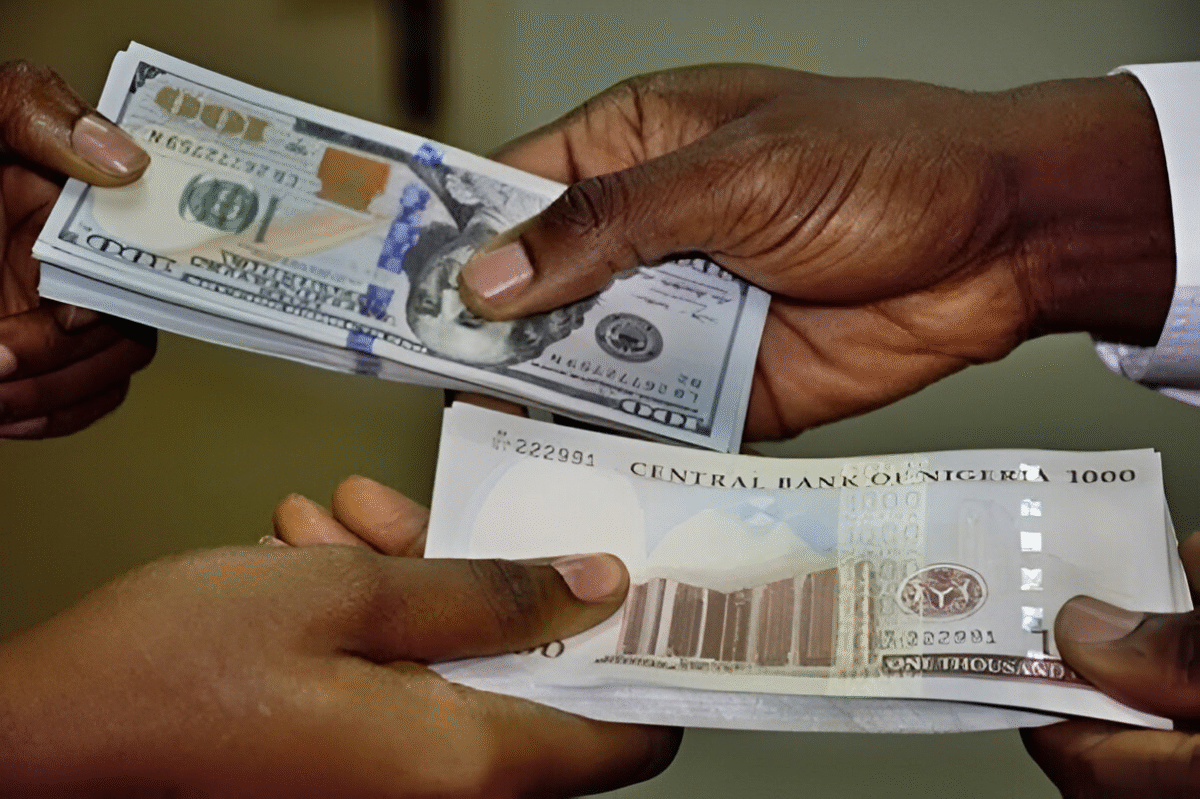
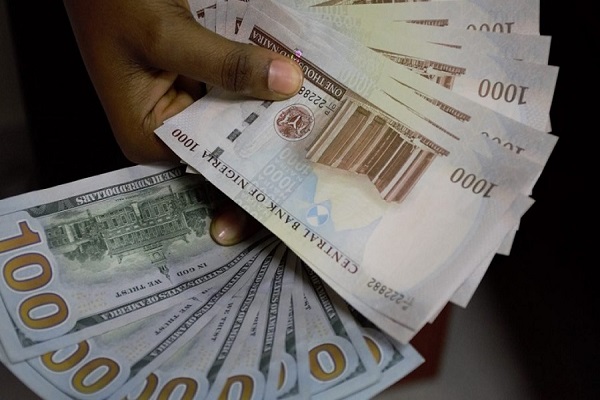
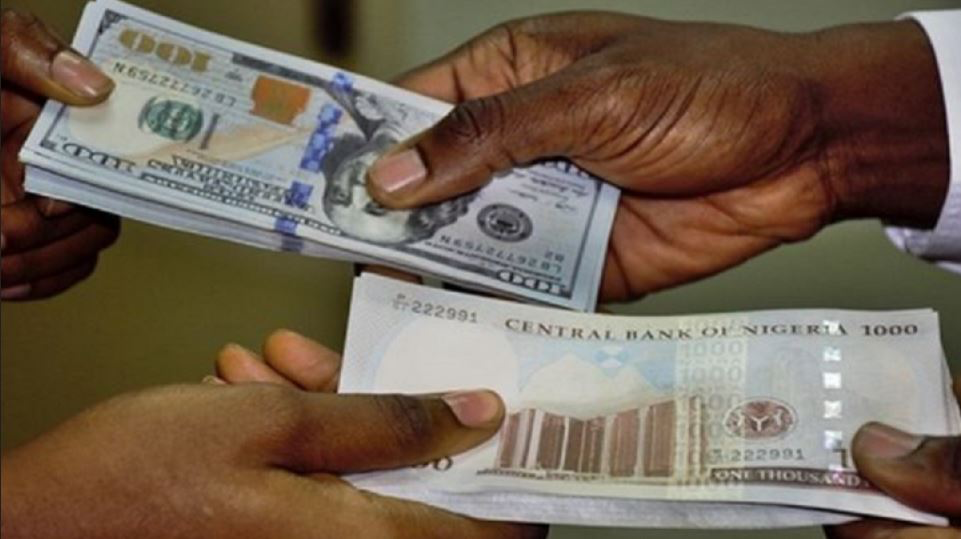
The Naira fell to N1,540 per dollar in the parallel market yesterday, down from N1,525 per dollar on Tuesday.

But the Naira appreciated to N1,502.5 per dollar in the Nigerian Foreign Exchange Market (NFEM).

Data published by the Central Bank of Nigeria, CBN, showed that the exchange rate fell to N1,502.5 per dollar from N1,506.5 per dollar yesterday, indicating N6.5 appreciation for the naira.

Consequently, the margin between the parallel market and NFEM rate expanded to N37.5 per dollar from N18.5 per dollar on Tuesday.

Categories
Uncategorized

Naira Down To N1,540/$ In Parallel Market

Yesterday, the Naira fell to N1,540 per dollar in the parallel market, down from N1,537 per dollar on Tuesday.

But the Naira appreciated to N1,522 per dollar in the Nigerian Foreign Exchange Market (NFEM).

Data published by the Central Bank of Nigeria, CBN, showed that the exchange rate for the naira fell to N1,522 per dollar from N1,525.45 per dollar on Tuesday, indicating N3.45 appreciation for the naira.

Consequently, the margin between the parallel market and NFEM rate widened to N18 per dollar from N11.55 per dollar on Tuesday.

Categories
News

Naira Slides To N1,550/$ In Parallel Market

The Naira weakened further on Tuesday, August 26, closing at N1,550 per dollar in the parallel market, compared to N1,540 per dollar on Monday.

In the Nigerian Foreign Exchange Market (NFEM), the local currency also weakened slightly to N1,537 per dollar, compared to N1,536.99 per dollar the previous day, according to data from the Central Bank of Nigeria (CBN).

This depreciation widened the gap between the official and parallel market rates to N13 per dollar, a sharp increase from N3.01 recorded on Monday.

The currency’s drop reflects sustained pressure from high demand for foreign exchange amid limited dollar supply, a challenge that has persisted despite ongoing CBN interventions and recent policy reforms aimed at stabilizing the market.

Analysts warn that without a significant boost in forex inflows and improved investor confidence, the Naira could face further volatility in the coming weeks.

Categories
News

Dollar to Naira Black Market Rate: Everything You Need to Know (February 2, 2024)

The Dollar to Naira black market rate is an unofficial exchange rate determined by supply and demand, often more favorable than the official Central Bank of Nigeria (CBN) rate.

Looking to exchange dollars for naira on the black market or parallel market? This article provides current rates, key terms, and important information.

What is the Black Market Rate?

The Dollar to Naira black market rate is an unofficial exchange rate determined by supply and demand, often more favorable than the official Central Bank of Nigeria (CBN) rate. However, transactions occur outside regulated channels, carrying inherent risks.


Key Terms:

  • Buying Rate: The price you pay in naira to obtain one dollar.
  • Selling Rate: The amount of naira you receive for exchanging one dollar.
  • BDC Operators/Abokis: Individuals or businesses facilitating black market exchanges.

Today’s Rates (February 2, 2024)


Black Market Rate

  • Buying ₦1425
  • Selling ₦1435

CBN Rate

  • Selling ₦1414
  • Buying ₦1413

Please note that

  • Rates are fluid and can change rapidly.
  • Lagos and Abuja often offer better rates due to their strategic location.
  • Transactions carry inherent risks due to the unregulated nature of the black market.
  • Consider alternatives like licensed bureau de change operators for safer transactions.
  • This information is for informational purposes only and does not constitute financial advice.

Remember: Exercise caution when exchanging currencies on the black market. Always compare rates, inquire about fees, and prioritize safety and transparency.


Disclaimer: I am not affiliated with any financial institutions and cannot endorse specific services or providers.

Categories
Entertainment News

Naira Falls By 16%, Closes Week At N927/$

On the official Investor and Exporter forex window, the Nigerian currency, the naira closed the week at N927.19/$.

This was a 16.64 per cent decline from the N794.89/$ it closed the week that ended November 24, 2023, according to data from the FMDQ Securities Exchange. Also, the turnover of dollars traded in the market improved from $75.82m to $110.14m in the period under review.

On Friday, the naira began trading at N815.00/$ for the day before hitting a high of N1160/$ and a low N701/$ within the day. It eventually closed trading at N927.19/$.

Last week Friday, the naira traded at a high of N1136/$ and a low of N700.00/$. The naira has continued to fall despite the Central Bank of Nigeria’s attempt to clear a backlog of foreign exchange forward contracts.

Recently, the apex bank’s governor, Olayemi Cardoso, stated that fiscal deficits and public debt increases are adding pressure to the external reserves and contributing to exchange rate instability.

While commenting at the recent Chartered Institute of Bankers of Nigeria 58th Annual Bankers’ Dinner and Grand Finale of the Institute’s 60th Anniversary, the governor said, “We have already witnessed improvements in FX market liquidity in recent weeks, as the market responded positively to tranche payments which have been made to 31 banks to clear the backlog of FX forward obligations.

“We have been subjecting these payments to detailed verification to ensure only valid transactions are honored.  In a properly functioning market, it is reasonable to expect significant FX liquidity, with daily trade potentially exceeding $1.0bn. We envision that, with discipline and focused commitment, foreign exchange reserves can be rebuilt to comparable levels with similar economies.”

He added that one of the bank’s monetary policies aims is to achieve price stability and the stabilization of the exchange rate of the naira. Cardoso highlighted that the proper functioning of domestic and foreign currency markets, clear, transparent, and harmonised rules governing market operations are essential.

He declared, “New foreign exchange guidelines and legislation will be developed, and extensive consultations will be conducted with banks and FX market operators before implementing any new requirements.”

However, the Economic Intelligence Unit, the research and analysis division of the Economist Group, does not believe the CBN has the required firepower to clear the backlog of foreign exchange orders.

In a recent report, it said, “In Nigeria, an unsupportive monetary policy implies that the naira will remain under pressure, while the central bank lacks the firepower to adequately supply the market or clear a backlog of foreign exchange orders, which will keep foreign investors unnerved. High inflation and a continued spread with the parallel market will leave the exchange rate regime unstable and result in periodic devaluations.”