Categories
News

Naira Rises To N1,495/$ In Parallel Market

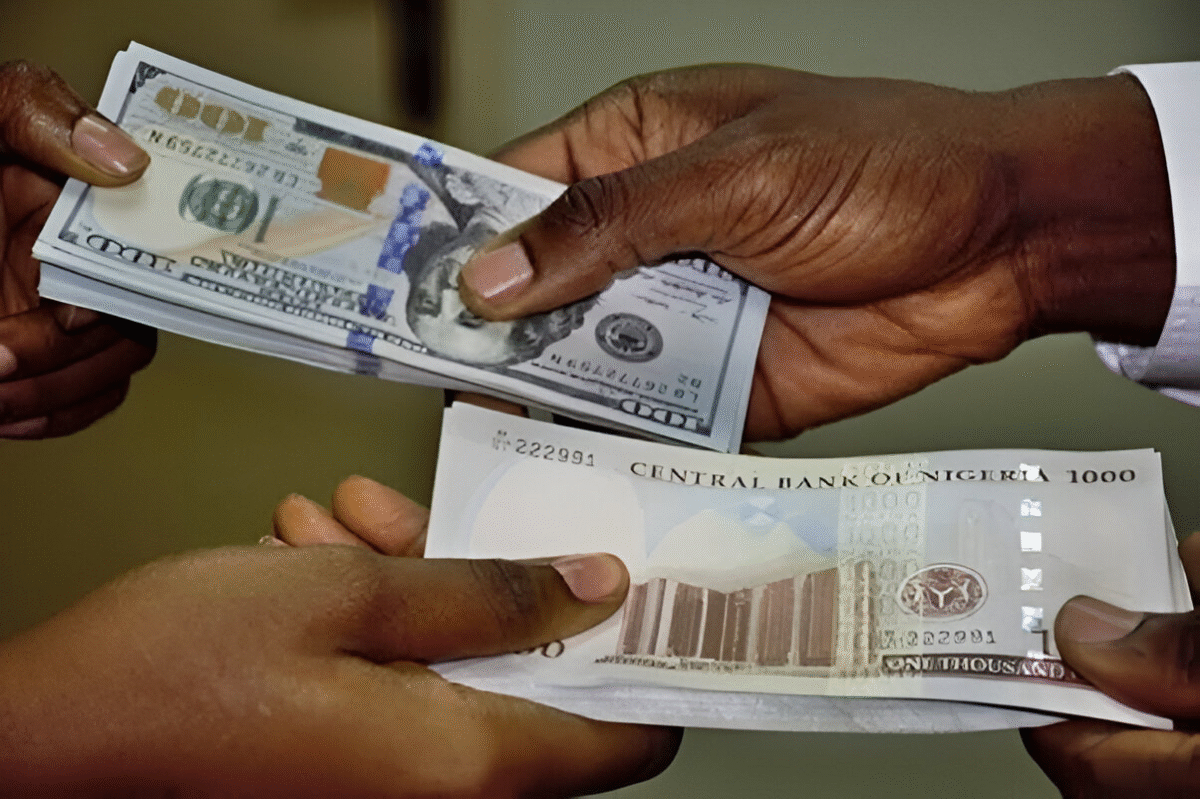
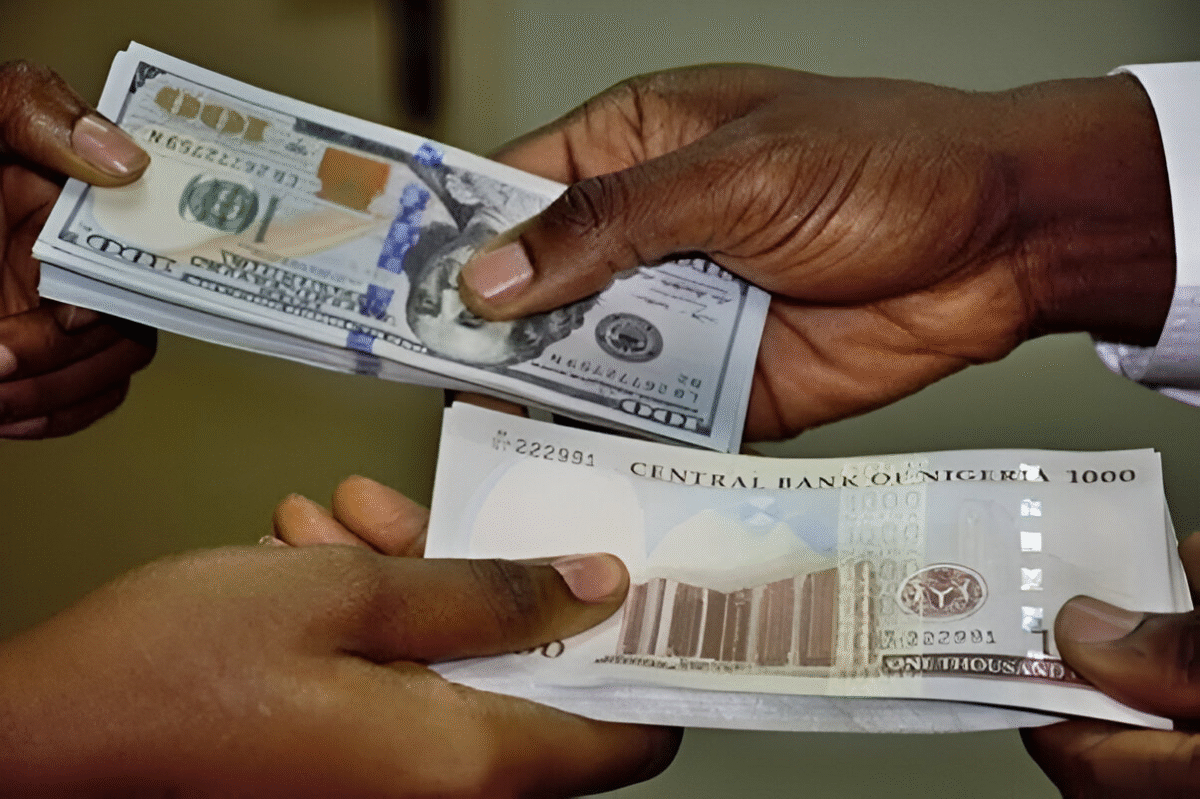
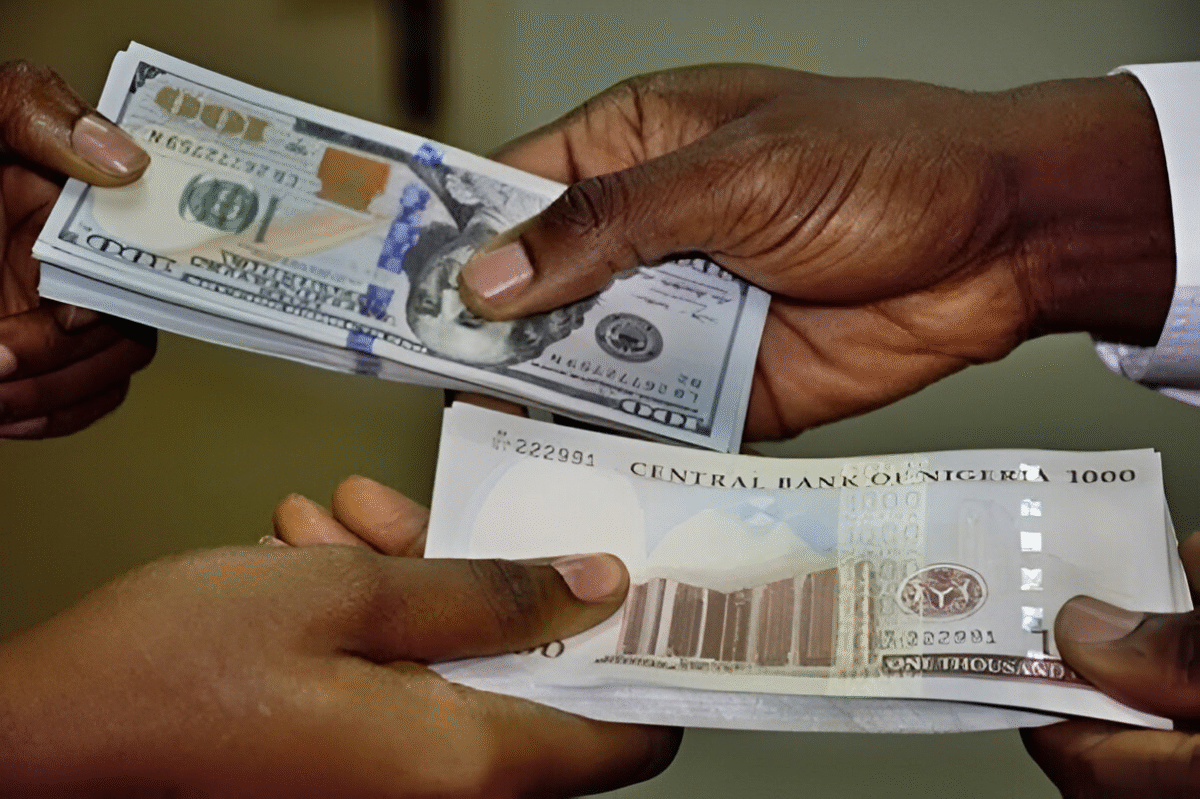
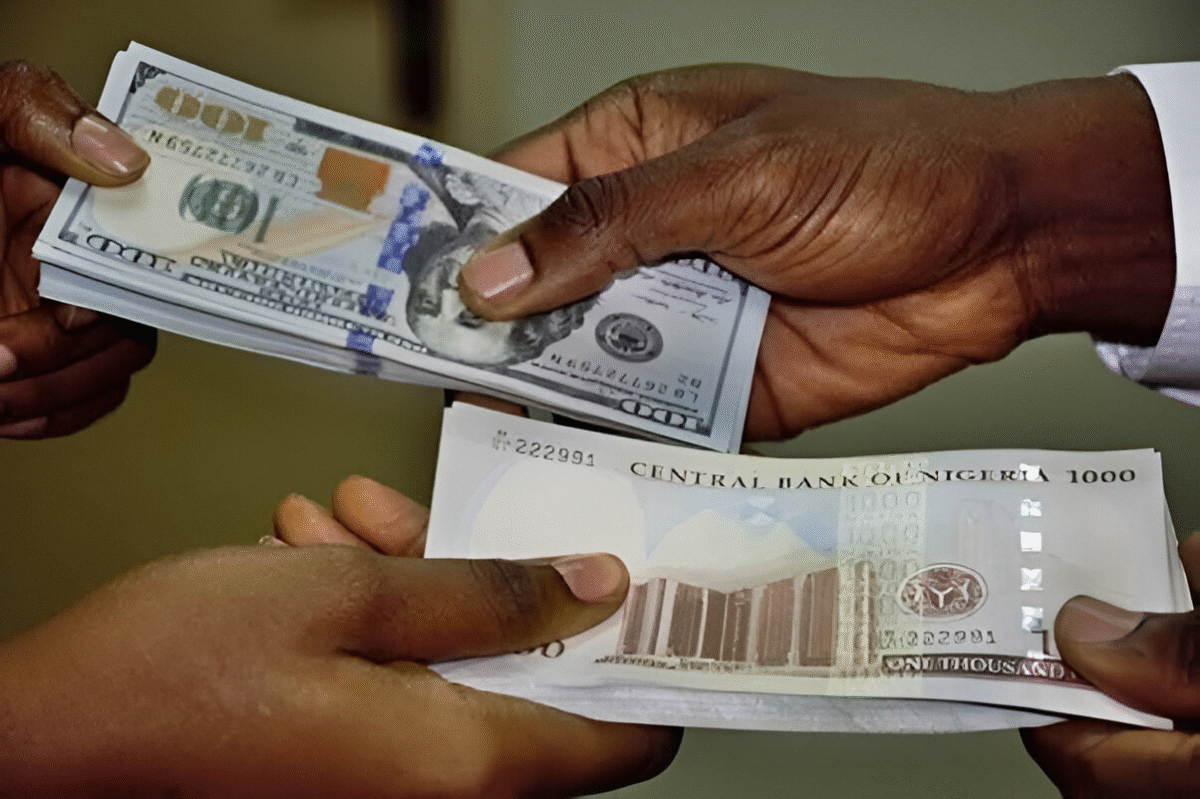
The Naira strengthened in the parallel market yesterday, appreciating to ₦1,495 per dollar from ₦1,500 per dollar recorded on Monday.

But the Naira depreciated to N1,464.5 per dollar in the Nigerian Foreign Exchange Market (NFEM).

Data published by the Central Bank of Nigeria, CBN, showed that the exchange rate for the naira rose to N1,464.5 per dollar from N1,464 per dollar on Monday, indicating 50 kobo depreciation for the naira.

Consequently, the margin between the parallel market and NFEM rate narrowed to N35.5 per dollar from N36 per dollar on Monday.

Categories
News

Naira Depreciation Is Not Necessarily Bad — IMF Says

The International Monetary Fund (IMF) said yesterday that the Naira’s depreciation should not automatically be seen as a negative occurrence.

The Financial Counsellor and Director of Monetary and Capital Markets of the Fund, Mr. Tobias Adrian, stated this while fielding questions at the Global Fiscal Sustainability Report press briefing at the ongoing Annual Meetings of the World Bank and the IMF in Washington DC, USA.

Asked what policy measures the Fund would advise the Nigerian to adopt to shore up the value of the Naira that has suffered a major devaluation in the last two years, the Director said, “In terms of the Nigerian economy, of course, you know exchange rates are important, are important buffers to adjust the domestic economy relative to shocks.

”So, you know, a depreciating exchange rate is not necessarily a bad thing. It may actually be a good thing to restore equilibrium.

“And we have indeed seen in Nigeria, you know, many steps to strengthen policy frameworks, such as on the monetary policy side. And you know, we generally do recommend moving towards more flexible exchange rates.

“And yeah, in addition to monetary policy actions, revenue collection has strengthened in Nigeria, and transparency in terms of FX reserve positions have improved.

”I think all of this has contributed to lower inflation from more than 30% last year to 23% this year, as well as improved FX reserve positions in Nigeria.

”So the direction of travel appears to be positive.”

Mr. Adrian noted however, that Sub-Saharan Africa in general was facing and continue to face headwinds.

He said, “While growth has been pretty strong during this period where financial conditions are easy, capital flows are resuming, it is also possible that the previous capital flow surge and then retracement cycles that we have seen before could happen, and when that happens, it would expose some of these economies with vulnerabilities, particularly when foreign investments were to retrace.

”So, it is important for countries to continue to improve the fundamentals on the fiscal and monetary policy side, but also in terms of developing more structural policies like revenue mobilization, as Nigeria is trying to do- debt management and hopefully also support from the international community.”

Categories
News

Gold Pushes Past $4,000 For The First Time

Gold has pushed past $4,000 an ounce for the first time on Wednesday.
Information gathered revealed that this new milestone is being fueled by investors seeking refuge from mounting economic and geopolitical uncertainty.
The new record is also as a result of expectations of further interest rate cuts by the U.S. Federal Reserve.
The metal’s record-breaking rally has made it one of the best-performing assets of 2025, up 54% year-to-date after gaining 27% in 2024. Spot gold was last trading up 1.58% at $4,047.28 per ounce, with U.S. gold futures for December delivery also gaining 1.58% to $4,067.70.
Gold has surpassed advances in global equity markets and Bitcoin while outpacing losses for the dollar and crude oil.
The safe-haven appeal of gold stems from a perfect storm of factors. Mounting global crises, including the Middle East conflict, the war in Ukraine, and political turmoil in France and Japan, are stoking demand. Domestically, the U.S. government shutdown, now in its eighth day, is delaying the release of key economic data, forcing investors to lean on expectations for Fed rate cuts. Markets are currently pricing in a 25-basis-point reduction at the upcoming Fed meeting, with a similar cut anticipated in December.
Beyond the headlines, the rally is fortified by strong central bank buying and “hefty inflows” into gold-backed Exchange Traded Products (ETPs). Globally, these inflows reached a total of $64 billion year-to-date, with a record $17.3 billion flowing in during September alone. Analysts also noted that a “fear of missing out” is compounding the upward momentum.
Matthew Piggott, director of gold and silver at Metals Focus, commented that gold’s strength “reflects an extremely positive macroeconomic and geopolitical background for safe-haven assets.” He sees no immediate catalyst for a significant drop and expects gold to continue pushing up throughout the year, attempting a challenge of $5,000/oz.
Silver joined the rally, gaining 3.24% to $49.37 per ounce, sitting just below its all-time high of $49.51.
The metal is up more than 69% this year, benefiting from the same drivers as gold, in addition to tightness in the spot market. Suki Cooper, Global Head, Commodities Research at Standard Chartered Bank, noted that the silver market is tightening due to rising lease rates, record-high Comex stocks, and seasonal demand in India. HSBC has since raised its average silver price forecast for 2026 to $44.50.
The strong momentum also lifted other precious metals: platinum gained 2.10% to $1,652.20, and palladium climbed 7.35% to $1,435.53. However, on a technical note, gold’s Relative Strength Index (RSI) stands at 88, which suggests the metal is currently overbought.
Categories
News

Naira Depreciates Against US Dollar Across Official, Black Markets

The Naira has depreciated against the United States Dollar on Monday.

The currency depreciated against the dollar across official and parallel foreign exchange markets according to data from the Central Bank of Nigeria.
The data showed that the Naira dropped to N1,470.26 on Monday, down from N1,465.68 traded on Friday.
This means that the Naira weakened by N4.58 per dollar on Monday compared to the N1,465.68 recorded on Friday last week.
Similarly, at the black market, the Naira dropped to N1,505 per dollar on Monday, down from N1,495 traded at the close of business on Friday last week.
Bureau de Change operators attributed the drop to rising demand for foreign exchange.
Recall that the Naira had also eased against the Dollar on Friday.
This comes despite the continued rise in Nigeria’s external reserves to $42.44 billion as of October 3, 2025.
Categories
News

Naira Appreciates To N1,530/$ In Parallel Market

The Naira strengthened in the parallel market yesterday, rising to N1,530 per dollar from Wednesday’s rate of N1,537 per dollar.

Likewise the Naira appreciated to N1,490 per dollar in the Nigerian Foreign Exchange Market (NFEM).

Data published by the Central Bank of Nigeria, CBN, showed that the exchange rate for the naira fell to N1,490 per dollar from N1,498 per dollar on Wednesday, indicating N8 appreciation for the naira.

Consequently, the margin between the parallel market and NFEM rate widened to N40 per dollar from N39 per dollar on Wednesday.

Categories
News

Naira Down To N1,540 In Parallel Market

The Naira fell to N1,540 per dollar in the parallel market yesterday, down from N1,525 per dollar on Tuesday.

But the Naira appreciated to N1,502.5 per dollar in the Nigerian Foreign Exchange Market (NFEM).

Data published by the Central Bank of Nigeria, CBN, showed that the exchange rate fell to N1,502.5 per dollar from N1,506.5 per dollar yesterday, indicating N6.5 appreciation for the naira.

Consequently, the margin between the parallel market and NFEM rate expanded to N37.5 per dollar from N18.5 per dollar on Tuesday.

Categories
Uncategorized

Naira Down To N1,540/$ In Parallel Market

Yesterday, the Naira fell to N1,540 per dollar in the parallel market, down from N1,537 per dollar on Tuesday.

But the Naira appreciated to N1,522 per dollar in the Nigerian Foreign Exchange Market (NFEM).

Data published by the Central Bank of Nigeria, CBN, showed that the exchange rate for the naira fell to N1,522 per dollar from N1,525.45 per dollar on Tuesday, indicating N3.45 appreciation for the naira.

Consequently, the margin between the parallel market and NFEM rate widened to N18 per dollar from N11.55 per dollar on Tuesday.

Categories
News

Naira Slides To N1,550/$ In Parallel Market

The Naira weakened further on Tuesday, August 26, closing at N1,550 per dollar in the parallel market, compared to N1,540 per dollar on Monday.

In the Nigerian Foreign Exchange Market (NFEM), the local currency also weakened slightly to N1,537 per dollar, compared to N1,536.99 per dollar the previous day, according to data from the Central Bank of Nigeria (CBN).

This depreciation widened the gap between the official and parallel market rates to N13 per dollar, a sharp increase from N3.01 recorded on Monday.

The currency’s drop reflects sustained pressure from high demand for foreign exchange amid limited dollar supply, a challenge that has persisted despite ongoing CBN interventions and recent policy reforms aimed at stabilizing the market.

Analysts warn that without a significant boost in forex inflows and improved investor confidence, the Naira could face further volatility in the coming weeks.

Categories
News

Naira Down To N1,555/$ In Parallel Market

Yesterday, the Naira fell to N1,555 per dollar in the parallel market, down from N1,550 per dollar on Monday.

But the Naira appreciated to N1,534.5 per dollar in the Nigerian Foreign Exchange Market (NFEM).

Data published by the Central Bank of Nigeria, CBN, showed that the exchange rate for the naira fell slightly to N1,534.5 per dollar from N1,534.8 per dollar on Monday, indicating 30 kobo appreciation for the naira.

Consequently, the margin between the parallel market and NFEM rate widened to N20.5 per dollar from N15.2 per dollar on Monday.

Categories
News

Bitcoin Smashes Past $124K For The First Time

Bitcoin has climbed past $124,000 on Thursday, August 14.
This is the first time Bitcoin is crossing the $124k mark.
Analysts say the latest peak was fueled by growing demand from U.S. retirement accounts, institutional investors, and treasury firms. The move coincided with a rally in American stocks, reflecting heightened global risk appetite.
The world’s largest cryptocurrency by market value rose 0.9% from its July peak, while Ethereum hit $4,700 — its highest level since late 2021. Bitcoin is now trading near $121,500, having broken decisively above the $120K mark after a strong rally from $116K.
Analysts say the breakout signals strong momentum, supported by President Donald Trump’s pro-crypto policies, increased certainty of Federal Reserve rate cuts in September, and sustained exchange-traded fund inflows. Bitcoin’s market capitalization now stands at around $2.5 trillion, while Ethereum’s has climbed to nearly $575 billion. Together, the two account for roughly 70% of the global crypto market.
A recent executive order from Trump allows 401(k) retirement accounts to invest directly in cryptocurrencies — a potential multi-trillion-dollar pool of capital. Even a modest allocation could deliver a significant boost to Bitcoin prices.
Institutional and treasury buying has added further fuel to the rally, with steady payroll contributions in retirement accounts creating consistent purchasing pressure. Large custodians and asset managers are now expected to source more Bitcoin directly, bolstering its legitimacy as a mainstream investment.
Trump, who calls himself the “crypto president,” has overseen sweeping regulatory changes, including stablecoin legislation and securities reforms to accommodate digital assets. His administration’s stance, combined with a favorable macroeconomic outlook, has driven Bitcoin up nearly 32% in 2025.
Analysts suggest that if Bitcoin sustains its momentum above $125,000, it could be on track to hit $150,000, cementing its position as a cornerstone of institutional and retail investment portfolios.