Categories
News

Students Must Submit Final Year Projects for NYSC Mobilisation – FG

The federal government has announced a new criteria for mobilization for the mandatory one-year National Youth Service Corps.

According to FG, graduating students intending to embark on the mandatory one-year National Youth Service Corps will now provide their projects and thesis before mobilization can be effected.

This is coming after President Bola Ahmed Tinubu approved a reform linking the National Youth Service Corps (NYSC) mobilisation process to the National Policy for the Nigeria Education Repository and Databank (NERD). By invoking Sections 2(4)(4) and 16(1)(C) of the NYSC Act, Tinubu directed that no graduate — whether from a Nigerian or foreign institution — will be mobilised for or exempted from NYSC without proof of compliance with the NERD policy.
The directive, conveyed through a circular by the Secretary to the Government of the Federation, Senator George Akume, takes effect from October 6.
Under the NERD framework, students are required to deposit academic outputs, including thesis and project reports, as part of a national effort to curb certificate fraud and preserve Nigeria’s intellectual assets. According to Section 6.1.23 of the policy, this requirement serves as an independent quality assurance measure and proof of academic enrolment.
Earlier in March 2025, while issuing the Declaration of Effectiveness for NERD, the Minister of Education, Dr. Tunji Alausa, said that following the declaration, “the approved stipulations for mandatory submission of academic outputs as provided in Sections 2.3, 4.3(1), and 7.6.11(c), among others, of the approved National Policy for the NERD Programme shall become obligatory requirements in Nigeria.”
Highlighting the importance of the directive, NERD spokesperson Haula Galadima explained that every student submission will include the full names of the student, supervisor, co-supervisor (where applicable), and Head of Department, along with the sponsoring institution and department.
 
“Apart from the mandate to verify for authenticity as a national flagship, the NERD digitisation programme has a clear objective – to raise the bar in the quality of academic content, output and presentation nationwide.
 
One way NERD intends to accomplish this task, based on its mandate, is to strengthen the supervision processes in the nation’s higher institutions without getting involved in the processes.
 
If our eminent scholars are aware that their names will appear next to those of the students they supervise on a globally available digital platform, there is the likelihood that each lecturer would up his or her standard.
 
Very few lecturers would want their names associated with poorly produced academic works. NERD is therefore poised to help each lecturer earn his ‘earned allowances’ by providing thorough supervision.”
Categories
News

Resident Doctors Suspend Strike After Two Days, Give FG Additional Two-Week Ultimatum

The Nigerian Association of Resident Doctors has called off its five-day warning strike just two days after it commenced.

The association has also given the Federal Government an additional two-week ultimatum to meet its demands.

PUNCH Online earlier reported that the doctors had downed tools on Friday morning but suspended the action on Saturday night, with members directed to resume work today (Sunday).

The President of the association, Dr. Tope Osundara, disclosed this in a WhatsApp message on Saturday.

He said, “Some of our demands have been met. The government has promised to look into other issues. Strike suspended; resumption of work tomorrow (today). We did this as a sign of goodwill and to assist Nigerians who are seeking healthcare in our various facilities.”

The doctors had issued a series of ultimatums before embarking on the strike — a 21-day ultimatum in July, extended by 10 days, which lapsed on September 10, followed by a final 24-hour deadline.

With the suspension of the warning strike, NARD said it is now giving the government an additional two weeks to fulfil its promises.

The doctors had embarked on the strike to press home their demands, which include the immediate payment of the outstanding 2025 Medical Residency Training Fund; settlement of five months’ arrears from the 25–35 per cent Consolidated Medical Salary Structure review; and other long-standing salary backlogs.

They also demanded the payment of the 2024 accoutrement allowance arrears; prompt disbursement of specialist allowances; and restoration of the recognition of the West African postgraduate membership certificates by the Medical and Dental Council of Nigeria.

In addition, they called on the National Postgraduate Medical College of Nigeria to issue membership certificates to all deserving candidates, implement the 2024 Consolidated Medical Salary Structure, resolve outstanding welfare issues in Kaduna State, and address the plight of resident doctors at Ladoke Akintola University of Technology Teaching Hospital, Ogbomoso.

The strike had disrupted services in public hospitals across the country. Consultants and other categories of health workers were left to manage heavy caseloads, leading to overstretched services, while patients faced delays.

Also, in a communiqué issued after an Extraordinary National Executive Council meeting held virtually on Saturday, the association confirmed that the decision followed the Federal Government’s commitment to address some of its concerns, as well as the commencement of payment of the 2025 Medical Residency Training Fund to members who had been previously left out.

The communique signed by Osundara, the association’s General Secretary, Dr. Oluwasola Odunbaku, and the Publicity and Social Secretary, Dr. Omoha Amobi, stated, “After due deliberations, considering the plight of Nigerians who are grappling with health issues under the present harsh economy, the NEC resolved to suspend the strike action effective 8:00 a.m. on Sunday, 14th September, 2025, to allow the Government a two-week window to fully implement the demands contained in our communiqué.”

NARD also called on the Oyo State Government to comply with the 15-day ultimatum issued by the Nigerian Medical Association’s Oyo State branch to address lingering issues affecting doctors at LAUTECH Teaching Hospital, Ogbomoso, warning that failure to do so would compel its members in the state to embark on an indefinite solidarity strike.

The association further urged other state governments to promptly resolve welfare challenges facing resident doctors. In line with the NEC resolution, members in state tertiary hospitals were empowered to continue their industrial action until their respective governments demonstrate a genuine commitment to addressing their concerns.

NARD said it remains committed to working with all levels of government to ensure better healthcare for Nigerians.

Categories
News

No Immediate Plan to Implement 5% Fuel Tax – Nigerian Govt

The Federal Government has said it is not planning to implement the 5 per cent Petroleum Products Tax soon.
Recall that the tax is contained in the new tax legislation.
The Minister of Finance and Coordinating Minister of the Economy, Wale Edun, made this known at a press briefing in Abuja on Tuesday.
This is coming after the tax generated widespread anger among Nigerians, with organised labour issuing the government an ultimatum to cancel it or face industrial action.
Categories
News

Fuel Price: FG, NUPENG, Dangote Meeting Ends in Deadlock

There are indications that the meeting between the federal government, executives of Nigeria Petroleum and Natural Gas Workers, NUPENG, Dangote Group and other stakeholders ended in a deadlock.
This is according to a report by DailyPost.
Recall that the meeting took place on Monday after FG had announced its plan to resolve the face-off between NUPENG and Dangote Group.
The meeting scheduled originally for 3pm Tuesday did not kick off until after 5:00pm.
No official details of the outcome of the meeting have been made public by the Minister of Labour and Employment, Muhammad Dingyadi, the leadership of NUPENG led by Williams Akporeha, or the Dangote Group as of the time of filing this report.
Earlier, Dingyadi, speaking on the importance of Monday’s meeting, said, “We are here to try and reconcile our labour unions in the oil industry and the employers in Dangote Group. This is not the first time we are having this kind of dispute.”
However, a source and industry stakeholder told DAILY POST that the details are still sketchy, but it seems no agreement has been reached yet.
“Details are still sketchy. However, it seems there is no agreement yet. I should know from tomorrow (Tuesday),” he told DAILY POST.
The National President of the Independent Petroleum Marketers Association of Nigeria, Abubakar Maigandi, told DAILY POST in an interview on Monday that both parties need to come to a sustainable resolution for the good of all Nigerians.
Meanwhile, NUPENG, in enforcing its strike on Monday, shut down major depots and some filling stations in Lagos and Warri in protest against the Dangote Group.
In Warri, reports have emerged that the cost of transportation has increased due to the strike.
Meanwhile, DAILY POST correspondent observed that fuel prices have remained unchanged in parts of the Federal Capital Territory as of Monday night, between N885 and N910 per litre, except for Empire Filling Station, which stood at N950.
However, with the Petroleum Products Retail Outlets Owners Association of Nigeria and the Petroleum and Natural Gas Senior Staff Association of Nigeria, the Natural Oil and Gas Suppliers Association of Nigeria (NOGASA), and the Nigerian Association of Road Transport Owners (NARTO) threatening to mobilise members to down tools, petrol scarcity may set in, and prices may go up.
Recall that NUPENG president, Akporeha, accused Dangote Group of anti-labour activities in his plan to roll out 4,000 compressed natural gas trucks for petroleum products distribution nationwide.
He said Dangote’s anti-labour policy is meant to enslave workers, but the oil firm insisted on implementing its policy.
Categories
News

N70,000 Is No Longer Sustainable – NLC

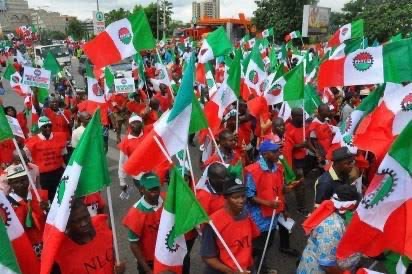
The Nigeria Labour Congress (NLC) and federal government workers have called for an immediate review of the national minimum wage, arguing that the current N70,000 is no longer sustainable.

They made the demand following the bold steps taken by several states across the country to increase the minimum wage of their workers above the N70,000 benchmark, in response to the prevailing economic realities.

The labour unions and workers who spoke to the News Agency of Nigeria, NAN, in separate interviews, contended that in the face of galloping inflation, rising costs of food, transportation, housing, and other essential services, the N70,000 minimum wage could no longer sustain them.

It would be recalled that President Bola Tinubu signed the new National Minimum Wage Bill into law in July 2024, raising the minimum wage from N30,000 to N70,000.

The amended law applies to the entire country, including the federal government, states, local governments, and the private sector.

However, on August 27, 2025, Imo increased the minimum wage from N70,000 to N104,000, along with corresponding increases in the entire salary structure for the state’s civil servants.

The state Governor, Hope Uzodinma, had said that the salary review, arrived at during a meeting with organised labour, was part of efforts to improve the welfare of workers.

Before the bold and applauded step by Uzodinma, some other states had implemented higher minimum wages for their workers.

On October 16, 2024, Governor Babajide Sanwo-Olu of Lagos State announced a minimum wage increase to N85,000, with a promise to further raise it to N100,000 in 2025.

Rivers State equally approved N85,000 minimum wage on October 18, 2024, while Bayelsa, Niger, Enugu, and Akwa Ibom states approved N80,000 for their workers. Ogun and Delta states are implementing N77,000 minimum wage, Benue and Osun states raised the wage to N75,000, while Ondo State pegged its own at N73,000.

Acting General Secretary of the NLC, Mr. Benson Upah, told NAN on Sunday in Abuja that inflation has eroded the value of the N70,000 minimum wage, leaving many workers unable to meet basic needs.

“The truth is that N70,000 is not sustainable under the present economic situation.

“Workers are under immense pressure, and unless the government responds quickly, the crisis of survival will only worsen.

“We have since engaged the Federal Government on this matter at different times and fora,” he said.

Categories
News

FG Predicts Heavy Rain, Flood In 14 States (See Full List)

The federal government has cautioned that several communities across fourteen states are at risk of flooding due to heavy rainfall.

The warning was made known in a statement on Thursday by the National Flood Early Warning Centre (FEWS Centre) of the Federal Ministry of Environment.

The statement warned that the heavy rainfall could trigger flooding in 14 states between September 4 and 8, 2025.

The statement, which was signed by the Director of Erosion, Flood, and Coastal Zone Management Department of the Ministry, Usman Abdullahi Bokani, advised relevant stakeholders to be on alert.

The states and localities expected to experience heavy rainfall that could lead to flooding include: Ebonyi (Afikpo), Cross River (Edor, Ikom, Itigidi, Akpap), Kano (Gwarzo, Karaye), Zamfara (Anka, Gummi, Kaura Namoda, Maradun, Shinkafi, Bukuyum), Taraba (Dampar, Duchi, Garkowa, Gassol, Gembu, Gun Gun Bodel, Kambari, Mayo Ranewo, Mutum Biyu, Bandawa, Ngaruwa), Abia (Eziama, Umuahia) and Yobe (Geidam, Kanama, Potiskum).

Others are Plateau (Langtang, Shendam, Wase), Borno (Ngala), Imo (Okigwe, Otoko), Niger (Sarki Pawa), Sokoto (Sokoto, Wamakko, Isa, Shagari, Makira), Kaduna (Kafanchan), and Akwa Ibom (Oron).

The Ministry also requested feedback from “relevant stakeholders and state government representatives” on major developments.

In other news, the Governors of the North-Eastern states of Nigeria have raised alarm over what they described as imminent humanitarian and economic challenges facing the region, including the threat of flooding and a possible food crisis.

The warning came in a statement issued at the end of the 12th meeting of the North-East Governors’ Forum held on Saturday in Jalingo, Taraba State.

Chairman of the Forum and Governor of Borno State, Babagana Zulum, said credible climate forecasts signalled that the subregion could face heavy flooding in the coming months.

Categories
News

ASUU Won’t Go On Strike – FG

The Federal Government has assured it will not allow the Academic Staff Union of Universities (ASUU) go on strike and disrupt academic activities.
The assurance was given by the Minister of Education, Olatunji Alausa.
Speaking with journalists on the sidelines of the Gender Inclusion Summit organised by the Policy Innovation Centre in Abuja on Wednesday, Alausa said the government was engaging ASUU and other trade unions with “mutual respect.”
He stated, “I don’t want to come on TV to start talking about private conversations with them, but what I can assure you is that ASUU will not go on strike; we will keep our children in school. This is a responsible government, and we will ensure that our children stay in school.”
ASUU has been in negotiations with the Federal Government over the non-implementation of the 2009 FGN-ASUU Agreement, which covers sustainable university funding, revitalisation of institutions, outstanding salary arrears, stagnated promotions, unremitted third-party deductions, and alleged victimisation of members in some universities.
Alausa maintained that the government was committed to addressing the issues without resorting to brinkmanship.
He said, “We are engaging; I told you we will deal with ASUU and other trade unions with the highest level of mutual respect. We will continue to talk to them.”
The minister also announced major reforms in the examination system, revealing that both the West African Examinations Council (WAEC) and the National Examinations Council (NECO) will gradually migrate to computer-based testing (CBT).
According to him, the shift to CBT is aimed at curbing examination malpractices and raising educational standards.
He further stated, “We believe that computer-based testing is one of the starting points to reduce examination malpractices in our country. You disincentivise the hardworking students when you allow cheating. That is why we have moved quickly to implement CBT in WAEC and NECO.”
Alausa disclosed that the November WAEC exams will commence with computer-based objective questions, while essay sections will remain paper-based. By 2026, however, all components, including essays, will be fully computer-based.
He added, “By next year, both the objectives and the essays will all be CBT. As you do this, you’ll get the kids to study more, their cognition will get better, and the quality of their preparation for exams will improve.”
Categories
News

FG Unveils New Curriculum for JSS, SS Students

The Federal Government has launched a new school curriculum for Junior Secondary School and Senior Secondary School students.
This is according to the Special Assistant to the President on Social Media, Dada Olusegun who shared the full list of subjects in the newly introduced school curriculum on Wednesday.
In a post on his X handle, Olusegun displayed an unsigned and unmarked image said to contain the subjects.
 
“The new curriculum for Nigerian Schools which will commence from the next session in September 2025 has been released,” he said.
The curriculum, which was unveiled by the Federal Government on Sunday, introduces compulsory digital literacy and basic entrepreneurship at the JSS level, while programming, artificial intelligence, and new languages feature prominently at the SSS level.
Below is the full list of subjects for JSS and SSS as shared:
 
JUNIOR SECONDARY (JSS 1–3)
Mathematics & Measurement: Numbers, fractions, decimals, percentages, ratios, proportions, rates, geometry (angles, area, volume), algebra, statistics, graphs, measurement (km, m, cm, g, kg, ml, °C, time zones).
English Language: Essay writing (narrative, descriptive), advanced grammar (clauses, idioms), comprehension, vocabulary, oral (debates, speeches, drama).
Integrated Science: Physics (motion, forces, energy), chemistry (matter, mixtures, reactions), biology (cells, reproduction, ecology), earth science (climate, resources), technology, lab safety.
Digital Literacy & Coding: Word, Excel, PowerPoint, internet research, coding (Python basics, Scratch advanced), robotics (basic kits).
Social Studies: Nigerian and African history, geography, civics, economy (trade, money, entrepreneurship basics), global issues.
Languages: Advanced mother tongue, conversational fluency in foreign language (French/Arabic).
Creative Arts: Drawing, painting, crafts, drama, theatre, film basics, music.
Physical & Health Education: Sports, fitness, nutrition, reproductive health, first aid, drug abuse awareness.
SENIOR SECONDARY (SS 1–3)
Mathematics & Advanced Applications: Algebra, trigonometry, calculus basics, probability, statistics, financial maths, applied maths.
English & Communication: Advanced essays, academic writing, literary analysis, world literature, research skills, public speaking, journalism, fact-checking.
Sciences: Physics (mechanics, waves, electricity, nuclear physics), chemistry (organic, inorganic, industrial, analytical), biology (genetics, ecology, biotechnology), environmental science.
Technology & Innovation: Programming (Python, JavaScript, HTML/CSS), data science basics, AI & robotics, digital entrepreneurship, cybersecurity.
Social Sciences: Government & law, economics (micro, macro, trade), history (Africa, world revolutions), philosophy & ethics, entrepreneurship.
Languages: Advanced mother tongue literature, fluency in international language (French/Arabic/Chinese optional).
Creative Arts & Innovation: Fine arts, music, drama, film/media production.
Physical & Health Education: Advanced sports, mental health, first aid & CPR, leadership.
Research & Project Work: Final-year project, data collection, analysis, presentation & defense.
Categories
News

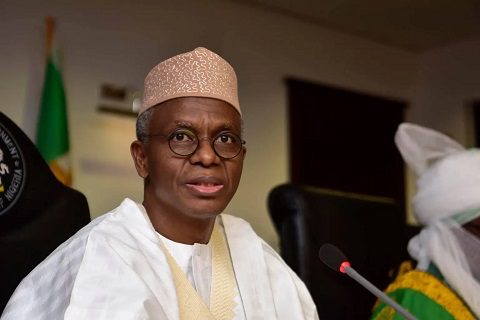
FG Paying Bandits, Empowering Them – El-Rufai Cries Out

Former Kaduna State governor, Nasir El-Rufai, has made a damning allegation against the federal government.
According to him, FG is paying bandits in Nigeria.
He said the policy of negotiating and compensating armed groups was a national directive championed by the Office of the National Security Adviser.
Speaking during an appearance on Channels Television, the former governor argued that the best way to handle bandits is to kill them and not negotiate.
He said, “What I will not do is to pay bandits. They are paying bandits. They are empowering bandits. This is what this government has done. We have the evidence. They are paying bandits. They are empowering bandits.
 
“It’s a national policy driven by the Office of the National Security Adviser, and Kaduna is part of it. Many states are objecting to that. But that is the policy now.”
El-Rufai maintained that dialogue with terrorists is dangerous.
“My position has always been that the only repentant bandit is a dead one. Let’s kill them all. Let’s wipe them. Let’s bomb them until they are reduced to nothing. And then the 5% that still want to be rehabilitated can be rehabilitated,” he declared.
He argued that the so-called non-kinetic strategy only strengthens criminal groups.
“You do not negotiate from a position of weakness. You don’t empower your enemy. You don’t give him money to go on and buy more sophisticated weapons. That’s why the security problem has not gone away. It will not go away. As long as this policy continues,” he added.
The former governor also cited intelligence and media reports to back his claims.
“Just last week, SBM published a report that showed that the security situation in Kaduna and Zamfara has actually deteriorated under this government’s watch. A week earlier or two weeks earlier, Sahara Reporters published another credible report that actually, insecurity has been increasing. What the government has been doing both at the national and state levels is buying the media from reporting it,” he said.
Categories
News

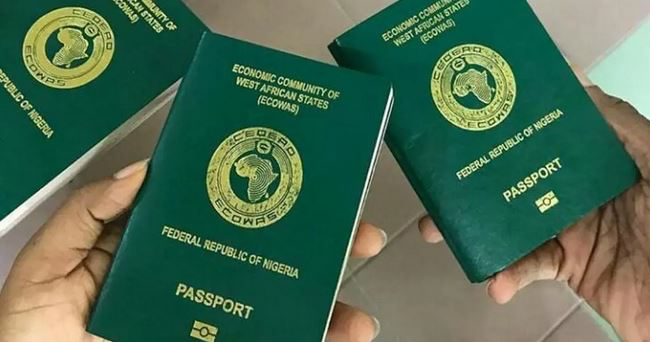
FG Defends Passport Price Hike To N100,000, N200,000

The Federal Government on Thursday justified the recent increase in Nigerian passport fees to ₦100,000 and ₦200,000, stating that the adjustment is aimed at sustaining service quality, curbing corruption, and ensuring timely issuance of travel documents.

The Nigeria Immigration Service, in a statement signed by its Public Relations Officer, ACI AS Akinlabi, on Thursday, announced that from September 1, 2025, applications made within Nigeria will attract new fees of N100,000 for the 32-page, five-year validity passport and N200,000 for the 64-page, 10-year validity passport.

“The review which only affect Passport Application fees made in Nigeria, now set a new fee thresholds for 32-page with five-year validity at N100,000 and 64-page with 10-year validity at N200,000,”
the statement read.

The NIS, however, said Nigerians in the diaspora will continue to pay $150 for the 32-page, five-year passport and $230 for the 64-page, 10-year passport.

It explained that the adjustment was aimed at maintaining the integrity of the document while making issuance processes more efficient.

The increase comes barely a year after the Federal Government approved an earlier adjustment in August 2024, which raised the 32-page, five-year booklet from N35,000 to N50,000, and the 64-page, 10-year booklet from N70,000 to N100,000.

At the time, the NIS said the hike was necessary to sustain the quality of the passport and improve service delivery.

On Thursday, the Minister of Interior, Dr. Olubunmi Tunji-Ojo, defended the new hike.

Speaking in Abuja during the ministry’s mid-tenure performance retreat, Tunji-Ojo said the hike would ensure timely delivery of passport and eliminate corruption,

He said, “Our target is very clear: within one week of enrolment, every Nigerian should have their passport in hand. Not just delivering quickly, but delivering quality passports that reflect our integrity as a nation,” he said.

He noted that the new system was designed to eliminate long delays and extortion that once forced citizens to wait up to seven months or pay as much as N200,000 to fast-track processing.

“The system that we inherited that had six months backlog which we were able to clear in two and a half weeks. Nigerians will apply for passports and wait endlessly, or be asked to pay hundreds of thousands of naira.

“My own daughter had that bad experience. Even when I was chairman of the House Committee on NDDC, my daughter wanted passport, it was a problem. I had to pay hundreds of thousands to be able to get a passport for my daughter, a 12-year-old girl. That era is over,” Tunji-Ojo said.

The minister disclosed that the centralised personalisation centre, the largest in Africa, would ensure faster processing and tighter security.

“With this facility, we can print five times more passports than we currently need. Once you enrol, it doesn’t take us more than 24 hours to vet. Printing capacity is no longer our problem,”
he explained.

As part of the reforms, Tunji-Ojo announced that Passport Control Officers will no longer have the power to approve or delay applications.

“Some PCOs had so much power that they could decide not to approve or not to print a passport until they were settled. That abuse of power ends now,”
he declared.

According to him, centralising the approval process would curb corruption and restore credibility to Nigeria’s travel documents.

“We realised that the best way to cut corruption is to remove human contact to the barest minimum. Passport approval will no longer rest with PCOs. My responsibility is not for them to like me — it is to deliver efficiency. Let Nigerians be happy,”
he said.

He added that the reforms will also protect the integrity of Nigeria’s passport.

“My responsibility is not just to make passports available, but to ensure that anybody carrying it is a Nigerian. If you are not a Nigerian, you cannot carry it. It’s about our national integrity.”

Citing past abuses, he recalled how foreigners once procured Nigerian passports illegally.

“In one incident, a Ugandan woman carrying a Nigerian passport was arrested at Lagos Airport after paying $1,000 to procure it. That cannot continue. Our passport must remain a true symbol of Nigerian identity,”
the minister stressed.