Categories
News

Ozoro S*xual Assault: Nigerian Govt Orders Prosecution Of Culprits

The Federal Government of Nigeria has ordered security agencies to apprehend and prosecute suspects connected to alleged s*xual assaults associated with a local festival in Ozoro.

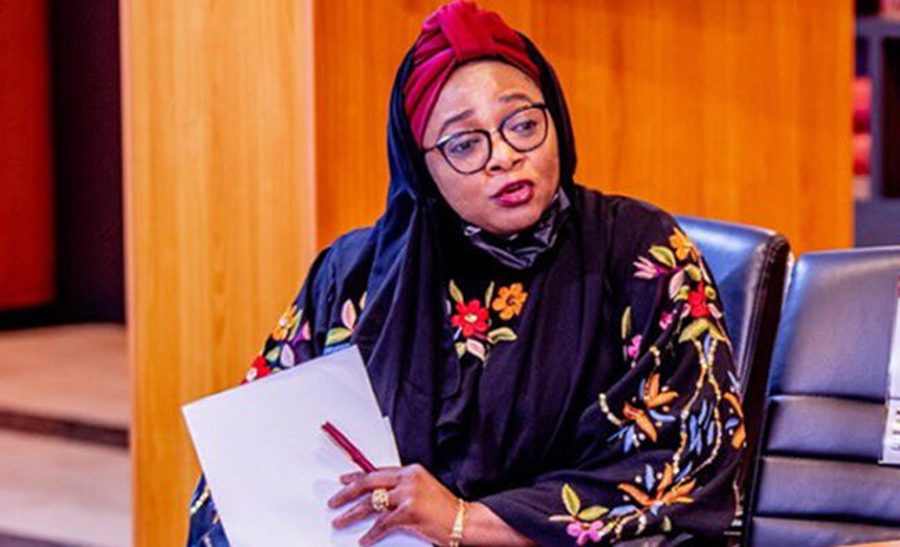
The Minister of Women Affairs and Social Development, Imaan Sulaiman-Ibrahim, issued the directive in a statement released on Friday in Abuja by the ministry’s Head of Press and Public Relations, Ahmed Danbazau.

The directive follows the circulation of a viral video early Friday, which captured incidents of s*xual assault during the Alue-Do Festival, a traditional event often referred to as a “Festival of Fertility” in the Ozoro Kingdom.

Expressing deep concern, the minister condemned reports that women were subjected to harassment and s*xual violence during the activities in Isoko North Local Government Area.

She said, “I am deeply concerned by the disturbing reports and viral footage alleging that women were subjected to s*xual assault and harassment during the Alue-Do Festival in Ozoro.”

While commending the swift response of the Delta State Police Command, she called for a transparent, thorough, and expedited investigation.

“I commend the prompt action of the Delta State Police Command, but I urge that the investigation be transparent, thorough, and accelerated to ensure that all persons implicated are identified and brought to justice without delay,” she stated.

Describing the incidents as disturbing and unacceptable, Sulaiman-Ibrahim stressed that such acts violate human dignity, public safety, and the rule of law.

“These incidents are disturbing, unacceptable, and a clear violation of human dignity, public safety, and the rule of law,” she said.

She emphasised that no cultural justification can excuse such acts.

“No cultural or traditional practice can justify or excuse s*xual violence in any form. S*xual assault is a serious criminal offence, and all allegations must be thoroughly investigated, with perpetrators held fully accountable under the law,” the minister added.

Reaffirming the Federal Government’s commitment to protecting women and girls, she noted:

“We remain committed to prioritising the safety, dignity, and protection of women and girls across Nigeria.”

She added that the ministry would collaborate with the Delta State Ministry of Women Affairs to support victims.

“We will strengthen collaboration to ensure victims receive immediate psychosocial support, medical attention, and legal assistance,” she said.

The minister also stressed the need to engage community leaders to prevent a recurrence.

“We will continue to engage traditional leaders and community stakeholders to address harmful norms and prevent a recurrence of such incidents,” she added.

The ministry further urged the public to cooperate with law enforcement authorities to ensure justice is served and similar incidents are prevented.

Categories
News

War: Federal Govt Begins Evacuation Of Nigerians From Iran

The Federal Government has begun evacuating Nigerians who wish to leave Iran, escorting them safely across the Armenian border as tensions continue to rise in the Middle East.

The development was disclosed on Tuesday by the Chairman and Chief Executive Officer of the Nigerians in Diaspora Commission (NiDCOM), Abike Dabiri-Erewa, in a post shared on her X handle.

According to her, officials of the Nigerian Embassy in Tehran are coordinating the evacuation process and assisting Nigerians willing to depart the country.

The evacuees are being escorted to the Armenian border where arrangements have been made to facilitate their safe passage.

The evacuation comes amid growing concerns over the security situation in the region following a series of coordinated military strikes on Iran by the United States and Israel on February 28.

The strikes reportedly triggered retaliatory missile and drone attacks across parts of the Middle East, raising fears of a broader regional conflict.

Despite the rising tension, Dabiri-Erewa reassured that no Nigerian in Iran has been affected by the ongoing hostilities.

She also noted that embassy officials remain stationed at the border to receive and assist Nigerians who decide to leave the country.

“Willing Nigerians being escorted across the Armenian border by officials of the Nigerian embassy in Iran for safe passage. No Nigerian in Iran has been affected by the war as officials remain at the border to receive all who want to leave,”
she wrote.

This comes due to the ongoing military strikes between U.S, Israel and Iran.

Categories
News

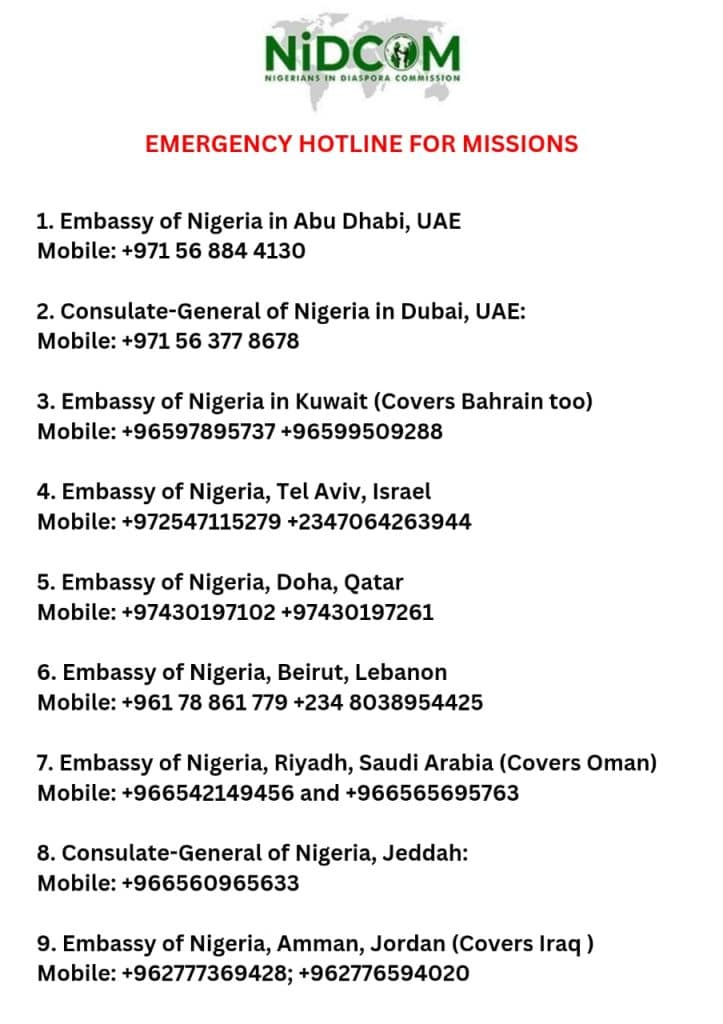
Iran War: FG Releases Emergency Contacts For Nigerians In Middle East (Full List)

The Federal Government has issued emergency contact details for Nigerian diplomatic missions across the Middle East to support citizens impacted by the escalating conflict in the region.

The advisory was issued in Abuja by the Federal Ministry of Foreign Affairs Nigeria and signed by its spokesperson, Kimiebi Imomotimi Ebienfa.

According to the ministry, the emergency contacts were provided to enable Nigerians living in or travelling across the Middle East to quickly reach diplomatic missions for assistance as tensions escalate in the conflict involving Iran, Israel, and the United States.

The ministry explained that the emergency contact list covers Nigerian diplomatic missions in 10 countries across the Middle East affected by the ongoing hostilities.

It urged Nigerians in the region to maintain communication with the nearest Nigerian embassy or consulate.

“Further to established communication channels publicised by the various Nigerian missions in the Middle East region, Nigerian citizens affected by the ongoing crisis should contact the following mobile numbers in case of emergency and also ensure that they are registered with the respective embassy or consulate in their country of residence,” the statement said.

The ministry listed the following emergency numbers for Nigerian diplomatic missions in the region:

  • Embassy of Nigeria, Tehran (Iran): +98 937 685 1897; +98 933 951 5348; +98 930 972 9965; +234 906 768 4063
  • Embassy of Nigeria, Tel Aviv (Israel): +972 547 115279; +234 706 4263944
  • Embassy of Nigeria, Abu Dhabi (UAE): +971 56 884 4130
  • Consulate-General, Dubai (UAE): +971 56 377 8678
  • Embassy of Nigeria, Kuwait (covers Bahrain): +965 9789 5737; +965 9950 9288
  • Embassy of Nigeria, Doha (Qatar): +974 3019 7102; +974 3019 7261
  • Embassy of Nigeria, Beirut (Lebanon): +961 78 861 779; +234 803 8954425
  • Embassy of Nigeria, Riyadh (Saudi Arabia): +966 542149456; +966 565695763
  • Consulate-General, Jeddah (Saudi Arabia): +966 56 096 5633
  • Embassy of Nigeria, Amman (Jordan – covers Iraq): +962 777 369428; +962 776 594020

Authorities advised Nigerians to register with their respective embassies to facilitate communication and emergency support.

The government had earlier issued a security advisory to Nigerians living in or travelling across Iran and other Gulf countries following the escalation of the regional conflict.

According to the ministry, diplomatic missions in Qatar, Bahrain, Kuwait, the United Arab Emirates and Saudi Arabia have been placed on high alert to provide consular assistance where necessary.

Categories
News

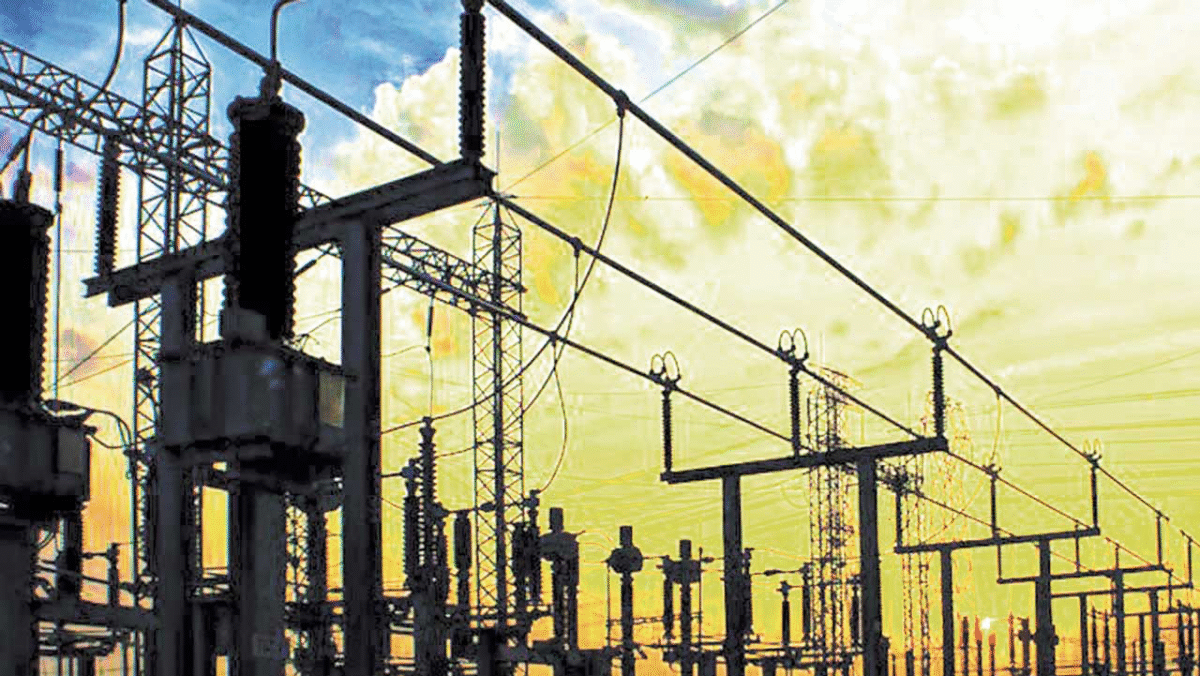
Nigerian Govt To Share Electricity Subsidy Burden With States, LGs

The Federal Government has announced plans to end its sole responsibility for electricity subsidies, unveiling a new framework that will see the costs shared among the federal, state, and local governments starting in 2026.

The Director-General of the Budget Office of the Federation, Tanimu Yakubu, disclosed this on Monday in Abuja during a training and sensitisation workshop for ministries, departments and agencies, MDAs, on the 2026 post-budget preparation process, conducted using the Government Integrated Financial Management Information System, GIFMIS, Budget Preparation Sub-System.

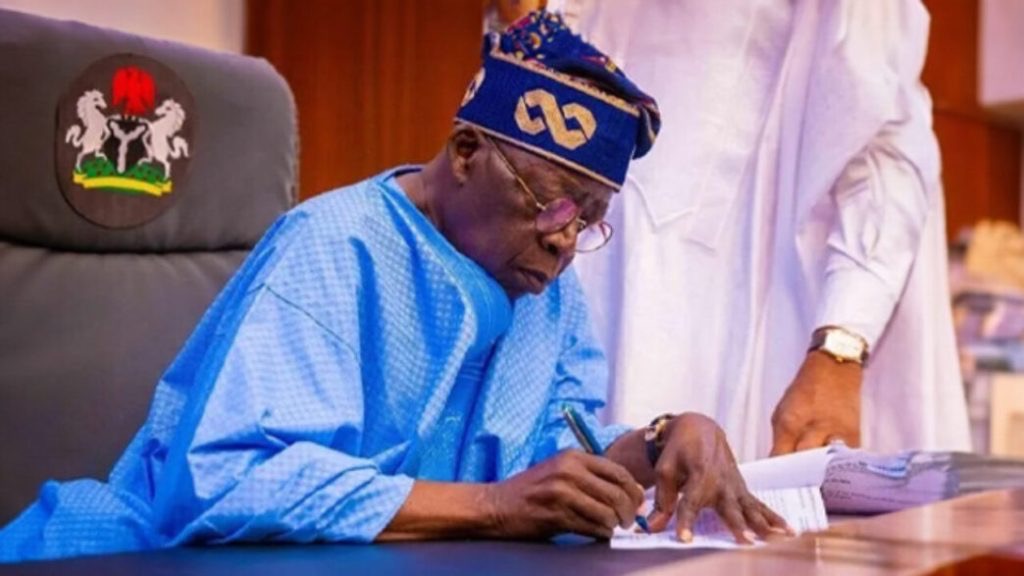
Yakubu said President Bola Tinubu had directed that electricity subsidies be clearly identified, properly monitored and equitably distributed across all tiers of government, warning that the existing arrangement had created hidden liabilities and repeated crises within the power sector.

“If we want a stable power sector, we must pay for the choices we make. When tariffs are held below cost, a gap is created. That gap is a subsidy. And a subsidy is a bill,” Yakubu said.

He explained that from 2026, electricity subsidies would no longer be treated as an unlimited federal responsibility, particularly where policy decisions and political benefits are jointly shared by multiple levels of government.

“In 2026, we will stop pretending that this bill can be left to the Federal Government alone, especially where the policy choice or the political benefit is shared across tiers of government,” he said.

According to the Budget Office chief, the President has instructed that existing laws governing the electricity sector be fully applied to ensure that subsidy-sharing arrangements are transparent, practical and enforceable.

“This means subsidy costs must be explicit, tracked and funded, so they do not resurface as arrears, liquidity shortfalls or hidden market liabilities.

“If any tier of government chooses affordability interventions, the funding responsibilities must be clear, agreed and enforceable,” Yakubu said.

He stressed that the policy was not punitive but designed to align incentives across government and promote efficiency within the power market.

“This is not punishment. It is alignment,” he said, adding: “When everyone carries a fair share of the cost, everyone also has an incentive to support cost-reflective efficiency, targeted protection for the vulnerable, and a power market that can actually deliver.”

Yakubu urged MDAs to clearly reflect subsidy-related obligations in their 2026 budget submissions and avoid transferring unfunded liabilities into the electricity value chain.

Beyond electricity subsidies, he said the 2026 Budget would mark a decisive shift away from rollover budgeting and fragmented project listings, which he noted had weakened implementation and accountability over the years.

“The 2026 Budget corrects this. It is built as one coherent implementation framework,” he said. “The approach is to consolidate commitments into a single, visible pipeline and manage them as a disciplined programme of delivery.”

Describing the model as a “single-train” framework, Yakubu said it would enhance prioritisation, strengthen control mechanisms and eliminate duplication across government.

“One plan. One pipeline. One execution logic,”he said. “It allows the government to know, at any point, what we have committed to deliver.”

He also disclosed that President Tinubu had ordered a review of the Fiscal Responsibility framework to make fiscal rules more dynamic and enforceable rather than discarding them entirely.

“Fiscal rules are the guardrails of the government,” Yakubu said. “Without guardrails, spending becomes impulsive, debt becomes casual, and the budget becomes a statement of intent rather than a tool of delivery.”

According to him, the review will introduce clearer fiscal anchors, better-defined escape clauses for genuine shocks, and a credible return-to-compliance pathway, alongside stronger reporting on contingent liabilities.

For MDAs, he said the changes would significantly alter how proposals are evaluated.

“You will not only be asked what you want to spend. You will be asked how it fits the fiscal rules, how it affects sustainability, and what measurable results it will deliver,” he said.

Yakubu also revealed that the 2026 Budget would deepen the transition from long project lists to structured project financing, insisting that capital proposals must be both delivery-ready and, where applicable, finance-ready.

“A long list of projects is not a development strategy,” he said. “What citizens feel is delivery, completed roads, reliable power, functional schools and working hospitals.”

He explained that projects submitted for funding must demonstrate readiness, clear sequencing, defined financing strategies, measurable outputs and realistic timelines, noting that fewer but well-funded projects would yield greater impact.

Yakubu described the GIFMIS Budget Preparation Sub-System as central to restoring credibility to the budgeting process, calling it “the operating system for credible budgeting” that enhances transparency and traceability from submission to execution.

“The success of the Renewed Hope Agenda is shared,” he said. “The Budget Office will coordinate and enforce standards, but delivery depends on every MDA. Nigerians expect results, and through a credible 2026 Budget, we must deliver.”

Categories
News

A Shame Of A Nation – How Nigerians Reacted After National Grid Collapsed

Nigerians have criticised the Federal Government over what they described as the embarrassing and frequent collapse of the national power grid.

Earlier, 626BLAZE reported that Nigeria’s national electricity grid suffered a total collapse on Friday, plunging parts of the country into blackout in the first such incident recorded in 2026.

According to the figures from the Nigerian Independent System Operator, NISO, power generation fell to zero megawatts, while electricity supply to all 11 distribution companies dropped completely by about 1 p.m.

NISO disclosed that the affected distribution firms include Benin, Eko, Enugu, Ikeja, Jos, Kaduna, Kano, Port Harcourt, Ibadan, Abuja and Yola, all of which recorded zero load allocation at the time of the collapse.

A cross-section of Nigerians, who spoke to Daily Post on the development, said the regular collapse of the national grid is a national embarrassment.

Paul Igbashangev said it was quite disheartening that Nigeria had continued to experience this very often.


He said: “It’s quite unfortunate that our country at this level is always talking of national grid collapsing. The frequent grid collapse is a concern, and we are hoping the authorities will find a lasting solution soon. It is affecting businesses and households alike.”


Another Nigerian, Iwuchukwu Ike, said nothing is working under this administration, lamenting that since coming on board of the administration, it has been from one drama to another.

“The national grid has collapsed again? It’s quite painful that this thing is collapsing on every eke market day.

“I could remember how Peter Obi went to Egypt to see how they’re getting it right. APC supporters mocked him. Now see us see Disco,” he said.

On his part, Ngozi Ikechukwu, said it is too much to bear the current economic hardship.

“See what these people who promised us heaven on earth are doing to us. How can we be battling with national grid collapse when the year has just started?” She queried.

Also speaking, Mustapha Audu said that the Federal Government should adopt the Compress Natural Gas, CNG, to put an end to the constant collapse of the national grid.

“I think what the Federal Government should do is to get a CNG electricity conversion solution to this national grid collapse. A country of 200 million people having a nationwide blackout without a natural disaster like a hurricane? A shame of a nation,” he said.

According to another respondent, Adamu Yusuf, some people are playing politics with the national grid for their selfish purposes.

He said: “There is nothing serious about the frequent collapse of the national grid. Some group of persons are just playing politics with it to make money

“National grid is something that is supposed to take years before collapsing, but it has become business as usual and nobody is asking them.”

On his part, Adah Joseph said the regular collapse of the national grid affects the national economy, causing a decline in the country’s Gross Domestic Product, GDP.

“It’s rather unfortunate that the devastating effects of the constant collapse of the national grid has continued.

“This also affects individual businesses of different kinds, especially food related businesses that need constant power supply for the use of refrigerators.

“And as it also affects Nigerians in different aspects, including health facilities.

“It is high time, therefore, that the government included our power sector amongst topmost  priorities to end this embarrassment,” he posited.

In the same vein, Augustine Oyiwona urged the government to invest massively in new transmission lines and substations, stressing that most of them are more than 40 to 50 years

He said: “Manual systems should be replaced with a modern real time grid monitoring system. Transmission Company of Nigeria,TCN, should be run like a technical utility and not a ministry desk.

“As passed by the National Assembly and signed into law, the state governments should legally be made to generate, transmit and distribute power.”

According to another respondent, Paul Igbadi, “To me, it is like total negligence on the side of our government.”

Categories
News

FG Opens Applications For 2026 Overseas Scholarships

The Federal Government has announced the opening of applications for the 2026 Petroleum Technology Development Fund (PTDF) Overseas Scholarship Scheme, offering Nigerian postgraduate students the opportunity to study in the United Kingdom, Germany, France, and Malaysia.

This was confirmed in a post shared via X( Formerly Twitter) by the Office of the Special Adviser to the President on Social Media, Dada Olusegun, on Monday.

“FG has announced the commencement of applications for 2026 Petroleum Technology Development Fund (PTDF) Scholarships overseas,” the post said.

According to the statement on scholarship board website, the scheme targets MSc and PhD candidates in disciplines relevant to the oil and gas sector, offering benefits such as tuition, return flight tickets, accommodation and living allowances, health insurance, and bench fees where applicable.

The PTDF statement said, “The 2026 Overseas MSc and PhD Scholarships provide access to world-class training, research facilities, and global expertise, while developing indigenous capacity in Nigeria’s oil and gas sector.”

For PhD applicants in the United Kingdom, scholarships will follow a split-site arrangement, allowing research to be conducted between the College of Petroleum and Energy Studies, Kaduna (CPESK), and selected UK partner universities including Robert Gordon University, University of Strathclyde, and University of Portsmouth.

The agency emphasised that the scholarships are highly competitive.

“Only candidates who demonstrate outstanding merit and suitability will be considered,” the statement said, adding that applicants will be evaluated based on academic credentials, research proposals, membership in professional bodies, and the relevance of their studies to the oil and gas industry.

Requirements for MSc applicants include a minimum of Second Class Lower (2.2) in a first degree (or 2.1), completion of the NYSC programme, computer literacy, and five O’Level credits including English Language and Mathematics. PhD applicants must also submit a research proposal of up to five pages outlining objectives, methodology, and data collection approaches.

“All applicants must ensure their National Identity Number (NIN) is verified prior to application, and multiple applications or submission of falsified documents will result in automatic disqualification,” the PTDF statement added.

Interested candidates are advised to apply online at scholarship.ptdf.gov.ng for approved programmes at PTDF partner institutions. The closing date for applications is 27th February

Categories
News

FG Confirms US Airstrikes On Terrorists, Cites Intelligence Cooperation

The Federal Government has confirmed that Nigeria and the United States are engaged in ongoing security and intelligence cooperation following airstrikes on terrorist targets in the North West.

“This has led to precision hits on terrorist targets in Nigeria by air strikes in the North West.”

In a statement issued on Friday, the Ministry of Foreign Affairs, signed by spokesperson Kimiebi Ebienfa, said Nigerian authorities remain engaged in “structured security cooperation with international partners, including the United States of America,” to address terrorism and violent extremism in the country.

The ministry said the collaboration, which led to precision airstrikes on terrorist targets, involves intelligence sharing, strategic coordination and other forms of support in line with international law, respect for Nigeria’s sovereignty and shared security commitments.

“Nigeria reiterates that all counter-terrorism efforts are guided by the primacy of protecting civilian lives, safeguarding national unity, and upholding the rights and dignity of all citizens, irrespective of faith or ethnicity,”the statement said.

It added that terrorist violence, “whether directed at Christians, Muslims, or other communities, remains an affront to Nigeria’s values and to international peace and security.”

The statement followed comments by United States President Donald Trump, who said on Thursday that US forces had carried out deadly strikes against Islamic State terrorists in Northwestern Nigeria.

“Tonight, at my direction as Commander in Chief, the United States launched a powerful and deadly strike against ISIS Terrorist Scum in Northwest Nigeria, who have been targeting and viciously killing, primarily, innocent Christians,”
Trump wrote on his Truth Social platform.

He added, “The Department of War executed numerous perfect strikes, as only the United States is capable of doing.”

Trump warned that further attacks would follow if the killing of Christians continued, saying, “If they did not stop the slaughtering of Christians, there would be hell to pay, and tonight, there was.”

In a separate social media post, US Defence Secretary Pete Hegseth said Washington acted with Nigeria’s cooperation.

“Grateful for Nigerian government support & cooperation,”
Hegseth wrote, adding that the Department of War was “always ready.”

The Ministry of Foreign Affairs said Nigeria would continue to work with its partners through established diplomatic and security channels to weaken terrorist networks, disrupt their financing and logistics, and prevent cross-border threats.

The airstrikes came a day after a bomb attack on a mosque in Maiduguri, Borno State, killed five people and injured dozens in what authorities suspect was a suicide bombing.

Categories
News

BREAKING: Nigerian Govt, ASUU Finally Seal New Deal

The Academic Staff Union of Universities (ASUU) and the Federal Government have successfully concluded the long-awaited renegotiation of the 2009 FGN–ASUU Agreement, bringing an end to years of prolonged discussions and disputes over academic welfare and the funding of public universities.

The development was disclosed by ASUU in a statement shared on its official Facebook page on Wednesday.

The agreement is scheduled to take effect from January 1, 2026, and will be reviewed after three years.

ASUU announced that the new agreement was reached on December 23, 2025, following extensive negotiations between both parties.

“After years of delays, negotiations, and struggles, ASUU has officially reached a new agreement with the Federal Government on December 23, 2025, concluding the renegotiation of the 2009 FGN–ASUU Agreement,” ASUU said.

Under the agreement, academic staff in Nigerian public universities will receive a 40 per cent salary increase, while pension benefits have been significantly improved.

Professors are to earn pension equivalent to their annual salary upon retirement at the age of 70.

The agreement also introduces a new university funding model with dedicated allocations for research, libraries, laboratories, equipment and staff development.

In addition, a National Research Council is proposed to fund research activities with at least one per cent of Nigeria’s Gross Domestic Product.

Other provisions include stronger university autonomy and academic freedom, the election of academic leaders such as Deans and Provosts, with eligibility restricted to professors, and a commitment that no individual will be victimised for participating in past industrial actions.

Categories
News

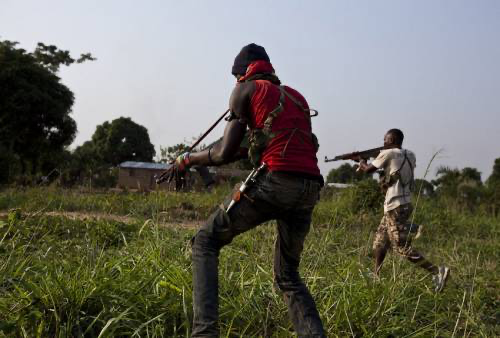
FG Declares Kidnappers And Bandits As Terrorists

The Federal Government has officially classified kidnappers and violent armed groups as terrorists, signaling a major escalation in Nigeria’s response to abductions, attacks on farmers, and community violence.

The announcement was made on Monday by the Minister of Information, Mohammed Idris, during the end-of-year press briefing in Abuja.

This move signals a shift from treating mass kidnappings and rural attacks as ordinary crimes to confronting them under full counterterrorism measures.

“Henceforth, any armed group or individual that kidnaps our children, attacks our farmers, and terrorises our communities is officially classified and will be dealt with as a terrorist.


“Now, the era of ambiguous nomenclature is over. If you terrorise our people, whether you are a group or you are an individual, you are a terrorist and will be classified as such. There is no name hiding under this again,”
the minister said.

He added that the policy would strengthen intelligence sharing and operational coordination across security agencies, allowing for faster and more decisive action.

The minister highlighted that improved inter-agency collaboration has already produced results, noting that in 2025, two of the most internationally wanted criminals were captured through coordinated operations.

In a bid to secure vulnerable rural areas, Idris also announced the deployment of trained and equipped forest guards, saying that these personnel will combine surveillance, local intelligence, and rapid-response capabilities to secure forests and remote locations often used as hideouts by criminal groups.


By classifying kidnappers as terrorists, the government is signalling zero tolerance for abductions and rural violence, while expanding the powers of security forces.

The forest guard initiative is expected to disrupt criminal supply routes, dismantle camps, and provide reassurance to farming communities affected by insecurity.

He noted the arrest of the ISWAP head residing in Nigeria, described as one of the most wanted terrorists on the African continent, who had a substantial bounty placed on him by the United States.

“The most internationally wanted criminals, the ISWAP head residing in Nigeria, has been captured through the coordination of all the security agencies and those also in the intelligence community.

“Don’t forget that Abu Barra was captured a few months ago, and he was also presented to the public by the National Security Advisor and other security chiefs.

“This is one of the most wanted terrorists on the African continent, and he was captured through the coordination of our security forces.

“Remember also, this was someone who had a large sum of money put on his head by even the Americans to capture him and bring him to justice.

“As we speak today, this gentleman, together with his chief of staff, is undergoing and having their day in court, and he is going to get justice that befits them,” he said.

Categories
News

No Changes To Tax Laws, Only One Version Exists – FG Insists

The Federal Government has maintained that there is only one genuine version of the newly enacted tax reform laws.

The Minister of Information and National Orientation, Mohammed Idris, stated this on Monday in Abuja at the end-of-year news conference.

Idris dismissed claims that the tax laws had been altered after being passed by the National Assembly, stressing that the version assented to by President Bola Tinubu remains intact.

He said the laws followed due legislative process, including consultations and debates at the National Assembly, before receiving presidential assent.

“The Federal Government is going ahead with the commencement of implementation, noting as changed,” Idris said.

The minister explained that concerns over alleged discrepancies between the version passed by lawmakers and the one gazetted had been raised at the National Assembly, adding that the executive would rely on the outcome of the legislature’s review.

“I think it is important for us to wait for the National Assembly to look at this again to tell us whether there were discrepancies or not,”
he said.

“This is, at this point, an affair of the National Assembly to which I have no jurisdiction, and I have no authority to speak about. As far as the government of Nigeria is concerned, there’s only one version of that tax document.”

The controversy followed claims by a lawmaker representing Kebbe/Tambuwal Federal Constituency in Sokoto State, Abdussamad Dasuki, who raised the alarm in the House of Representatives over alleged alterations to the tax reform laws.

Dasuki alleged that the version of the laws passed by the National Assembly differed from the one later gazetted and circulated by the Federal Government through the Ministry of Information.

PUNCH Online reports that the tax reform laws, scheduled to take effect on January 1, 2026, were recently signed into law by President Tinubu.

The bills, however, faced stiff opposition during legislative consideration, particularly from some northern lawmakers, amid concerns over their economic and regional implications.

The controversy deepened after Dasuki claimed that some provisions contained in the gazetted laws were neither debated nor approved by lawmakers.

The tax laws have also attracted criticism from prominent political figures, including former Vice President Atiku Abubakar and the 2023 Labour Party presidential candidate, Peter Obi, both of whom have called for the suspension of their implementation pending clarification of the disputed provisions.

Meanwhile, the Chairman of the Presidential Fiscal Policy and Tax Reforms Committee, Taiwo Oyedele, has also dismissed claims of secret alterations, warning of the consequences Nigerians could face if the new tax laws are not implemented from January 1.