Categories
News

BREAKING: Nigerian Filling Stations Reduce Fuel Price After 15% Import Duty Suspension

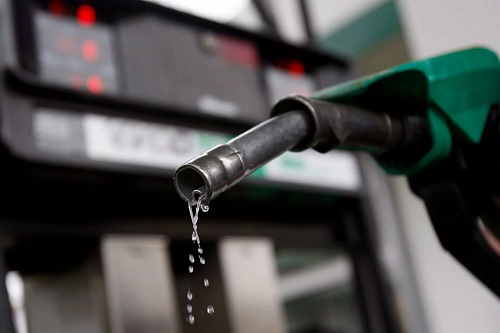
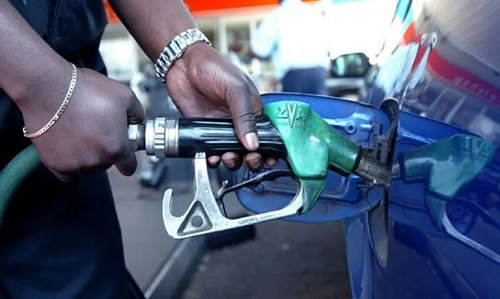
Nigerian filling stations in the Federal Capital Territory on Friday reduced the pump price of premium motor spirit following the federal government’s suspension of the 15% import duty on petrol and diesel.

Ranoil and Empire filling stations on Friday reduced petrol pump prices to N940 and N949 per litre, respectively, down from N955.

This means that the Nigerian filling stations’ fuel price drops by between N6 and N15 per litre.

The Spokesperson of Independent Petroleum Marketers Association of Nigeria, Chinedu Ukadike, linked the price drop to the Nigerian government suspension of its planned 15 percent import duty on petrol.

“Yes, petrol price will drop further,” he told Daily Post in an interview.

According to him, the anxiety associated with the planned 15 per cent import duty on petrol has been eased following the tariff suspension.

Recall that the Nigerian government announced the suspension of the planned 15 per cent tariff that would have given Dangote Refinery an edge in the country’s downstream sector with the potential to increase fuel prices.

Earlier this month, the Nigerian National Petroleum Company Limited had reduced its fuel pump price to 945 per litre in Abuja.

According to Daily Post, most filling stations are now selling fuel between N940 and N955 per litre in Abuja and its environs.

Meanwhile, the ex-depot price of petrol at Dangote Refinery stood at N856 per litre, and depot owners such as Aiteo (N854), NIPCO (N858) and Pinnacle (N858).
Categories
News

Nigerian Govt Suspends Implementation of 15% Petrol Import Duty

The Federal Government has announced the suspension of the implementation of a 15 per cent import duty on premium motor spirit and automotive gas oil.
This was announced on Thursday by the spokesperson of the Nigerian Midstream and Downstream Petroleum Regulatory Authority, NMDPRA, George Ene-Ita.
The country’s downstream oil sector regulator urged Nigerians to avoid panic buying of petrol and diesel, assuring the public of adequate supply nationwide.
 
“It should also be noted that the implementation of the 15 percent ad valorem import duty on imported premium motor spirit and diesel is no longer in view,” NMDPRA stated.
The statement added, “The Nigerian Midstream and Downstream Petroleum Regulatory Authority assures the general public that there is an adequate supply of petroleum products in the country, within the acceptable national sufficiency threshold during this peak demand period.

“There is a robust domestic supply of petroleum products (AGO, PMS, LPG, etc.) sourced from both local refineries and importation to ensure timely replenishment of stocks at storage depots and retail stations during this period.

 
“The Authority wishes to use this opportunity to advise against any hoarding, panic buying or non-market reflective escalation of prices of petroleum products.
 
“The Authority will continue to closely monitor the supply situation and take appropriate regulatory measures to prevent disruption of supply and distribution of petroleum products across the country, especially during this peak demand period.
 
“While appreciating the continued efforts of all stakeholders in the midstream and downstream value chain in ensuring a smooth and uninterrupted supply and distribution, the public is hereby assured of NMDPRA’s commitment to guarantee energy security.”
 
Recall that President Bola Ahmed Tinubu, late last month, approved the implementation of a 15 per cent import duty on petrol and diesel to encourage Dangote Refinery.
However, the decision has drawn mixed reactions from economists, stakeholders, and Nigerians.
While some believe it is a good move to encourage Dangote Refinery, others argue that it would further worsen hardship for Nigerians as petrol and diesel prices would rise.
Categories
News

Petrol Hike: Union Orders Colleges of Education Lecturers To Work Only Twice Weekly

Colleges of Education Academic Staff Union has directed lecturers to work only twice in a week.
The directive was given on Wednesday due to the recent increase in the price of petrol.
The Union said the order is effective unitl the government addresses the issues caused by the removal of subsidy which according to the union has caused untold hardship to its members.
The union in a press statement issued by its national president, Dr Sam Olugbeko noted that its members could no longer survive on the current minimum wage hence it has directed its members to only go to work twice weekly.
The statement reads, “The National leadership of our great Union in its extraordinary meeting held on Tuesday, 18th July 2023 had agreed to direct its members to go to work two days weekly until Federal Government yields to its demand of 200 percent increase in salary amidst the difficulty of members to get to work as a result of hike in the price of petrol.
“The implementation of the removal of fuel subsidy by the Federal Government two months ago raised the price of a litre of petrol by 250%. This worsened the inflationary rate on the cost of transportation, food, and other essential commodities and impoverished the Nigerian people. Workers, including staff of Colleges of Education, kept faith with the government and chose to endure the untold hardship thinking it would be only for a while as the government promised to roll out palliative measures including a significant increase in salaries. Alas! While our capabilities to sustain hope were already exhausted, the price of petrol rose further to N650 per litre. Now, the leadership of the Union has been inundated by members’ complaints that they could no longer go to work as a result of a hike in the price of petrol and the resultant high cost of transportation.
 
“Against this backdrop, it has become inevitable for the Union to direct members to go to work only two days weekly while an emergency NEC meeting shall be convened to ratify this decision and decide on the specific days of the week members are to go to work.
 
“The present salary of staff of Colleges of Education was approved in the year 2010 – 13 years ago! This means we have been on the same salary since 2010 while petrol prices rose intermittently from N65/N70 in 2010 to N650 in 2023 (tenfold increase). Our salary structure which is subject to renegotiation at 3-year intervals has remained static for 13 years, skipping four due renegotiations. It is ludicrous that the government has refused to return to the negotiation table on the welfare package for staff after the Union, prior to the removal of the fuel subsidy, had proposed a 200% increase in salary as against the government’s offer of a ridiculous 35% for Chief Lecturers and 23% for other cadres.”
Speaking on the way forward, the union called on the government to immediately seek lasting solutions to prevent crisis in colleges of education.
“We call on the FG to urgently do the needful because the inevitable action of the Union against this hardship will have devastating effects on the students as it will lead to a prolonged academic calendar – a semester of 16 weeks will become 32 weeks or more; while Teaching Practice exercise of 6 months will become 12 months.
 
“We call on His Excellency, President Bola Ahmed Tinubu to quickly address the issue of salary adjustment for staff of Colleges of Education. We believe in the capacity of the President to address this problem as he did when he was the Governor of Lagos State where he so generously increased the salaries of staff in the then Lagos State-owned Colleges of Education that they became the highest paid nationwide,” the union said.
Categories
News

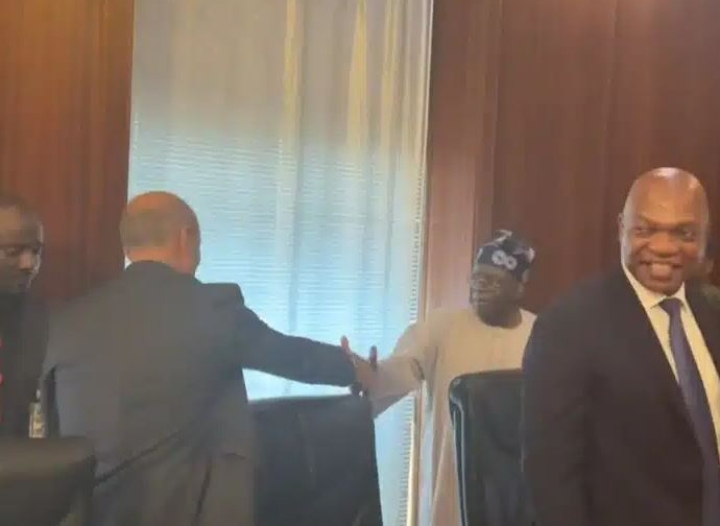
President Tinubu Receives Shell Petroleum Delegation

President Asiwaju Bola Tinubu received a delegation led by Ms Zoe Yunovic, the Global Upstream Director, Shell Petroleum Development Company at the State House, Abuja, on Monday.

Those among the Shell Petroleum Development Company delegation are Peter Costello, Osagie Okunbo, and Mar De Jong.

At the meeting from the side of the presidency include, Chief of Staff, Femi Gbajabiamila; Special Adviser on Energy to Tinubu, Ms Olu Verheijen; SA on Revenue matters to the President, Mr Zacchaeus Adedeji; SA on Media, Dele Alake; and the Group Managing Director of the Nigerian National Pretroleum Company Limited (NNPCL), Mele Kyari.