Categories
News

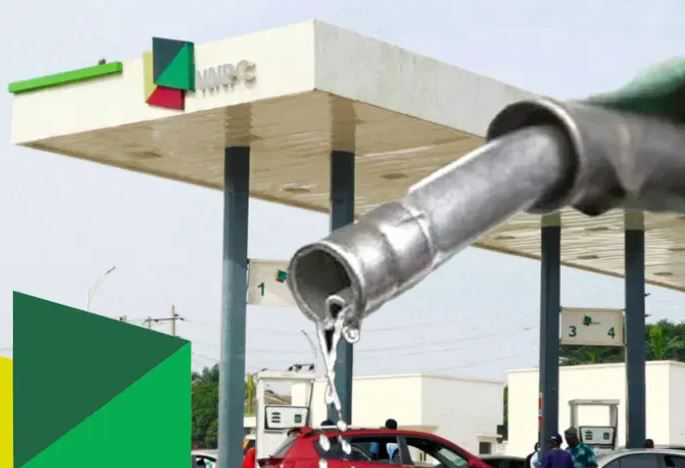
BREAKING: NNPCL Reduces Fuel Price By N80

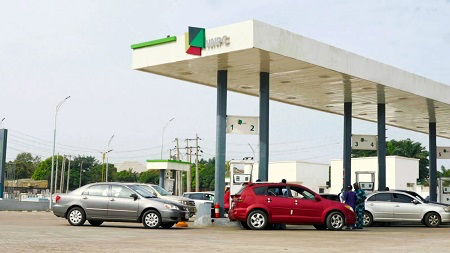
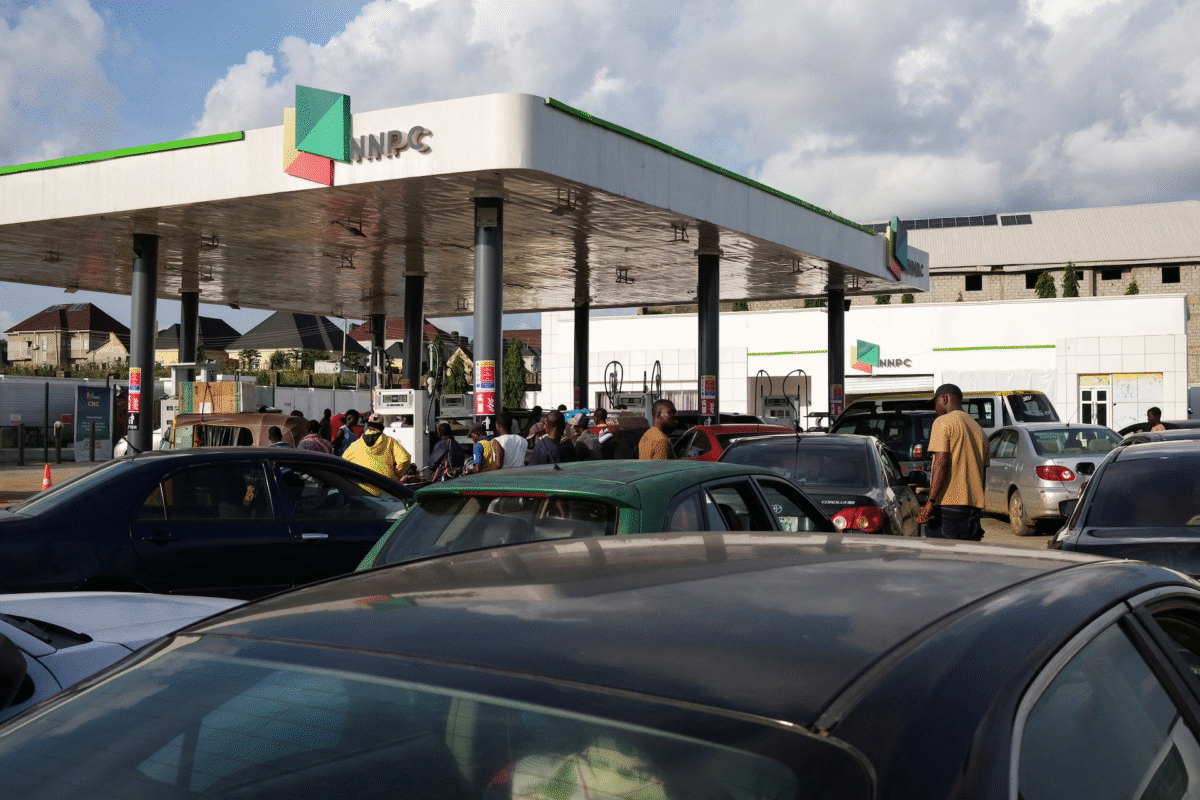
The Nigerian National Petroleum Company Limited (NNPCL) has lowered its petrol price for the third time in December 2025.

According to Daily Post, after a survey of filling stations in Abuja, it was observed on Thursday that NNPCL has reduced the petrol price to N835 per liter, down from N915.

This means that the state-owned oil firm adjusted its fuel price by N80.

The development comes as MRS, BOVAS, and AA Rano earlier reviewed their fuel pump price to between N739 and N865 per liter in the nation’s capital.

NNPCL and other filling stations’ price cuts come after Dangote Refinery and depot owners slashed their ex-depot price to between N699 and N800.

Recall NNPCL; other filling stations reduced fuel on December 4 and 10, 2025, respectively.

Categories
News

NNPCL, Other Nigerian Filling Stations Reduce Fuel Price

The Nigerian National Petroleum Company Limited (NNPCL) and other filling stations have announced a further reduction in the pump price of premium motor spirit (PMS).

According to Daily Post, it was observed that NNPCL retail outlets in parts of Abuja have adjusted their fuel price to N915 per liter, down from N920.

This means that the petrol price was reduced by N5 per liter when compared to N920 per liter.

It was also observed that MRS and BOVAS retail outlets in Abuja dropped fuel prices to N910 per liter from as high as N945 per liter.

Daily Post reports that other filling stations such as AYM Shafa, NIPCO, Optima, Mobil, Ranoil, and Empire dispense petrol between N920 and N937 per liter in Abuja.

The development comes as the ex-depot price of petrol at Dangote Refinery stood at N824.50 per liter, Eterna (N823), Aiteo (823), and BOVAS (N822).

This is not the first fuel price reduction by NNPCL and other Nigerian filling stations in recent days.

Recall NNPCL has adjusted its petrol pump price twice in the last two weeks by N30, down from N945 per liter.

Categories
News

BREAKING: NNPCL Reduces Fuel Price After Dangote Refinery, Depot Owners Cut Rates

The Nigerian National Petroleum Company Limited has lowered the pump price of premium motor spirit following a reduction in ex-depot prices by Dangote Refinery and other depot operators.

According to Daily Post, a correspondent who went round filling stations in Abuja on Thursday, found that the state-owned firm has slashed its fuel price to N930 per litre from N945.

The downward adjustment has been implemented in NNPCL retail outlets in Kubwa Expressway, Gwarimpa, Wuse Zone 4, Zone 6 and filling stations within Abuja and environs.

This means that NNPCL reduced its fuel retail price by N10 per litre.

It was also observed that other Nigerian filling stations, such as Ranoil in Gwarimpa, have reduced fuel pump prices by N5 to N935 per litre from N940.

Similarly, MRS and AP Ardova filling stations in Abuja are currently dispensing their petrol between N930 and N935.

The development comes as Dangote Refinery and depot owners such as Pinnacle and Aiteo dropped ex-depot prices by at least N10 to N846, N845, and N844 per litre, respectively, as of Thursday morning.

Earlier, the spokesperson of the Independent Petroleum Marketers Association of Nigeria, IPMAN, Chinedu Ukadike, told Daily Post that fuel prices may drop further as the ongoing petrol price war intensifies.

Categories
News

NNPCL Reduces Fuel Price As Dangote Refinery Supply Glitch Eases

The Nigerian National Petroleum Company Limited (NNPCL) on Saturday reduced the petrol pump price as supply challenges at the Dangote Refinery began to ease.

The state-owned oil firm adjusted the retail fuel price to N945 per litre, down from N955.

This means that NNPCL decreased its petrol price by N10 on Saturday.

The fresh price reduction has been implemented at NNPCL retail outlets in Gwarimpa and Wuse Zone 4.

Similarly, the Nigerian filling station in Abuja, Eterna, also recently reduced its pump price to N945 per litre.

This development follows improved fuel supply nationwide through the Dangote Refinery and petroleum product importers.

More than two weeks ago, a supply glitch at the Dangote Refinery led to a nationwide fuel price hike.

Recall that President Bola Ahmed Tinubu recently approved the implementation of a 15 per cent import tax on petrol and diesel, a move that may lead to increased fuel prices nationwide.

Categories
News

Dangote Announces Fresh Conditions For NNPCL To Increase Stake In $20bn Refinery

The President of Dangote Group, Aliko Dangote, has announced some fresh conditions for the Nigerian National Petroleum Company Limited, NNPCL, to expand its stake in his 650,000-barrel-per-day petroleum refinery.

However, he said this would only happen after Dangote Refinery must have proven to NNPCL what the plant can do.

Dangote stated this in a recent interview with S&P Global Commodity Insights.

“The door remains open for Nigerian National Petroleum Co. to boost its stake after the state oil company trimmed its interest to 7.2 per cent, but not before its next phase of growth is well underway.”

Reiterating the need for the refinery to be listed in the Nigerian Exchange Limited, Dangote said he’s only interested in keeping a 70 per cent stake.

“We don’t want to keep more than 65-70 per cent.”

In 2024, NNPCL announced that it has trimmed its shares in Dangote Refinery to 7.2 per cent, down from 20 per cent.

The then spokesperson of NNPCL, Olufemi Soneye, had said the state-owned firm reduced its stake in Dangote Refinery to invest in compressed natural gas.

Meanwhile, Dangote Refinery recently encountered an operational setback which resulted in a glitch in fuel supply, according to a Bloomberg report.

Petroleum product marketers had in a recent report complained of the non-supply of petrol after paying billions to Dangote Refinery.

Categories
News

NNPC Increases Petrol Price to N992/Litre in Lagos

The Nigerian National Petroleum Company Limited (NNPCL) has announced it has increased the pump price of petrol from N865 to N992 per litre.
However, it gave no official explanation as to the sudden adjustment.
However, attendants at several NNPC retail outlets confirmed receiving directives to update their pump meters to reflect the new price.
At the NNPC station on Ogunusi Road, Ojodu Berger, Lagos, staff told The Nation that they had been instructed to switch the price to N992 per litre. Meanwhile, a visit to other outlets, including those in Ibafo along the Lagos–Ibadan expressway, showed that while some still displayed the previous rate of N875 per litre, they were not dispensing fuel to motorists.
Many NNPC stations across the region were also observed to be closed or not selling petrol as of Monday, October 13.
The development comes amid growing reports of petrol scarcity in parts of the country, with Abuja recently experiencing long queues linked to a reported dispute involving Dangote Refinery and the Petroleum and Natural Gas Senior Staff Association of Nigeria (PENGASSAN).
Categories
News

NNPCL Increases Fuel Price

The Nigerian National Petroleum Company Limited has announced a new increase in the price of petrol.

This is as NNPCL retail outlets in Wuse Zone 6 and Zone 4 have now increased their petrol pump price to N905 per litre, up from N890.

This means that the country’s oil behemoth adjusted its fuel pump by N15, or a 1.7 per cent upward increase.
The president of the Independent Petroleum Marketers Association of Nigeria, Abubakar Maigandi, attributed the hike to supply disruption caused by the Petroleum and Natural Gas Senior Staff Association of Nigeria and the Dangote Refinery feud.
He, however, stated that its members dispense petrol between N885 and N895 per litre.
 
“It is due to PENGASSAN’s strike disruption.However, members still sell at N885 and N895 per litre,” he told DAILY POST.
Recall that PENGASSAN’s feud with Dangote Refinery over the mass sacking of Nigerian workers led to a two-day strike action.
However, the federal government intervened, which resulted in the suspension of the strike action.
Categories
News

Why Cooking Gas Price Is Increasing – NNPC Boss

The Group Chief Executive Officer of the Nigerian National Petroleum Company Limited (NNPC), Mr. Bayo Ojulari has explained the recent rise in the price of cooking gas across the country.
Speaking in a chat with State House correspondence, Ojulari said cooking gas price hike was caused by the temporary disruption of operations during last week’s strike by the Petroleum and Natural Gas Senior Staff Association of Nigeria (PENGASSAN).
He said the industrial action halted loading and distribution for several days, leading to an artificial rise in the price.
“The increase you saw was relatively artificial because for the period of the strike, movements and loading were delayed by about two, three days. And because of that, you see that impact. As things return back to normal, it takes some time for distribution to be fully restored.”
Ojulari also accused some retailers of taking advantage of the temporary supply disruption to inflate the cooking gas price.
 
“As you know, in Nigeria, people take opportunity. With that delay, some of the people that had existing resources and reserves had to put up the price,” he said.
Ojulari assured Nigerians that as supply chains stabilise, the cooking gas price is expected to ease in the coming weeks.
 
“My expectation is that now that things are back to normal, prices should return to what they were before the strike,” he said.
The rise in cooking gas price followed the industrial action by PENGASSAN over the dismissal of Nigerian workers at the Dangote Refinery.
Categories
News

NNPCL Lost $500m Monthly To Refineries Operation – Ojulari

The Group Chief Executive Officer (GCEO) of the Nigerian National Petroleum Company Limited (NNPCL), Bayo Ojulari, revealed yesterday that Nigeria was losing between $300 million and $500 million monthly during the period the Port Harcourt Refinery was in operation.

He said: “When I resumed, one of the first priorities I focused on was the refinery. I did a quick review to see if we could quickly fix it. What I found is that we were losing between $300 million to $500 million on a monthly basis in the refinery. We were pumping about 50,000 barrels of crude to go into the refinery. What was coming out was less than 40 per cent equivalent of what was coming in.”

Ojulari said this when he met with the leadership of Petroleum and Natural Gas Senior Staff Association of Nigeria (PENGASSAN) in his office at Abuja.

The Port Harcourt Refinery, after years of being in comatose, started working in November, 2024 when former GCEO Mele Kyari announced the reopening to a wide applause by Nigerians, but the operation was halted in May, barely one month after Ojulari’s resumption.

Ojulari, who assumed office on April 2, the same day Kyari was relieved of the job, said he halted the operation of the refinery to prevent further losses and work towards a sustainable arrangement.

Ojulari explained: “The first thing we said was rather than continue to lose, let’s quickly stop and look for a way to put this refinery into a sustainably profitable venture.”

He said the NNPCL was working to revive the moribund refineries to operate at full capacity by adopting the Nigeria Liquefied Natural Gas (NLNG) model (Public, Private, Partnership), which PENGASSAN advocated during the meeting.

The NNPCL chief said talks were on to find a viable solution to the refining crisis, ensuring the refineries become a sustainably profitable venture.

He said the national oil company had concluded a technical review for the three refineries, pointing out that the long term neglect and lack of maintenance were major reasons behind the huge losses recorded monthly, despite the huge investments to make them work

The NNPCL chief explained that a lot of money has been spent on these refineries, but admitted that it’s been challenging to translate those funds into profitability.

He likened the situation of the refineries to parking an old car for some time without any greasing and oiling. He added that the Port Harcourt refinery has been difficult to put back because of years of neglect and it’s been difficult: when you fix one thing, the other thing is still there.

Turning to PENGASSAN, Ojulari said: “The solution you are proposing (the NLNG model) is what we are working on. We’ve completed technical review of the three refineries, but it’s not just about technical. It’s also about commercial viability, it has to make money. Maybe not a lot, but it should not be making a loss.

“We’ve completed the commercial review for the Port Harcourt refinery and from that commercial review, we have come to the conclusion that the best way forward is to get a true professional refinery company to join us and co-operate with us.

“We’ve been having meetings with potential parties, but we need to find the pathway that will work. We’ve also realised that it was not in the best interest of Nigeria, not in the best interest of NNPCL, that we will continue to put money into a place where we do not have the full ability to fully operationalise. So, when we bring in partners, we can work with them.”

Ojulari appealed to Nigerians, contractors, traders and beneficiaries to be patient with the shutdown of the refineries.

In the course of the briefing, the NNPCL chief said his team was facing attacks, but said he will not be deterred. “We are under attack. We will not budge to short-term pressure, as it will not be in the best interest of Nigerians. You cannot drive change without a price, and the transformation is tough,” he said, adding that patience will be required from Nigerians to get to the other side of change, which will benefit the citizens.

He restated his commitment to stay focused in driving the mandate given to the team by President Bola Ahmed Tinubu.

“Tinubu did not put pressure on me to go and do the wrong thing. The baseline was to go and ensure that whatever we’re doing, going forward, sustainably works. There’s no need for us to pretend, there was no negative political pressure for NNPCL to just continue to run at a loss, so we decided to freeze on it, and we’ve been working astutely fine.

“My commitment is that when this refinery is reworking, everybody will be back to work but for now, we all need to co-operate and work together to ensure that whatever we put in place is sustainable.”

Ojulari declared that he is not a politician, saying that he will have to learn a bit more about politics. “I’m not hiding from anybody. I’m not a politician. I will have to learn a bit more about politics, but for me, it is a development plan, and I’m ready to learn.”

The NNPCL chief raised concerns about threats to his life, and some members of the company’s management, saying his major “offence” was the reforms he introduced in the oil and gas sector in line with President Tinubu’s directive to revive the country’s ailing refineries. He said some powerful interests were plotting to unseat him, but insisted that he remained focused on ensuring the success of the refinery rehabilitation plan.

Osifo said the pipelines have been working optimally since Ojulari became the GCEO, leading to an increase in production.

He commended the management of NNPCL for moving beyond addressing the welfare of members.

While seeking answers to the reasons behind the shutdown of the refineries, Osifo noted that PENGASSAN was committed to supporting the NNPCL to stabilise the system, which has been bedevilled with so many challenges, including non-producing fields, to boost production to 2.6 million barrels per day next year.

The PENGASSAN president, who is also president of the Trade Union Congress (TUC), said: “Managing institutions as this and trying to bring about change, we know that there are always ups and downs, which is expected in life. But at PENGASSAN, we assure you that we are solidly behind you, that we will work with you, we will collaborate with you and your team to ensure the stability of the system, because for us, when the system is not stabilised, it has a way of trickling down to our members.

“We will work with you to ensure that the system is stabilised and to ensure that NNPCL continuously remains vibrant, the way it has been, and even to take it a notch higher, because today we are doing approximately 1.8 million barrels of crude.

“We believe that with a lot of capacities and experience that will be brought in, we’ll be able to bring about an improvement in our production”.

The tale surrounding the new development with the nation’s refineries, as painted by Ojulari, runs counter to that of his predecessor, Mele Kyari, who described the reopening of the Port Harcourt Refinery Company in Novembe,r 2024, as a monumental achievement for Nigeria, which signified a new era of energy independence and economic growth for the country.

In a statement, Kyari had said: “The Nigerian National Petroleum Company Limited (NNPCL) has fulfilled its pledge of re-streaming the Port Harcourt Refining Company (PHRC), signalling the commencement of crude oil processing from the plant and delivery of petroleum products into the market.”

Ojulari’s briefing yesterday is coming barely nine months after the Port Harcourt Refinery was adjudged fit for production by Kyari.

Categories
News

BREAKING: NNPCL Reduces Fuel Price

On Thursday, the Nigerian National Petroleum Company Limited reduced the pump price of premium motor spirit.

Daily Post reports that NNPCL retail outlets in the Federal Capital Territory, Abuja, have reduced their pump price to N890 per litre from N945.

This new fuel price has been reflected in NNPCL retail outlets such as mega station Danziyal Plaza, Central Area, Wuse Zone 4, Wuse Zone 6, and other of its filling stations in the nation’s capital.

The latest downward review of fuel price in NNPCL outlets represents an N55 reduction in fuel pump price.

“It was reduced to N890 per litre this afternoon, down from N945,” an NNPCL fuel attendant told DAILY POST anonymously on Thursday.

This comes after it was reported that a Nigerian filling station, MRS Empire Energy, on Thursday adjusted their fuel pump price to N885 and N946 per litre, down from N910 and N955 per litre.

The latest fuel price reduction trend is unconnected to Dangote Refinery’s ex-depot petrol price adjustment by N30 to N820 per litre from N850 and the price of crude oil in the international market.