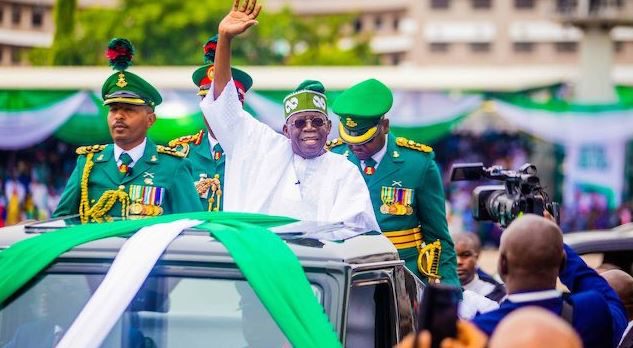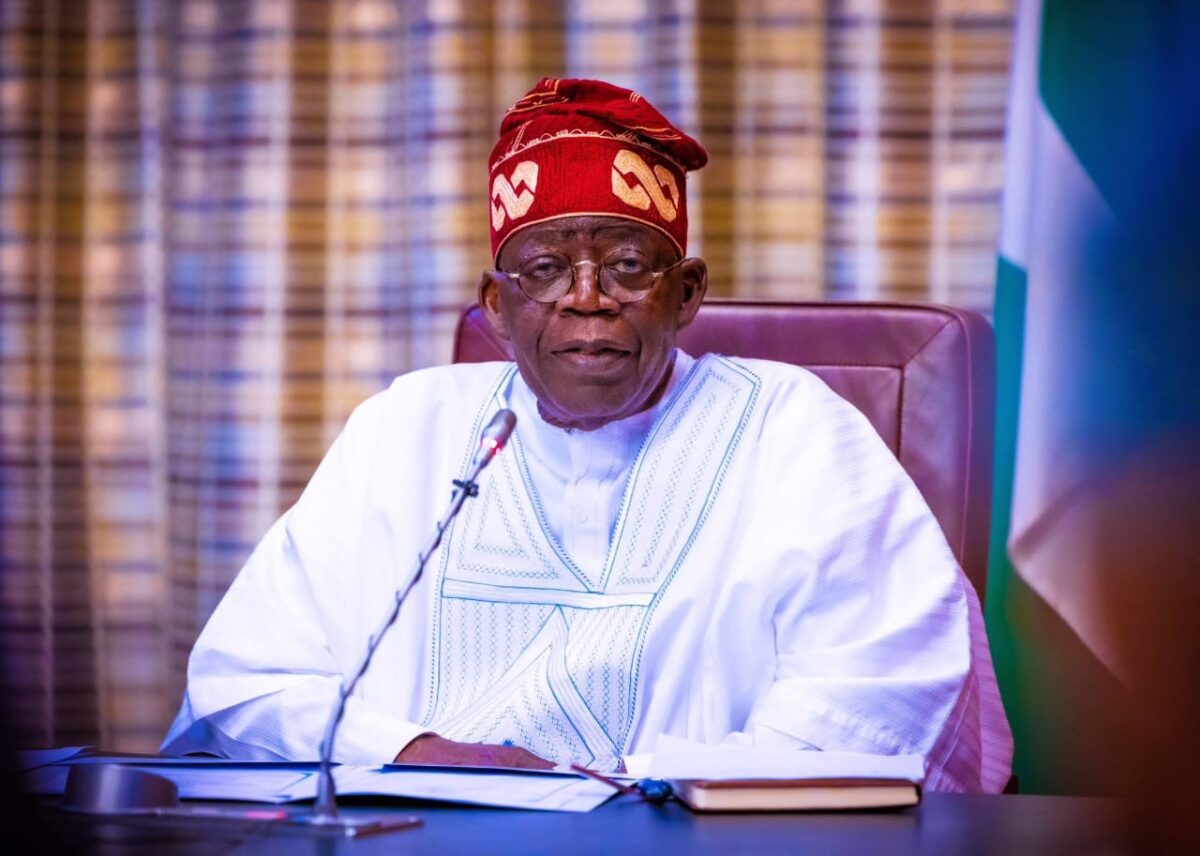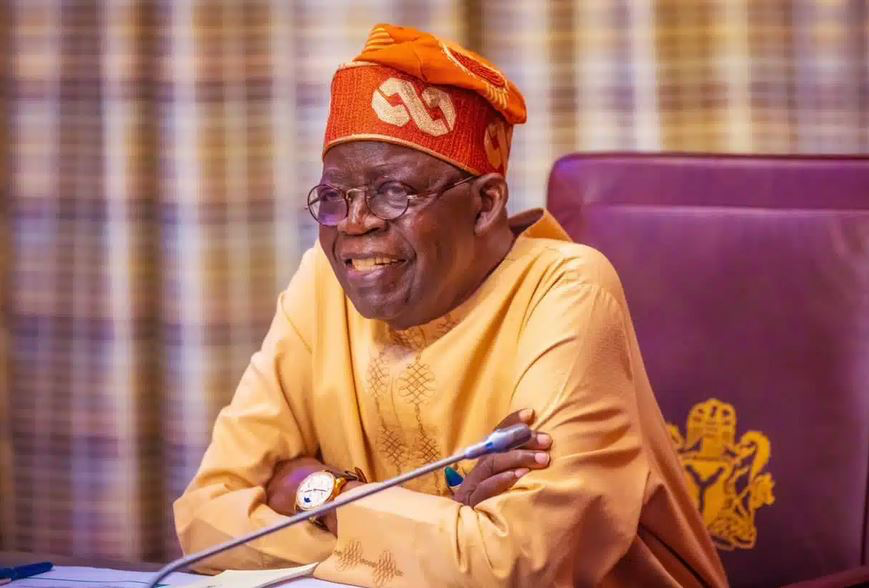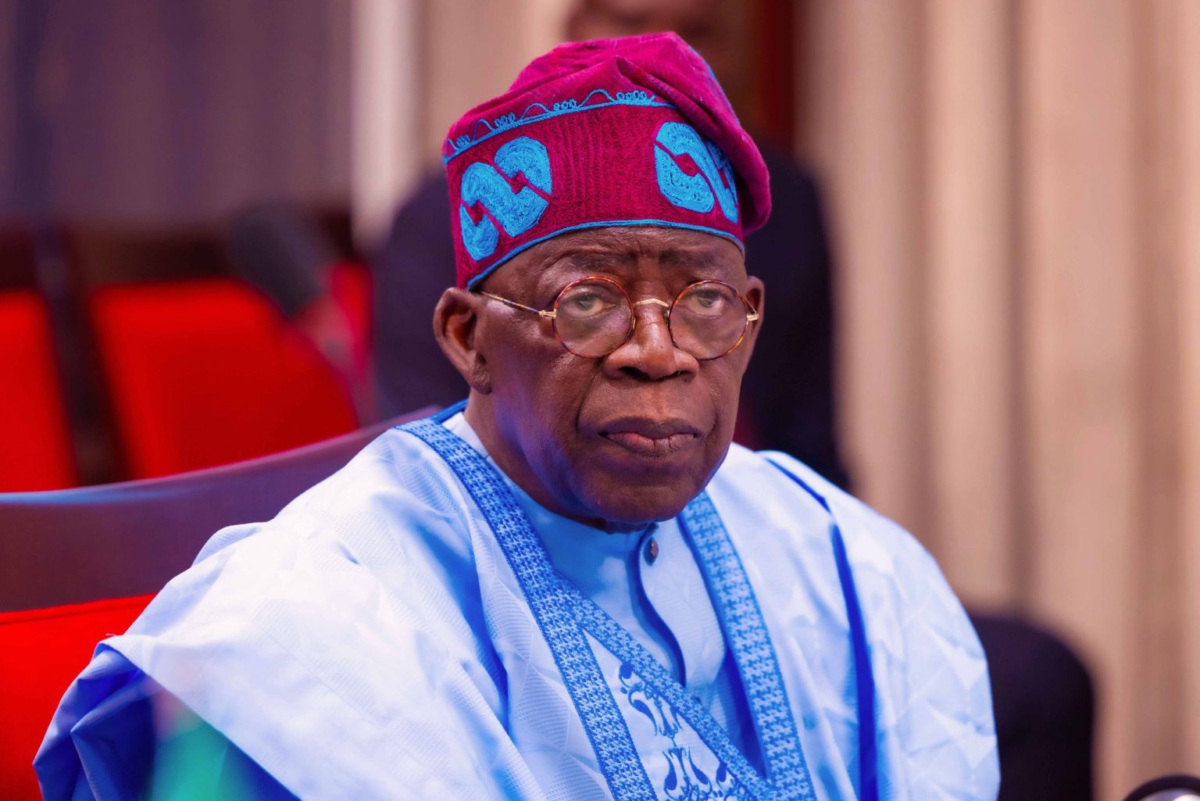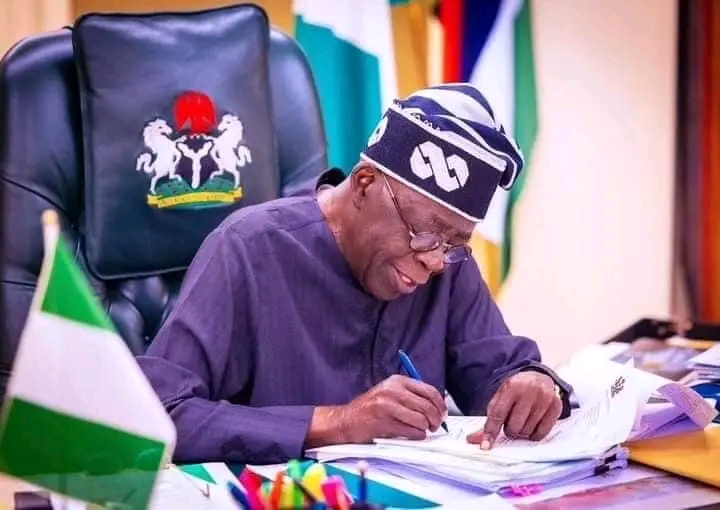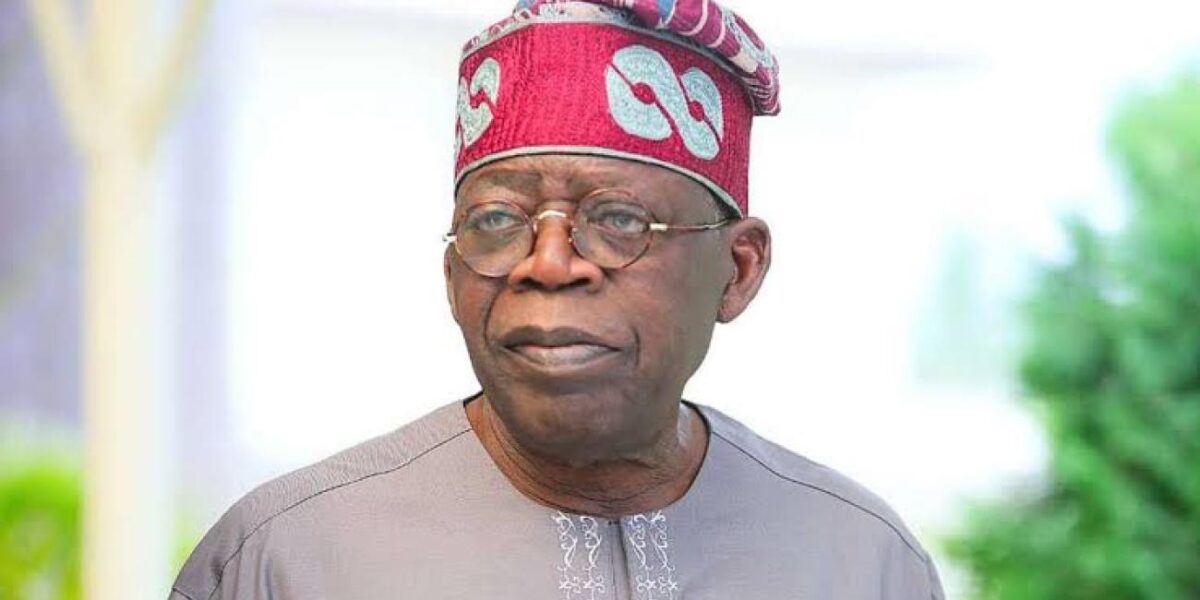
President Bola Tinubu has delivered his 2024 Democracy Day speech.
The speech was delivered on Wednesday morning to celebrate democracy.
Read the full text below:
My fellow Nigerians, let me begin by congratulating all of us for witnessing the celebration of another Democracy Day today, the 12th day of June 2024. This year also marks our nation’s 25 years of uninterrupted democratic governance.
On this day, 31 years ago, we entered our rites of passage to becoming a true and enduring democratic society.
Going through this passage was hard and dangerous. During the fateful six years that followed, we fought and struggled for our natural rights as human beings put on this earth by the divine hand of our Creator.
We lost great heroes and heroines along the way. In this struggle, the winner of the June 12, 1993, presidential election, Chief MKO Abiola, the most significant symbol of our democratic struggle, his wife, Kudirat, General Shehu Musa Yar’Adua and Pa Alfred Rewane, among others sacrificed their very lives.
They bravely surrendered their futures, so that our nation might have a better one.
Let us honour the memories of Chief Anthony Enahoro, Chief Abraham Adesanya, Commodore Dan Suleiman, Chief Arthur Nwankwo, Chief Chukwuemeka Ezeife, Admiral Ndubuisi Kanu, Chief Frank Kokori, Chief Bola Ige, Chief Adekunle Ajasin, Chief Ganiyu Dawodu, Chief Ayo Fasanmi, Chief Gani Fawehinmi, Chief Olabiyi Durojaiye, Dr. Beko Ransome-Kuti, Chima Ubani, and others who have transited to the higher realm.
The sacrifices of General Alani Akinrinade, Professor Bolaji Akinyemi, Professor Wole Soyinka, Chief Ralph Obioha, Chief Cornelius Adebayo, among many others, should never be forgotten. For at least six years, they bore the pains and difficulties of life in exile.
While the exiled pro-democracy activists kept the fire burning, their comrades at home sustained the pressure on the military brass hats. Among the latter are Olisa Agbakoba, Femi Falana, Abdul Oroh, Senator Shehu Sani, Governor Uba Sani, Chief Olu Falae, and other National Democratic Coalition leaders such as Chief Ayo Adebanjo and Chief Ayo Opadokun.
The sacrifices they made, and the precious gift brought about by their selfless devotion can never be repaid. Neither shall it be forgotten.
We could not have won the battle against military dictatorship without the irrepressible Nigerian journalists who mounted the barricades along with the pro-democracy activists. We celebrate them today, along with their media establishments such as The Punch, Guardian, National Concord, Tribune, The News/Tempo, and TELL Magazines.
Military authorities proscribed these media establishments and jailed their journalists for standing for free speech and civil liberties.
Despite the lethal might of the military government, what appeared to be high and unyielding walls of dictatorship came tumbling down. The dismal fortress exists no longer.
The power of an idea, the power of the people proved more potent than all the guns and munitions, than all the guns, the munitions and the threats of the strongmen.
The nation exited the yoke of military rule in 1999 to become the most populous democracy on African soil, the beacon of democratic self-determination for the black race and one of the largest democracies in the world.
This change stands as a pivotal moment in human history. From this change, we shall never turn, nor shall the annals of mankind’s progress forget the sublime meaning of this great moment.
Today, 25 years later, we celebrate the silver anniversary of our journey in democracy.
We have steadied the course.
Democracy is neither a foreign nor abstract concept devoid of real-life meaning for us. Neither can we afford to reduce or minimalise it to being nothing but the mere holding of periodic elections where one candidate and party outdo another.
While elections attract dramatic attention, they are but one aspect of democracy. Democracy is a way of life that encompasses a broad outlook of which elections are but a part. As such, a nation can have elections without being democratic. But a nation cannot be truly democratic without holding elections.
That we have established a tradition of holding transparent, open, and fair elections gives credence to our democratic bearing. That we have experienced peaceful transitions of government affirms our democratic temperament.
Fellow Nigerians, true democracy shines its light into the daily lives of the people who live under its nurturing wings. It affords us the freedom and liberty to think as we want, live where we want and pursue whatever legitimate endeavour that suits us.
Democracy does not assume some false or forced unity of opinion. In fact, democracy assumes that conflicting ideas and differing opinions shall be the order of the day. Given the diversity and variety of the human experience, there must be diverse perspectives and viewpoints.
What democracy demands is that we do not resolve differences through force and repression. But we make allowance for the legitimacy of views that differ from our own.
Where other forms of government impose against the will of the people, democracy aims to make leaders sufficiently humble that they conduct themselves as servants of the common good, not as viceroys of the narrow interests of the mighty.
My dear compatriots, Nigeria faced a decision of untold gravity twenty-five years ago: Whether to veer toward a better destination or continue aimlessly in the fog of dictatorship.
We made the right choice then. We must continue with that choice now.
As Nigerians, we must remind ourselves that no matter how complicated democracy may be, it is the best form of governance in the long run. We must also be aware that there are those among us who will try to exploit current challenges to undermine, if not destroy, this democracy for which so much has already been given.
These people do this not to make things better but to subject all other people and things to their control and dominance until the point that, if you are not counted among their elite, then your life will be small and no longer owned by you.
This is the great battle of our day and the major reason we especially celebrate this Democracy Day.
Fellow Nigerians, our Democracy is more than a historical fact. It is a living, breathing reality.
The true meaning of this day is not to focus solely on the great deeds of the past that have brought us to this point.
Yes, we pay eternal honour to those who laid down their lives, sacrificing everything to pave the way for the nation.
I stand uniquely placed in this regard. I was among those who took the risk to midwife the birth of our democracy. I am now a direct and obvious beneficiary of the fruits of those historic efforts.
As president of this nation, I am morally and constitutionally bound to preserve this precious form of governance. I vow to do my utmost best to protect your rights, freedoms, and liberties as citizens of Nigeria.
Even more than that, I pledge to do whatever is necessary to cement democracy as our way of life.
Although the challenges are steep and multiple, I am grateful to lead Nigeria at this moment in her history and point in her democratic journey.
I come before you also to declare that our most important work remains before us. This real test has never been whether we would rise to challenge the slings of misfortune and grievous pain of dictatorship.
The real test is whether we shall lower our guards as the shadow of despotism and its evident physical danger fade.
I say to you here and now that as we celebrate the enshrinement of our political democracy, let us commit ourselves to the fulfilment of its equally important counterpart, the realisation of our economic democracy.
I understand the economic difficulties we face as a nation.
Our economy has been in desperate need of reform for decades. It has been unbalanced because it was built on the flawed foundation of over-reliance on revenues from the exploitation of oil.
The reforms we have initiated are intended to create a stronger, better foundation for future growth. There is no doubt the reforms have occasioned hardship. Yet, they are necessary repairs required to fix the economy over the long run so that everyone has access to economic opportunity, fair pay and compensation for his endeavour and labour.
As we continue to reform the economy, I shall always listen to the people and will never turn my back on you.
In this spirit, we have negotiated in good faith and with open arms with organized labour on a new national minimum wage. We shall soon send an executive bill to the National Assembly to enshrine what has been agreed upon as part of our law for the next five years or less.
In the face of labour’s call for a national strike, we did not seek to oppress or crack down on the workers as a dictatorial government would have done. We chose the path of cooperation over conflict.
No one was arrested or threatened. Instead, the labour leadership was invited to break bread and negotiate toward a good-faith resolution.
Reasoned discussion and principled compromise are hallmarks of democracy. These themes shall continue to animate my policies and interaction with the constituent parts of our political economy.
I take on this vital task without fear or favour and I commit myself to this work until we have built a Nigeria where no man is oppressed.
In the end, our national greatness will not be achieved by travelling the easy road. It can only be achieved by taking the right one.
The words of the American President Franklin Roosevelt certainly ring true:
“There are many ways of going forward. But only one way of standing still”!
We dare not slumber lest the good things awaiting our immediate future pass us by. We dare not plant our feet in an idle standstill in the middle of the intersection of hope and despair.
We know the proper way forward and we shall take it!
The initial rays of a brighter tomorrow now appear on the early horizon. An abundant future and our capacity to achieve that future lie within our reach. Democracy and the institutions it begets offer to take us to our profound destination.
Let us board this progressive train together. Together, let us move Nigeria forward.
Let’s continue to keep the fire of democracy burning. Let’s keep the torch lit for generations to come.
May God continue to bless the Federal Republic of Nigeria and preserve our democracy.
I wish us all a Happy Democracy Day.