Categories
News

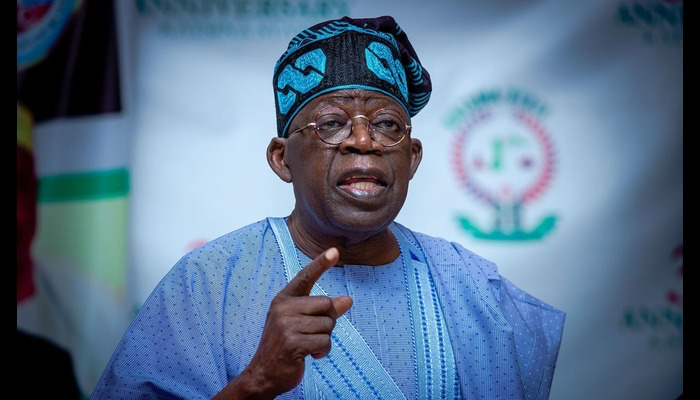
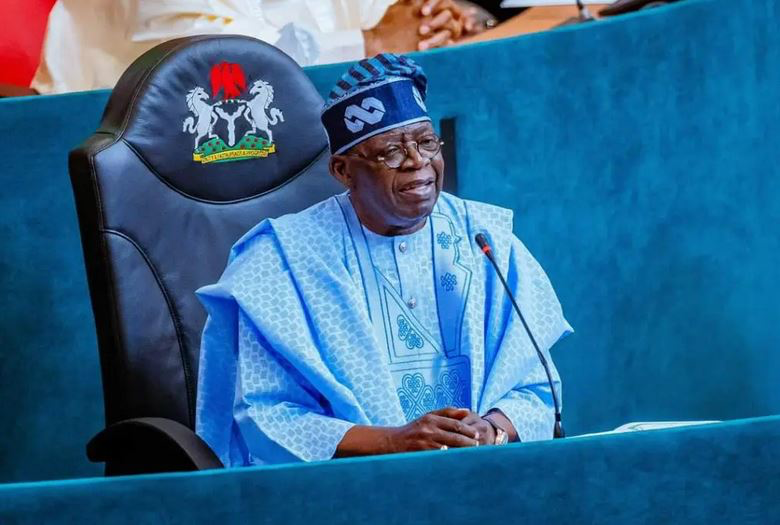
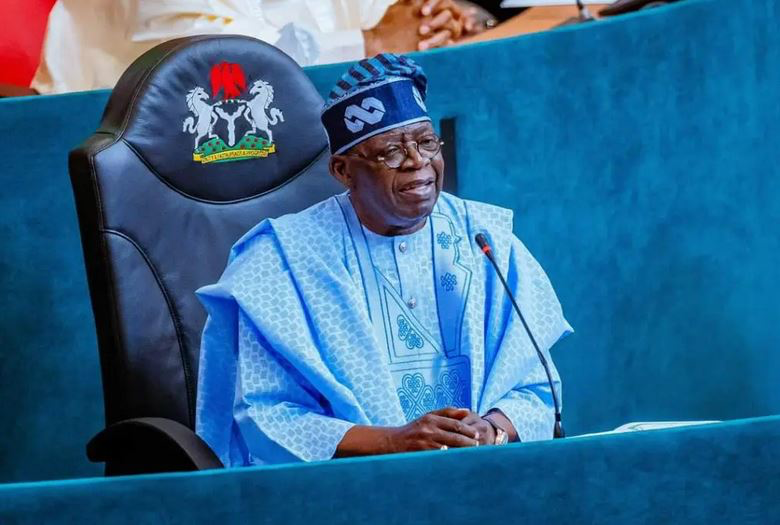
President Tinubu’s New Year Message (Full Text)

President Bola Tinubu has stated that 2026 signals the start of a stronger and more dynamic phase of economic growth.

The President stated this on Thursday in his New Year’s message to Nigerians,

Fellow Compatriots,

I welcome you all to 2026, with gratitude to God and confidence in our collective resolve that this new year will be a more prosperous one for our nation, our citizens, and all who call Nigeria home.

During 2025, we sustained the momentum on our major reforms. We had a fiscal reset and also recorded steady economic progress.

Despite persistent global economic headwinds, we recorded tangible and measurable gains, particularly in the economy.

These achievements reaffirm our belief that the difficult but necessary reforms we embarked upon are moving us in the right direction with more concrete results on the horizon for the ordinary Nigerian.

As we enter 2026, our focus is on consolidating these gains and continuing to build a resilient, sustainable, inclusive, and growth-oriented economy.

We closed 2025 on a strong note. Despite the policies to fight inflation, Nigeria recorded a robust GDP growth each quarter, with annualised growth expected to exceed 4 per cent for the year.

We maintained trade surpluses and achieved greater exchange rate stability. Inflation declined steadily and reached below 15 per cent, in line with our target.

In 2026, we are determined to reduce inflation further and ensure that the benefits of reform reach every Nigerian household.

In 2025, the Nigerian Stock Exchange outperformed its peers, posting a robust 48.12 per cent gain and consolidating its bullish run that began in the second half of 2023.

Supported by sound monetary policy management, our foreign reserves stood at $45.4 billion as of December 29, 2025, providing a substantial buffer against external shocks for the Naira. We expect this position to strengthen further in the new year.

Foreign direct investment is also responding positively. In the third quarter of 2025, FDI rose to $720 million, up from $90 million in the preceding quarter, reflecting renewed investor confidence in Nigeria’s economic direction, which global credit rating agencies, including Moody’s, Fitch, and Standard & Poor’s, have consistently affirmed and applauded.

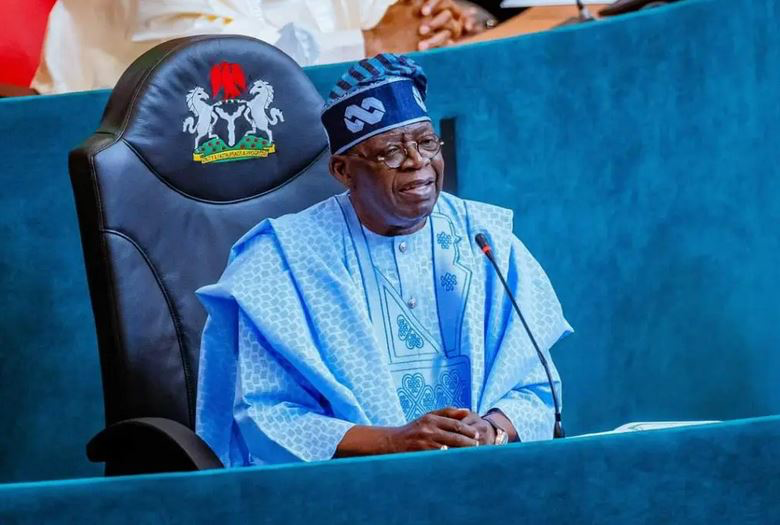
A few days ago, I presented the 2026 Appropriation Bill to the National Assembly.

In that address, I emphasised that our administration has implemented critical reforms that are laying a solid foundation for long-term stability and prosperity.

With patience, fiscal discipline, and unity of purpose, Nigeria will emerge in 2026 stronger and better positioned for sustained growth.

As inflation and interest rates moderate, we expect increased fiscal space for productive investment in infrastructure and human capital development.

We are also confronting the challenge of multiple taxation across all tiers of government. I commend states that have aligned with the national tax harmonisation agenda by adopting harmonised tax laws to reduce the excessive burden of taxes, levies, and fees on our people and on basic consumption.

The new year marks a critical phase in implementing our tax reforms, designed to build a fair, competitive, and robust fiscal foundation for Nigeria.

By harmonising our tax system, we aim to raise revenue sustainably, address fiscal distortions and strengthen our capacity to finance infrastructure and social investments that will deliver shared prosperity.

My fellow Nigerians, the path of reform is never easy, but it is necessary. We remain mindful that economic progress must be accompanied by security and peace.

Our nation continues to confront security threats from criminal and terrorist elements determined to disrupt our way of life.

In collaboration with international partners, including the United States, decisive actions were taken against terrorist targets in parts of the Northwest on December 24.

Our Armed Forces have since sustained operations against terror networks and criminal strongholds across the Northwest and Northeast.

In 2026, our security and intelligence agencies will deepen cooperation with regional and global partners to eliminate all threats to national security.

We remain committed to protecting lives, property, and the territorial integrity of our country.

I continue to believe that a decentralised policing system with appropriate safeguards, complemented by properly regulated forest guards, all anchored on accountability, is critical to effectively addressing terrorism, banditry, and related security challenges.

The new year marks the beginning of a more robust phase of economic growth, with tangible improvements in the lives of our people.

We will accelerate the implementation of the Renewed Hope Ward Development Programme, aiming to bring at least 10 million Nigerians into productive economic activity by empowering at least 1,000 people in each of the 8,809 wards across the country.

Through agriculture, trade, food processing, and mining, we will stimulate local economies and expand grassroots opportunities.

We will also continue to invest in modernising Nigeria’s infrastructure – roads, power, ports, railways, airports, pipelines, healthcare, education, and agriculture to strengthen food security and improve quality of life.

All ongoing projects will continue without interruption.

To achieve our objectives in 2026, we must all play our part.

Nation-building is a shared responsibility. We must stand together in unity and purpose, uphold patriotism, and serve our country with honour and integrity in our respective roles.

Let us resolve to be better citizens, better neighbours, and better stewards of our nation.

Fellow Nigerians, I wish you all a peaceful, productive, and prosperous New Year.

May God continue to bless and protect our beloved country, keep our troops safe and destroy the enemies bent on disrupting our national peace, security and stability.

Happy New Year to you all.

Bola Ahmed Tinubu, GCFR

President, Commander-in-Chief of the Armed Forces,

Federal Republic of Nigeria

Categories
News

BREAKING: There’s No Going Back, New Tax Laws Will Commence On January 1, 2026 – Tinubu Says

President Bola Tinubu has announced that the new tax laws will take effect as scheduled on January 1, 2026, despite objections from various quarters.

The President made the declaration in a statement on Tuesday in which he explained that the new laws are not designed to raise taxes but to drive harmonization.

President Tinubu noted that his administration is aware of agitations in some quarters over the new tax laws, but added that no substantial issue has been raised to warrant a suspension of the implementation process.

He promised that the government would ensure due process in the implementation of the laws and work with all stakeholders, including the National Assembly, to resolve all identified issues against the new tax laws.

“The new tax laws, including those that took effect on June 26, 2025, and the remaining acts scheduled to commence on January 1, 2026, will continue as planned.

“These reforms are a once-in-a-generation opportunity to build a fair, competitive, and robust fiscal foundation for our country.

“The tax laws are not designed to raise taxes, but rather to support a structural reset, drive harmonisation, and protect dignity while strengthening the social contract.

“I urge all stakeholders to support the implementation phase, which is now firmly in the delivery stage.

“Our administration is aware of the public discourse surrounding alleged changes to some provisions of the recently enacted tax laws.

“No substantial issue has been established that warrants a disruption of the reform process. Absolute trust is built over time through making the right decisions, not through premature, reactive measures.

“I emphasise our administration’s unwavering commitment to due process and the integrity of enacted laws. The Presidency pledges to work with the National Assembly to ensure the swift resolution of any issue identified.

“I assure all Nigerians that the Federal Government will continue to act in the overriding public interest to ensure a tax system that supports prosperity and shared responsibility,” the statement read.

Categories
News

FG Confirms US Airstrikes On Terrorists, Cites Intelligence Cooperation

The Federal Government has confirmed that Nigeria and the United States are engaged in ongoing security and intelligence cooperation following airstrikes on terrorist targets in the North West.

“This has led to precision hits on terrorist targets in Nigeria by air strikes in the North West.”

In a statement issued on Friday, the Ministry of Foreign Affairs, signed by spokesperson Kimiebi Ebienfa, said Nigerian authorities remain engaged in “structured security cooperation with international partners, including the United States of America,” to address terrorism and violent extremism in the country.

The ministry said the collaboration, which led to precision airstrikes on terrorist targets, involves intelligence sharing, strategic coordination and other forms of support in line with international law, respect for Nigeria’s sovereignty and shared security commitments.

“Nigeria reiterates that all counter-terrorism efforts are guided by the primacy of protecting civilian lives, safeguarding national unity, and upholding the rights and dignity of all citizens, irrespective of faith or ethnicity,”the statement said.

It added that terrorist violence, “whether directed at Christians, Muslims, or other communities, remains an affront to Nigeria’s values and to international peace and security.”

The statement followed comments by United States President Donald Trump, who said on Thursday that US forces had carried out deadly strikes against Islamic State terrorists in Northwestern Nigeria.

“Tonight, at my direction as Commander in Chief, the United States launched a powerful and deadly strike against ISIS Terrorist Scum in Northwest Nigeria, who have been targeting and viciously killing, primarily, innocent Christians,”
Trump wrote on his Truth Social platform.

He added, “The Department of War executed numerous perfect strikes, as only the United States is capable of doing.”

Trump warned that further attacks would follow if the killing of Christians continued, saying, “If they did not stop the slaughtering of Christians, there would be hell to pay, and tonight, there was.”

In a separate social media post, US Defence Secretary Pete Hegseth said Washington acted with Nigeria’s cooperation.

“Grateful for Nigerian government support & cooperation,”
Hegseth wrote, adding that the Department of War was “always ready.”

The Ministry of Foreign Affairs said Nigeria would continue to work with its partners through established diplomatic and security channels to weaken terrorist networks, disrupt their financing and logistics, and prevent cross-border threats.

The airstrikes came a day after a bomb attack on a mosque in Maiduguri, Borno State, killed five people and injured dozens in what authorities suspect was a suicide bombing.

Categories
Sport News

Ex-Super Eagles Captain, William Troost-Ekong Receives National Honour Certificate From President Tinubu

President Bola Tinubu has awarded former Super Eagles captain William Troost-Ekong the national honour of Member of the Order of the Federal Republic (MFR).

The defender confirmed the honour on Tuesday after receiving his official certificate, which followed the announcement made the previous night.

He expressed gratitude to the President and described the recognition as a proud moment for himself and his family.

“I am honoured and grateful to His Excellency, the President of the Federal Republic of Nigeria (@officialABAT), for conferring on me the MFR national honour.

“I have been sent the official certificate today following the announcement last night. It’s a very proud moment for me and my family to receive this recognition,” he wrote.

The 32-year-old defender expressed his gratitude to the country that gave him the platform to achieve his dreams.

“Nigeria gave me my identity, my purpose, and the platform to live my dream through football.

“Wearing the green and white has always been a great responsibility, privilege, and a promise to give everything for the badge and for our people,” he said.


“As our Super Eagles begin their AFCON journey today, I wish the team every success.


“As promised, I’ll be supporting them all the way. I believe in this group, our nation, and what we can achieve,”
 he added.

In the certificate attached to his post, Tinubu formally conferred the honour, stating,” In exercise of the powers vested in me under section 1(4) of the National Honours Act, I, BOLA AHMED TINUBU, President of the Federal Republic of Nigeria, in recognition of your outstanding virtues and in appreciation of your services to our country, Nigeria, HEREBY award to you to have, and enjoy title, dignity and all the privileges of Member of the Order of the Federal Republic (MFR).”


Troost-Ekong captained Nigeria to a runner-up finish at the 2023 AFCON in Côte d’Ivoire before announcing his retirement from international football.

Categories
News

We’ll Arm State Police, Forest Rangers To Defeat Terrorists, Bandits – Tinubu Vows

President Bola Tinubu, in his quest to end the decade-long security challenges in Nigeria, has declared that the operatives of the proposed state police would be well armed.

The president spoke during the All Progressives Congress, APC, National Executive Committee, NEC, meeting held on Friday at the State House Conference Centre, Abuja.

Tinubu also revealed plans to establish forest rangers, stating that they will also be equipped with arms to end terrorism and banditry in Nigeria.

He said, “We are going for state police. We will do forest rangers. We will arm them. We will defeat those terrorists and bandits, we must do that”.

Following the recent surge in killings and other activities of the criminal elements causing mayhem across the country, the president promised to establish local police in states.

Although there are some stakeholders who are still sceptical about the effectiveness of the state police owing to possible abuse by state governors, the National Assembly has also thrown its weight behind the establishment of the local force.

Categories
News

President Tinubu’s 2026 Budget Speech (Full Text)

On Thursday, President Bola Tinubu presented the 2026 Appropriation Bill to a joint session of the National Assembly, proposing a total budget of ₦58.46 trillion, including non-debt recurrent expenditure of ₦15.25 trillion.

In his address, the President fixed capital expenditure at N26.08 trillion and set the crude oil price benchmark for the fiscal year at US$64.85 per barrel.

Here is a full text of the President’s speech and a breakdown of the 2026 budget as released.

PROTOCOLS

Distinguished Senate President,

Rt. Honourable Speaker and Honourable Members of the House of Representatives,

Distinguished Senators and Honourable Members of the National Assembly,

Fellow Nigerians,

1. I appear before this Joint Session of the National Assembly, in fulfilment of my constitutional duty, to present the 2026 Appropriation Bill of the Federal Republic of Nigeria.

2. This is a defining moment in our national journey of reform and transformation. Over the last two and a half years, we made a deliberate choice: to confront long‑standing structural weaknesses, stabilize our economy, rebuild confidence, and lay a durable foundation for a more resilient, inclusive, and dynamic Nigeria.

3. These reforms were necessary — and they have not been painless. Families and businesses have faced pressure; established systems have been disrupted; and budget execution has been tested. I acknowledge these difficulties plainly, and I assure Nigerians that their sacrifices are not in vain. The path of reform is seldom smooth, but it is the surest route to lasting stability and shared prosperity.

4. Today, we come with a Budget that consolidates our gains, strengthens our resilience, and turns recovery into improved living standards for every Nigerian household.

THEME OF THE 2026 BUDGET

5. The 2026 Budget is themed: “Budget of Consolidation, Renewed Resilience and Shared Prosperity”. It reflects our determination to lock in macroeconomic stability, deepen competitiveness, and ensure that growth translates into decent jobs, rising incomes, and a better quality of life across our Federation.

ECONOMIC REALITIES: SIGNS OF STABILISATION, PURPOSE OF THE NEXT STEP

6. Mr. Chairman of this Joint Sitting, the 2026 Budget was prepared against an improving global outlook. Yet, our focus remains Nigeria: building a strong economy that works for our people.

7. I am encouraged that our reform efforts are already yielding measurable results:

Our economy grew by 3.98% in Q3 2025, higher than the 3.86% recorded in Q3 2024.

Inflation has moderated for eight consecutive months, with headline inflation declining to 14.45% in November 2025, from 24.23% in March 2025. With stabilising food and energy prices, tighter monetary conditions, and improving supply responses, we expect the disinflationary trend to persist—so that inflation continues to decline further over the 2026 horizon, barring major supply shocks.

Oil production has improved, supported by enhanced security, technology deployment, and sector reforms.

Non‑oil revenues have expanded significantly through better tax administration —not excessive taxation.

Investor confidence is returning, reflected in capital inflows, renewed project financing, and stronger private‑sector participation.

Our external reserves rose to a 7‑year high of about US$47 billion as at 14 November 2025, providing more than 10 months of import cover and a stronger buffer against shocks.

8. These outcomes are not accidental. They reflect difficult but deliberate policy choices. Our task now is to consolidate these gains—so that stability becomes prosperity, and prosperity becomes shared prosperity.

2025 BUDGET PERFORMANCE: LESSONS, ACCOUNTABILITY, AND EXECUTION

9. Distinguished Members, our 2025 budget implementation faced the realities of transition and competing execution demands. As at Q3 2025, we recorded:

N18.6 trillion in revenue—representing 61% of our target; and

N24.66 trillion in expenditure—representing 60% of our target.

10. Following the extension of the 2024 capital budget execution to December 2025, a total of N2.23 trillion was released for the implementation of 2024 capital projects as at June 2025.

11. While fiscal challenges persisted, the government met its key obligations. However, only N3.10 trillion—about 17.7% of the 2025 capital budget—was released as at Q3, reflecting the emphasis on completing priority 2024 capital projects during the transition period.

12. Let me be clear: 2026 will be a year of stronger discipline in budget execution. I have issued directives to the Honourable Minister of Finance and Coordinating Minister of the Economy, the Honourable Minister of Budget and Economic Planning, the Accountant‑General of the Federation, and the Director‑General of the Budget Office of the Federation to ensure that the 2026 Budget is implemented strictly in line with the appropriated details and timelines.

13. We expect improved revenue performance through the new National Tax Acts and the ongoing reforms in the oil and gas sector—reforms designed not merely to raise revenue, but to drive transparency, efficiency, fairness, and long‑term value in our fiscal architecture.

14. I will also be unequivocal about Government‑Owned Enterprises. Heads of all GOEs are hereby directed to meet their assigned revenue targets. To support this, we will deploy end‑to‑end digitisation of revenue mobilisation—standardised e‑collections, interoperable payment rails, automated reconciliation, data‑driven risk profiling, and real‑time performance dashboards—so leakages are sealed, compliance is verifiable, and remittances are prompt. These targets will form core components of performance evaluations and institutional scorecards. Nigeria can no longer afford leakages, inefficiencies, or underperformance in strategic agencies. Every institution must play its part.

PHILOSOPHY AND OBJECTIVES OF THE 2026 BUDGET

15. Mr. Chairman and fellow Nigerians, the 2026 Budget is guided by four clear objectives:

One, consolidate macroeconomic stability;

Two, improve the business and investment environment;

Three, promote job‑rich growth and reduce poverty; and

Four, strengthen human capital while protecting the vulnerable.

16. In short: we will spend with purpose, manage debt with discipline, and pursue growth that is broad‑based — not narrow — and sustainable — not temporary.

2026 BUDGET OVERVIEW: THE FISCAL FRAMEWORK

17. Distinguished Members, the 2026 Federal Budget is anchored on realism, prudence, and growth orientation.

18. The key aggregates are as follows:

Expected total revenue: N34.33 trillion.

Projected total expenditure: N58.18 trillion, including N15.52 trillion for debt servicing.

Recurrent (non‑debt) expenditure: N15.25 trillion.

Capital expenditure: N26.08 trillion.

Budget deficit: N23.85 trillion, representing 4.28% of GDP.

19. These numbers are not just accounting lines. They are a statement of national priorities. We remain firmly committed to fiscal sustainability, debt transparency, and value‑for‑money spending.

20. The 2026–2028 Medium‑Term Expenditure Framework and Fiscal Strategy Paper sets the parameters for this Budget. Our projections are based on:

a conservative crude oil benchmark of US$64.85 per barrel;

crude oil production of 1.84 million barrels per day; and

an exchange rate of ₦1,400 to the US Dollar for the 2026 fiscal year.

21. We will continue to reduce waste, strengthen controls, and ensure that every naira borrowed or spent delivers measurable public value — especially in infrastructure, human capital, and security.

PRIORITIES AND ALLOCATIONS: SECURITY, PEOPLE, PRODUCTIVITY

22. Our allocations reflect the Renewed Hope Agenda and the practical needs of Nigerians. Key sectoral provisions include:

Defence and Security: N5.41 trillion

Infrastructure: N3.56 trillion

Education: N3.52 trillion

Health: N2.48 trillion

23. These priorities are interlinked. Without security, investment will not thrive. Without educated and healthy citizens, productivity will not rise. Without infrastructure, jobs and enterprise will not scale. This is why the Budget is designed as one coherent programme of national renewal.

24. Security remains the foundation of development. The 2026 Budget strengthens support for:

modernisation of the Armed Forces;

intelligence‑driven policing and joint operations;

border security and technology‑enabled surveillance; and

community‑based peacebuilding and conflict prevention.

25. We will invest in security with clear accountability for outcomes—because security spending must deliver security results. To secure our country, our priority will remain on increasing the fighting capability of our armed forces and other security agencies by boosting personnel and procuring cutting-edge platforms and other hardware. We are also pursuing a new era of criminal justice system to stamp out terrorism, banditry, kidnapping for ransom and other violent crimes. Our administration is resetting the national security architecture and establishing a new national counterterrorism doctrine—a holistic redesign anchored on unified command, intelligence, community stability, and counter-insurgency. This new doctrine will fundamentally change how we confront terrorism and other violent crimes that have become existential threats to our corporate survival and have heightened anxiety among our people.

Henceforth, and under this new architecture, any armed group or gun-wielding non-state actors operating outside state authority will be regarded as terrorists. These include bandits, militias, armed gangs, criminal networks with weapons, armed robbers, violent cult groups, forest-based armed collectives, and foreign-linked mercenaries. Groups or individuals conducting violence for political, ethnic, financial, or sectarian objectives are also classified as terrorists.  Members of any group extorting communities, kidnapping civilians, occupying or seeking to occupy territory within Nigeria will be classified as terrorists. The denominator is that if you wield lethal weapons and act outside the state’s authority, you are a terrorist. Any individual or entity that enables the listed groups as financiers, money handlers, harbourers, informants, ransom facilitators, and negotiators will also be classified as terrorists. Political protectors and intermediaries, transporters, arms suppliers, and safe-house owners will be declared as terrorists.  Politicians, traditional rulers, community leaders, and religious leaders who facilitate and encourage violent actions and terror within Nigeria and against our citizens are also terrorists.

26. No nation can grow beyond the quality of its people. The 2026 Budget strengthens investments in education, skills, healthcare, and social protection.

27. In education, we are expanding access to higher education through the Nigerian Education Loan Fund. Over 418,000 students have been supported, in partnership with 229 tertiary institutions nationwide.

28. In healthcare, I am pleased to highlight that investment in healthcare is 6% of total budget size, net of liabilities.

29. We also appreciate the support of international partners. Recent high‑level engagements with the Government of the United States have opened the door to over US$500 million in grant funding for targeted health interventions across Nigeria. We welcome this partnership and assure Nigerians that these resources will be deployed transparently and effectively.

30. Across the nation, projects under the Renewed Hope Agenda are moving from vision to reality—transport and energy infrastructure, port modernisation, agricultural reforms, and strategic investments that unlock private capital.

31. We will take decisive steps to strengthen agricultural markets. Food security is national security. The 2026 Budget prioritises input financing and mechanisation; irrigation and climate‑resilient agriculture; storage and processing; and agro‑value chains.

32. These measures will reduce post‑harvest losses, improve incomes for smallholders, deepen agro‑industrialisation, and build a more resilient, diversified economy.

DELIVERY, DISCIPLINE, AND NATIONAL COMPACT

33. Distinguished Members and fellow Nigerians, the greatest budget is not the one we announce. It is the one we deliver.

34. Therefore, 2026 will be guided by three practical commitments:

Better revenue mobilisation through efficiency, transparency, and compliance—especially from GOEs and improved oil and gas sector governance.

Better spending: prioritising projects that can be completed, measured, and felt by citizens.

Better accountability: strengthening procurement discipline, monitoring, and reporting—so Nigerians can see what their money is funding.

35. This is how we will build trust: by matching our words with results, and our allocations with outcomes.

CONCLUSION: A BUDGET THAT BELONGS TO ALL OF US

36. Distinguished Members of the National Assembly, fellow Nigerians, the 2026 Budget is not a budget of promises; it is a Budget of Consolidation, Renewed Resilience and Shared Prosperity. It builds on the reforms of the past two and a half years, addresses emerging challenges, and sets a clear path towards a more secure, more competitive, more equitable, and more hopeful Nigeria.

37. I commend the understanding, sacrifice, and resilience of our people. My administration remains committed to easing the burdens of transition and ensuring that the benefits of reform reach households and communities across the Federation.

38. With unity of purpose between the Executive and the Legislature—and with the resilience of the Nigerian people—we will deliver the full promise of the Renewed Hope Agenda.

39. It is with great pleasure, therefore, that I lay before this distinguished Joint Session of the National Assembly the 2026 Appropriation Bill of the Federal Republic of Nigeria, titled: “Budget of Consolidation, Renewed Resilience and Shared Prosperity”.

May God bless the Federal Republic of Nigeria.

Categories
News

BREAKING: Tinubu Presents N58.46trn 2026 Budget, Defence Gets N5.41trn

President Bola Tinubu on Thursday presented the 2026 Appropriation Bill to a joint session of the National Assembly, proposing a total budget of ₦58.46 trillion, with non-debt recurrent expenditure estimated at ₦15.25 trillion.

In his address, the President fixed capital expenditure at N26.08 trillion and set the crude oil price benchmark for the fiscal year at US$64.85 per barrel.

The budget projections are based on crude oil production of 1.84 million barrels per day and an exchange rate of N1,400 to the US Dollar for the 2026 fiscal year.

A sector-by-sector breakdown shows that defence and security received the largest allocation at N5.41 trillion, followed by infrastructure with N3.56 trillion.

Education was allotted N3.52 trillion, while the health sector was earmarked N2.48 trillion under the proposal titled, “Budget of Consolidation, Renewed Resilience and Shared Prosperity”.

Categories
News

President Tinubu Asks NASS To Extend 2025 Budget Implementation

President Bola Tinubu has sought the National Assembly’s approval to extend the implementation of the 2025 Appropriation Act to March 31, 2026, as part of efforts to end the long-standing issue of overlapping budget cycles.

The request was conveyed in a letter dated December 18, 2025, and read on Friday during a special plenary of the House of Representatives by Speaker Tajudeen Abbas.

Tinubu said the new letter supersedes an earlier communication sent on December 16, 2025, explaining that the extension is part of broader fiscal reforms designed to improve planning, execution, and accountability in public spending.

According to the President, the proposed adjustment would allow the release of at least 30 percent of capital allocations to ministries, departments, and agencies, MDAs, noting that delays in fund releases have continued to weaken budget performance.

He disclosed that the proposal includes the repeal and reenactment of the 2024 and 2025 Appropriation Acts. Under the plan, the 2024 budget would be revised upward to N43.56 trillion, while the 2025 budget would be adjusted to N48.32 trillion and extended to run until March 31, 2026.

Tinubu explained that the amendments would also capture items not previously recognized and align budget implementation with current fiscal realities and execution capacity.

He urged lawmakers to consider and pass the bills quickly in the interest of national development.

Since Tinubu assumed office in May 2023, the Federal Government has grappled with overlapping budgets due to delays in budget passage, revenue shortfalls, and slow release of capital funds.

Meanwhile, the President is expected to present the 2026 budget to the National Assembly on Friday.

Categories
News

Tinubu To Present 2026 Budget Without Accounting For 2025 Fiscal Year – BudgIT

BudgIT, a civic advocacy organisation, has alleged that President Bola Ahmed Tinubu plans to present the proposed ₦54.4 trillion 2026 budget to the National Assembly without first providing a performance report on the 2025 budget.

BudgIT made this known in a statement on X on Thursday.

Earlier 626Blaze reported that Tinubu is expected to present the country’s 2026 budget before the National Assembly on Friday.

Reacting, BudgIT said Tinubu’s government is yet to make public the 2025 budget implementation report.

“Mind you, there is still no budget implementation report for 2025.

“The 2026 budget is almost here, yet we don’t know how the 2025 budget performed?

“No report. No accountability,” BudgIT wrote on X.

Recall that in February 2025, Tinubu had signed the N54.99 2025 budget into law.

Categories
News

There Is No Genocide Against Christians Or Muslims In Nigeria — President Tinubu Insists

Once again, President Bola Tinubu has dismissed claims of a Christian genocide in Nigeria, emphasizing that no religious group, whether Christian or Muslim, is being deliberately targeted for extermination.

Speaking on Friday in Abuja at the opening of the 8th Biennial Conference and Annual General Meeting of the Nasrul-Lahi-l-Fatih Society (NASFAT), themed “Building Resilience in a Changing World: The Role of Faith and Community,” the President stressed that insecurity in the country is not rooted in religious persecution.

Represented by the Attorney General of the Federation and Minister of Justice, Lateef Fagbemi, Tinubu said Nigeria’s current security challenges are largely driven by historical injustices, economic deprivation, criminality, and extremism.

“In recent times, the Federal Government and other persons of goodwill have had to address unfounded allegations. These allegations are not only false but harmful, and capable of inflaming passions and disrupting the peaceful coexistence we continue to build as a nation,” he said.

The President’s remarks come weeks after former U.S. President Donald Trump alleged that Christians in Nigeria were being targeted and persecuted, warning that the U.S. could consider military intervention if the Nigerian government failed to act.

Trump had labelled Nigeria a “Country of Particular Concern,” sparking widespread reactions within and beyond Nigeria’s borders.

In response, the Federal Government dispatched a high-level delegation led by National Security Adviser Nuhu Ribadu to engage U.S. lawmakers and provide clarity on the nation’s security situation.

President Tinubu reaffirmed that the Nigerian government does not support or carry out any policy that targets religious groups.

“As President, I reiterate with all sense of responsibility and fidelity to the Constitution that there is no Christian genocide in Nigeria, and there is no Muslim genocide in Nigeria. What we have is terrorism driven by criminality and extremism—challenges we are working tirelessly to overcome,”
 he stated.

He noted that both Christians and Muslims have suffered from terrorism and continue to stand together in condemning violence from all quarters.

The President emphasised the Federal Government’s commitment to national unity, religious tolerance, and the protection of every Nigerian life.

“We must, therefore, reject narratives that seek to divide us, whether they come from within or outside our borders. We must not allow internal or external forces to sow discord or promote dangerous stereotypes about our beloved nation,”
 he added.

Tinubu praised NASFAT for promoting national unity and peaceful coexistence.

“Your teachings on moderation, tolerance and service to humanity provide pathways for resolving conflicts and deepening national unity. Let us continue to promote moderation, peaceful coexistence and respect for our diversity. Our differences are a divine design, not a source of conflict,”
 he said.

Delivering the keynote address, Islamic scholar Dr Nurudeen Lemu urged Nigerian Muslims to remain steadfast in faith and hopeful amid the country’s challenges, stressing the importance of unity, patience, and resilience.