Categories
News

Dangote Petrol N65 Cheaper In Togo — Importers Claim

Several fuel importers in the country have claimed that the Dangote refinery sells a litre of petrol to international traders at N65 less than the price offered to local marketers in Nigeria.

The Depot and Petroleum Product Marketers Association of Nigeria, Petroleum Products Retail Outlet Owners Association of Nigeria confirmed this in separate exclusive interviews with Sunday PUNCH.

While kicking against the planned slashing of prices on Monday, DAPPMAN in particular said it was a ploy to stifle competition.

The Dangote refinery recently announced that it would drop petrol prices from N865 per litre to N841 in Lagos and the South West, and N851 in Abuja, Edo, and Kwara.
This would come alongside the commencement of its direct fuel distribution scheme.

In an interview with our correspondent on Saturday, the DAPPMAN Executive Secretary, Olufemi Adewole, told Sunday PUNCH that members of the group bought Dangote’s petrol from international traders in Lome, Togo, at prices lower than what was offered locally by the refinery.

Adewole said importers had made efforts to buy petrol from the Dangote refinery, but the price was higher, adding that sometimes, it could be better to import the product.

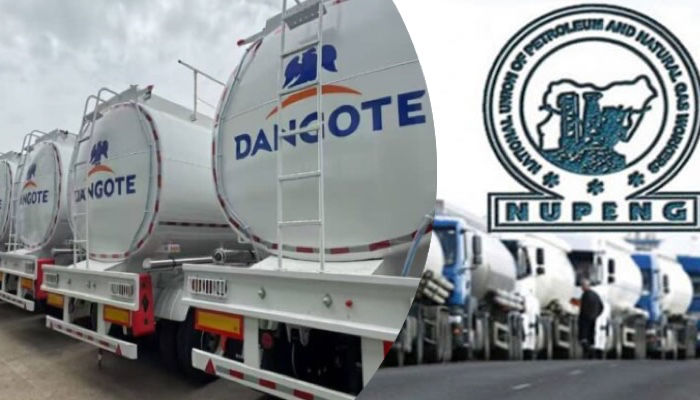
But the Dangote refinery downplayed the allegations, suggesting DAPPMAN might be the force behind the recent attack against it by the Nigerian Union of Petroleum and Natural Gas Workers.

NUPENG had accused the refinery of anti-union practices, including refusing to allow drivers to join the group. The union threatened to embark on industrial action over the matter.

Adewole told Sunday PUNCH that Alhaji Aliko Dangote once said he would crash prices whenever importers brought in fuel cargoes into Nigeria.

“So, anytime our cargoes are coming, we expect him to reduce the price. He may give a different reason for the reduction,”
he said.

“Dangote is selling to international traders at N65 lower than what he offers in Nigeria, or how is it possible for some of our members to buy from someone who bought from Dangote?

“Dangote sells to international traders at N65 cheaper than what he is selling to us. In some instances, we were able to buy from those people and still bring it to Nigeria. They will take the product to Lomé, claiming that they are buying large quantities.

“I have collated the volume of the products needed by DAPPMAN and sent to Dangote twice, yet he is not giving us products. What else does he want us to do? Even if he would give it to us, it would be with conditions that would not be profitable. Is that business?” he said.

Asked if it was cheaper to import petrol than to buy from the Dangote refinery, Adewole said, “It’s not all the time that it is cheaper. But there are instances in which it was cheaper to buy from international markets, and not only did we buy from international markets, we bought from international traders that Dangote sold to.”

When our correspondent sought to know what DAPPMAN’s requests were, he emphasised the need for discounts.

“Dangote has to give us a discount for the freight cost and other costs that we incur between his jetty and our jetty so that we can sell at the same price, and then we’ll be competitive. People will continue to import if the price is cheaper elsewhere,”
he added.

The National President of the Petroleum Products Retail Outlet Owners Association of Nigeria, Billy Gillis-Harry, said DAPPMAN was right to say Dangote’s fuel was cheaper in Lome than in Nigeria.

“Exactly, DAPPMAN said the correct thing. It is true. We don’t want to be saying everything. But the way things are going, one day we will say everything,” Billy Gillis-Harry said.

Also, a major importer told Sunday PUNCH that his company refused to buy from Dangote because the margin was not favourable.

However, in an interview with Sunday PUNCH, a spokesman for the refinery laughed off the allegations.

He said, “We now know who is behind NUPENG. Our free delivery starts Monday.”

The spokesman wondered when DAPPMAN members started buying petrol from Lomé, asking if they no longer patronised Russia and Malta.

Earlier, the DAPPMAN secretary said portraying Dangote refinery’s repeated fuel price cuts as patriotic gestures overlooked both their timing and effect on the market.

Adewole, in a statement on Saturday, said the price reductions were strategically timed when other importers had active cargoes at sea or in tanks, creating price shocks that undermined competition and imposed financial strain on fellow market participants, including the refinery’s domestic customers.

He said it was concerning that the refinery offered lower prices to international buyers while quoting higher rates to local off-takers.

This, he said, contradicted public-facing claims of prioritising Nigerians and placed unnecessary burdens on domestic businesses already operating under tight margins.

On the crisis between Dangote and NUPENG, the executive secretary said his group had watched the dispute with dismay.

“While the matter may not directly concern our association, we are alarmed by the tone, trajectory, and escalation of this issue. Beyond the reputational risks to various market participants, we are concerned about the potential impact this may have on ordinary Nigerians, particularly in a downstream environment still stabilising post-deregulation,”
he added.

Adewole noted that the assertion that Nigeria’s downstream stability rested solely on one refinery was dismissive of the broader ecosystem.

He said, “While we welcome the Dangote refinery as a major infrastructure project, its contribution has peaked at only 30 to 35 per cent of national demand. The balance continues to be supplied by responsible petroleum product marketers, including DAPPMAN members, who import and distribute under strict regulatory oversight by the Nigerian Midstream and Downstream Petroleum Regulatory Authority.”

On Dangote’s direct free fuel distribution scheme, he said the claim was misleading.

“The claim that the refinery offers ‘free delivery’ is also misleading. In reality, marketers are required to lift at least 25 per cent of their allocations directly from the refinery gantry and must do so using only Dangote-owned trucks, paying commercial rates based on their destinations. This arrangement imposes additional logistical and financial burdens on marketers, limits operational flexibility, and undermines the narrative of cost relief being provided to the local market,”
he alleged.

While conceding that the Dangote refinery is a valuable contributor, Adewole said it was not a messiah.

The Dangote refinery said it would begin the rollout of compressed natural gas-powered trucks on Monday, as part of its logistics-free distribution programme aimed at significantly reducing fuel prices across the country.

Categories
News

Dangote Refinery Reduces Fuel Price Nationwide, Provides Update On Petrol Distribution

Dangote Refinery has lowered the retail price of its premium motor spirit across the country.

This is as it announced Monday, September 15, 2025, as the new date to begin the direct petrol distribution initiative.

The initiative, which Dangote Group had earlier announced would kick off on August 15, 2025, would see the $20 billion plant distribute petrol and diesel to consumers with its 4,000 compressed natural gas trucks at zero logistics cost.

The 650,000-barrel-per-day refinery said its new gantry price is N820 per litre, the same price announced last month.

The company, which is currently in a face-off with the Nigerian Nigeria Union of Petroleum and Natural Gas Workers (NUPENG), disclosed this in a fresh price template released by Dangote Group on its X account.

With the new price template, in Lagos, Oyo, Ogun, Ondo, and Ekiti, Dangote Refinery’s petrol retail price stands at N841 from N860 per litre.

In Abuja, Edo, Delta, Rivers and Kwara states, the largest African refinery’s retail price is N851, down from N885 per litre.

This means that Dangote Refinery will deliver its petrol directly to willing consumers in Lagos and the South-west states at a reduced retail price of N19, while in Abuja, North Central, and the South-South, it will be a N34 reduction.

It stressed that the new price template and direct fuel distribution scheme are expected to take effect on Monday, September 15, 2025.

Meanwhile, the Dangote Refinery price template is not binding on petroleum marketers and retailers except MRS and its other distribution partners.

NUPENG on Thursday announced that it may return to strike against Dangote Group, alleging that the company reneged on its recent resolutions.

However, Dangote Group said it respects the voluntary membership of unions by its workers.

Categories
News

NUPENG Calls Off Strike After Meeting With Dangote Group

NUPENG has announced the suspension of its nationwide strike against the Dangote Group.
Recall that NUPENG had threatened to embark on strike after the Dangote Group allegedly refused to allow its workers join NUPENG.
The strike was called off following a meeting convened by the Department of State Services (DSS), attended by the Ministers of Labour and Finance, Dangote Group officials, and representatives from the Nigerian Midstream and Downstream Petroleum Regulatory Authority (NMDPRA).
Both parties reached an agreement, bringing an end to the brief nationwide industrial action.
Categories
News

Fuel Price: FG, NUPENG, Dangote Meeting Ends in Deadlock

There are indications that the meeting between the federal government, executives of Nigeria Petroleum and Natural Gas Workers, NUPENG, Dangote Group and other stakeholders ended in a deadlock.
This is according to a report by DailyPost.
Recall that the meeting took place on Monday after FG had announced its plan to resolve the face-off between NUPENG and Dangote Group.
The meeting scheduled originally for 3pm Tuesday did not kick off until after 5:00pm.
No official details of the outcome of the meeting have been made public by the Minister of Labour and Employment, Muhammad Dingyadi, the leadership of NUPENG led by Williams Akporeha, or the Dangote Group as of the time of filing this report.
Earlier, Dingyadi, speaking on the importance of Monday’s meeting, said, “We are here to try and reconcile our labour unions in the oil industry and the employers in Dangote Group. This is not the first time we are having this kind of dispute.”
However, a source and industry stakeholder told DAILY POST that the details are still sketchy, but it seems no agreement has been reached yet.
“Details are still sketchy. However, it seems there is no agreement yet. I should know from tomorrow (Tuesday),” he told DAILY POST.
The National President of the Independent Petroleum Marketers Association of Nigeria, Abubakar Maigandi, told DAILY POST in an interview on Monday that both parties need to come to a sustainable resolution for the good of all Nigerians.
Meanwhile, NUPENG, in enforcing its strike on Monday, shut down major depots and some filling stations in Lagos and Warri in protest against the Dangote Group.
In Warri, reports have emerged that the cost of transportation has increased due to the strike.
Meanwhile, DAILY POST correspondent observed that fuel prices have remained unchanged in parts of the Federal Capital Territory as of Monday night, between N885 and N910 per litre, except for Empire Filling Station, which stood at N950.
However, with the Petroleum Products Retail Outlets Owners Association of Nigeria and the Petroleum and Natural Gas Senior Staff Association of Nigeria, the Natural Oil and Gas Suppliers Association of Nigeria (NOGASA), and the Nigerian Association of Road Transport Owners (NARTO) threatening to mobilise members to down tools, petrol scarcity may set in, and prices may go up.
Recall that NUPENG president, Akporeha, accused Dangote Group of anti-labour activities in his plan to roll out 4,000 compressed natural gas trucks for petroleum products distribution nationwide.
He said Dangote’s anti-labour policy is meant to enslave workers, but the oil firm insisted on implementing its policy.
Categories
News

FG Summons Dangote And NUPENG Officials to Avert Nationwide Strike

The Federal Government has intervened in the ongoing face-off between the Dangote Group and the Nigeria Union of Petroleum and Natural Gas Workers (NUPENG).
FG has now summoned a meeting of both parties in Abuja today.
The Minister of Labour and Employment, Muhammadu Dingyadi, called the meeting in a last-minute effort to halt a nationwide strike set to begin today, already endorsed by the Nigeria Labour Congress (NLC).
NUPENG accuses Dangote of anti-union practices, monopolistic tendencies, and indecent labour conditions, alleging that the refinery pays some of the lowest wages in Nigeria’s oil and gas sector. The union further condemned a new policy barring drivers from joining oil and gas unions, describing it as a violation of the Nigerian Constitution, the Labour Act, and international labour conventions.
 
“This marks a dangerous road to fascism in industrial relations, where workers are treated as slaves without voice or dignity,” the union warned.
Despite the minister’s intervention, NUPENG leaders have directed members nationwide to commence the strike pending resolution of all grievances.
An official said: “Though we will attend the meeting to show readiness for dialogue, the strike goes on until all the issues are resolved.”
The crisis deepened over the creation of the Direct Trucking Company Drivers Association (DTCDA), which NUPENG dismissed as a “management-inspired fraud” designed to weaken and divide workers. The union insists that Dangote and his associates are behind the association, linking its operations to MRS Energy Limited.
Amid mounting tension, the NLC has rallied its 54 affiliates and 36 state councils to prepare for solidarity action. President Joe Ajaero warned that Dangote’s actions represent a direct attack on the entire Nigerian labour movement.
“An attack on one union is an attack on all. If we allow the Dangote Group to succeed, no industry or worker in Nigeria will be safe. It will set a perilous precedent that capital is above the law,” Ajaero said.
The NLC has ordered immediate mobilisation and sensitisation of workers nationwide, cautioning that the strike will first hit fuel supply chains, with filling stations already experiencing queues and rising black-market prices. Economists warn that prolonged disruption could cripple transport, power, and manufacturing, worsening inflation and economic hardship.
In Edo State, the NLC has declared full support for the strike, urging residents to stock up on fuel ahead of the action.
 
“The Edo council will mobilise all affiliates in solidarity. We advise workers and the public to get petroleum products that will last the duration of this industrial action, as filling stations will be closed,” the statement read.
The outcome of today’s Abuja meeting will determine whether the strike is called off or escalates into a nationwide shutdown.