Categories
News

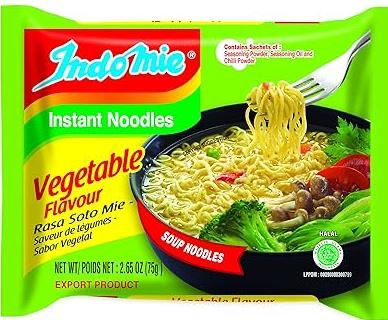
Recalled Indomie Noodles Flavour Not In Nigerian Market — NAFDAC Says

The National Agency for Food and Drug Administration and Control (NAFDAC) has clarified that the recalled Indomie Noodles Vegetable Flavour, pulled by the French authority Rappel Conso due to undeclared allergens—specifically milk and eggs—did not originate from Nigeria.

NAFDAC, in a statement signed on Sunday by its Director-General, Prof. Mojisola Adeyeye, also said the product is not on sale in Nigeria, adding that surveillance has been directed across all zones and states to mop up the product if found in any jurisdiction.

The clarification followed public concern after news of the product recall surfaced online.

Recall that in 2023, Indomie Special Chicken Flavour was also implicated in an international food safety alert following concerns raised by health authorities in Taiwan and Malaysia.

At the time, NAFDAC ordered investigations and assured the public that all noodles produced in Nigeria were safe for consumption.

The Sunday statement noted, ”The management of the National Agency for Food and Drug Administration and Control (NAFDAC) is aware of the recall of Indomie Noodles Vegetable Flavour by the French authority (Rappel Conso of France) on account of the presence of undeclared allergens, specifically milk and eggs, which may pose significant health risks to consumers with allergies or intolerances.

“In light of this development, NAFDAC has undertaken some proactive measures as a responsive regulator by ensuring increased vigilance actions to guard against the possible entry of the recalled product into Nigeria.

“Surveillance has been directed across all zones and states, and zonal directors and state coordinators have been mandated to mop up the product if found within their jurisdictions.

“The public is hereby informed that the Indomie Noodles Vegetable Flavour in question is not registered with the National Agency for Food and Drug Administration and Control (NAFDAC) for sale in Nigeria.

“It is important to note that noodles are listed on the Import Prohibition List of the Federal Government of Nigeria, meaning their importation into the country is not allowed. This significantly reduces the likelihood of the affected product entering the Nigerian market.”

It added that Indomie Instant Noodles products, as well as other noodle brands registered by NAFDAC for sale in the Nigerian market, are manufactured locally in Nigeria and are only granted registration after a strict regulatory regime covering all aspects of Good Manufacturing Practice.

The agency noted that its Ports Inspection Directorate had also been placed on heightened alert to guard against the importation of the implicated product into the country.

“Consumers are strongly advised to exercise caution, discard the recalled product if found, and report any suspicion of its sale or distribution to the nearest NAFDAC office or call 0800-162-3322. Adverse events or side effects related to consumption should be reported via NAFDAC’s e-reporting platforms available on www.nafdac.gov.ng.

“NAFDAC wishes to reassure the public that the agency is proactive and remains alive to its responsibilities of safeguarding the health of the public, including Nigerians who may travel abroad or purchase products online. NAFDAC—safeguarding the health of the nation,” the statement added.

Categories
News

NAFDAC Declares Indomie Vegetable Flavour Unsafe, Orders Nationwide Recall

The National Agency for Food and Drug Administration and Control (NAFDAC) has cautioned Nigerians against consuming Indomie Noodles (Vegetable Flavour), declaring the product unsafe and ordering its immediate withdrawal nationwide following an international safety alert.

In Public Alert No. 041/2025, released on Friday, NAFDAC disclosed that France’s consumer protection body, Rappel Conso, initiated a recall of the vegetable-flavoured noodles after laboratory analysis revealed the presence of undeclared allergens.

The affected product was found to contain milk and eggs, which were not indicated on the label.

According to the agency, the omission poses serious health risks, particularly to individuals with allergies or food intolerances, as exposure could result in severe reactions.

The recall applies to all batches with a best-before date of 6 February 2026, though the alert did not state the product’s country of manufacture.

NAFDAC said the decision to issue the warning was based on precautionary public health considerations, stressing the potential danger the product presents to sensitive consumers.

While noting that the likelihood of the recalled noodles entering Nigeria remains minimal due to the Federal Government’s prohibition on noodle imports, the agency cautioned that unauthorized importation through online shopping platforms or personal travel remains possible.

To ensure the product does not circulate within the country, NAFDAC has instructed its zonal directors and state coordinators to intensify monitoring activities and promptly confiscate any of the affected noodles found in markets, storage facilities, or distribution outlets.

The agency also called on consumers, wholesalers, and retailers to remain alert throughout the food supply chain. Anyone who has the implicated Indomie Vegetable Flavour noodles has been advised to dispose of them immediately and avoid consumption.

Members of the public are encouraged to report any sightings to the nearest NAFDAC office or through the toll-free number 0800-162-3322.

NAFDAC further urged Nigerians to report any adverse health effects associated with the product using its official e-reporting platforms.

The development has renewed attention on food safety standards and the importance of strict regulatory enforcement, especially given the widespread consumption of instant noodles in Nigerian homes.

Categories
News

NAFDAC Issues Nationwide Alert Over Europharm Products

The National Agency for Food and Drug Administration and Control (NAFDAC) has issued a public alert regarding a nationwide recall of pharmaceutical products produced by Europharm Laboratories in Jos.

In a statement posted on its official X handle on Friday, the agency said it had commenced enforcement action against Europharm Laboratories and its affiliate, Eurolink Nigeria Ltd, located at Plot PL 7354, Anglo Jos New Industrial Area, following credible intelligence and regulatory surveillance.

NAFDAC disclosed that investigations showed the company had been involved in the production, sale and distribution of several pharmaceutical and other regulated products without valid marketing authorisation. The agency said multiple items were discovered at the facility, many of which were found to be in violation of existing regulations.

Laboratory analysis carried out on some of the seized products revealed serious quality defects, raising major public health concerns. According to NAFDAC, tests showed dangerously low levels of Active Pharmaceutical Ingredients API in certain products.

The agency reported that Linmoxyn Amoxicillin suspension failed quality analysis, with API content recorded at 13.9 percent and 18.4 percent, far below acceptable standards. Linmoxyn Amoxicillin 500mg capsules were also found to be substandard, containing only 48.3 percent API.

NAFDAC further stated that additional products bearing various NAFDAC Registration Numbers were discovered at the Europharm Laboratories site during the investigation. It explained that medicines with insufficient API levels could result in treatment failure, contribute to antimicrobial resistance and pose safety risks to consumers.

Products identified include Linocloxin Ampicillin 125mg and Cloxacillin 125mg powder for oral suspension 100ml, Linromycine Erythromycin powder for suspension 100ml, Linocillin Ampicillin powder for oral suspension 50ml and Linmoxyn Amoxicillin 125mg suspension 60ml.

Other affected items are Eurogyl Metronidazole suspension 50ml, Naflin cough expectorant 100ml, Natacid Magnesium Trisilicate suspension 100ml, Navit B Syrup Vitamin B Complex 100ml, Fountain B 12 blood tonic in 100ml and 200ml sizes, Vitamin C syrup 100ml, Eurogyl Metronidazole tablets blister 10 by 10, Eurogyl Metronidazole tablets pack of 1000, Euramol Paracetamol tablets pack of 1000, Euramox Mebendazole 100mg tablets, Linotrim Cotrimoxazole suspension 50ml and Linoquine Chloroquine Phosphate syrup 80mg per 5ml in 60ml bottles.

The agency said all zonal directors and state coordinators nationwide have been instructed to intensify surveillance and ensure the removal of substandard products within their respective areas.

NAFDAC urged distributors, retailers, healthcare professionals and caregivers to remain vigilant within the supply chain to prevent the circulation and use of unsafe medicines. It also advised the public and medical practitioners to promptly report any suspected cases of substandard or falsified medicines and medical devices to the nearest NAFDAC office.

Categories
News

NAFDAC Raises The Alarm Over Fake Milk In Circulation (Photos)

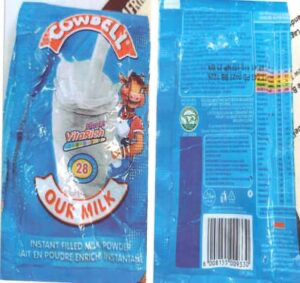
Counterfeit Cowbell 12g sachet milk. Photo: NAFDAC

The National Agency for Food and Drug Administration and Control (NAFDAC) on Friday warned about the circulation of counterfeit Cowbell “Our Milk” 12g sachets in Nigeria.

The alert posted on the agency’s website stated that Promasidor Nigeria Ltd, which is the marketing authorisation jolder and manufacturer of Cowbell “Our Milk” informed the agency about the existence of a product bearing a close resemblance to the genuine Cowbell “Our Milk” 12g sachet Milk.

“This includes unauthorised use of the brand name, packaging design, NAFDAC registration number, and trademark.

“The MAH has confirmed that these products are neither manufactured or distributed by them as the counterfeit packaging design was last used for production by the company in September 2023,” NAFDAC noted.

Differentiating, it said the genuine cowbell milk is creamy, the packaging material used is the revised PNG artwork “Our Creamy Goodness”, the printing of the batch details is done with laser printing, the coding is done on the coding area on the sachet, and the sealing and cutting on the vertical sides are automated.

The genuine Cowbell 12g sachet milk. Photo: NAFDAC

It said the content of the counterfeit Cowbell 12g sachet milk does not seem like milk, the packaging material used is the old PNG artwork “Our Milk”, the printing of the batch details was done with ink instead of laser printing, the coding was not done on the coding area but on a different part of the sachet, and the sealing and cutting on the vertical sides were manually done.

It added, “The use or consumption of counterfeit Cowbell ‘Our Milk’ Milk presents serious health and safety risks.

“Such products may contain harmful substances, including toxic chemicals, unapproved additives, or diluted ingredients that do not meet food safety standards.

“Consumption of counterfeit milk can result in foodborne illnesses, allergic reactions, organ damage, or even death in severe cases. Infants, children, pregnant women, and the elderly are particularly vulnerable.”

The agency urged all NAFDAC zonal directors and state coordinators to conduct surveillance and mop up the counterfeit Cowbell 12g sachet Milk products within their zones and states.

“Distributors, retailers, and consumers are advised to exercise caution and vigilance within the supply chain to prevent the distribution, sale, and use of the counterfeit milk product.

“All food products must be obtained from authorised/licensed manufacturers/suppliers. The products’ authenticity and physical condition should be carefully checked.

“Healthcare professionals and consumers are advised to report any suspicion of sale of substandard and counterfeit food products to the nearest NAFDAC office, NAFDAC on 0800-162-3322 or via email: sf.alert@nafdac.gov.ng

“Similarly, healthcare professionals and patients are also encouraged to report adverse events or side effects related to the use of counterfeited food products to the nearest NAFDAC office, or through the use of the E-reporting platforms available on the NAFDAC website www.nafdac.gov.ng or via e-mail on pharmacovigilance@nafdac.gov.ng,” it said.

Categories
News

NAFDAC declares a skin bleaching emergency.

The widespread use of skin-bleaching creams in Nigeria has been declared a national health emergency by NAFDAC.

The declaration was made by Mojisola Adeyeye, the director-general of the National Agency for Food and Drug Administration and Control, at the Kano Media Sensitization Workshop on the Dangers of Bleaching Creams and Regulatory Controls.

SUGGESTION: You can get News updates directly on WhatsApp by clicking “HERE”.

According to her,

“The World Health Organization study in 2018 revealed that the use of skin bleaching cream is prevalent amongst 77 percent of Nigerian women, which is the highest in Africa compared to 59 percent in Togo, 35 percent in South Africa and 27 percent in Senegal.

These scary statistics have shown that the menace of bleaching creams in Nigeria has become a national health emergency that requires a multi-faceted regulatory approach.
Part of the approach is consultative and not sensitization meetings like this. Another is a heightened raid on the cream outlets.”