Categories
News

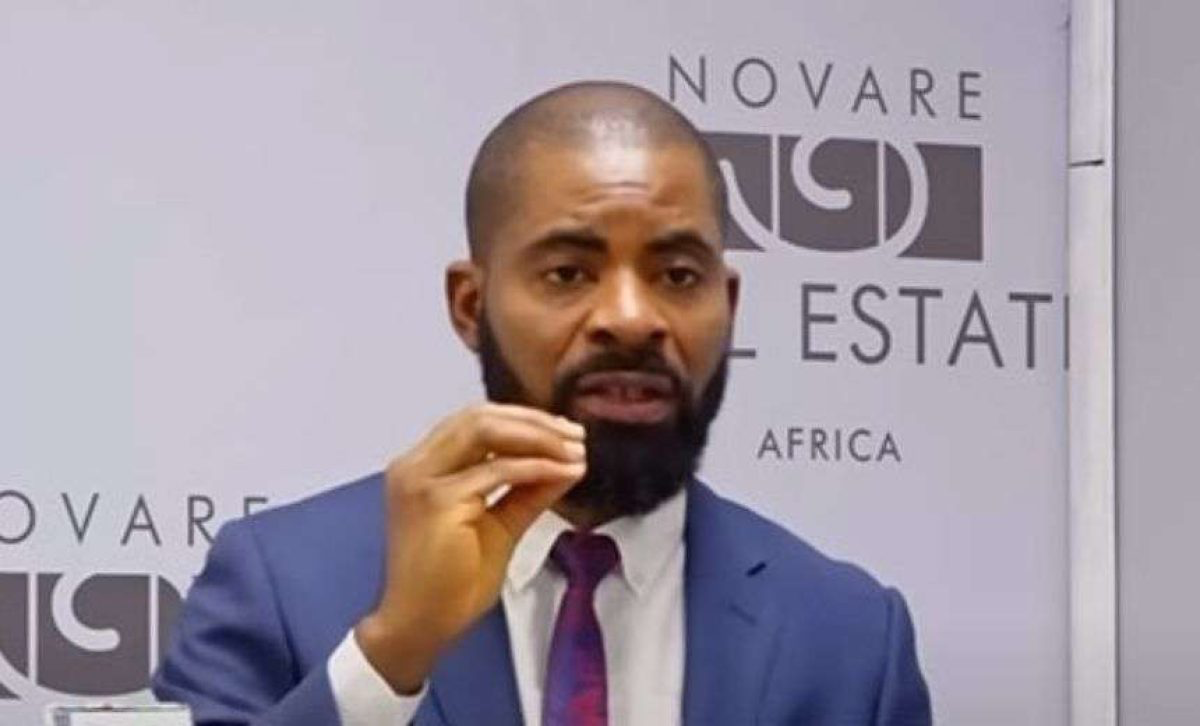
Probe El-Rufai Over Links To Insecurity, Corruption – Deji Adeyanju To DSS, EFCC

Civil rights activist and lawyer Deji Adeyanju has called on the Economic and Financial Crimes Commission (EFCC) and the Department of State Services (DSS) to investigate former Kaduna State Governor Nasir El-Rufai over allegations of corruption and questions surrounding his handling of insecurity during his tenure.

In a statement on Thursday, Adeyanju urged the anti-corruption agency and the intelligence service to act with fairness and independence.

According to him, accountability must apply to all public officials, past or present.

He described as “strange”, the assertions of political persecution allegedly advanced by El-Rufai, arguing that the former governor’s tenure was frequently criticized for suppressing opposing voices.

Adeyanju claimed that multiple critics among them activists, clerics and political commentators, allegedly faced detention, harassment, or intimidation during that period.

He further asked the DSS to investigate purportedly contentious security strategies linked to El-Rufai’s administration, including allegations that financial inducements were given to violent groups.

According to him, such claims raise profound national security concerns and warrant a comprehensive investigation.

Adeyanju said: “I call on the Economic and Financial Crimes Commission (EFCC) and the Department of State Services (DSS) to immediately investigate former Governor Nasir El-Rufai over allegations of corruption and his handling of insecurity during his time in office. No one should be above the law.

“If there are questions about financial misconduct or abuse of office, he must give a full account, and the relevant agencies must not succumb to any form of blackmail or intimidation.

“It is strange to hear claims of political persecution from a man whose administration was repeatedly accused of silencing critics.

“Several individuals who spoke against his government, including activists, religious leaders, and public commentators, were reportedly arrested, harassed, or intimidated.

“The unresolved disappearance of one of his prominent critics, who was abducted in front of his family, remains a painful reminder of that era and must not be forgotten.

“Furthermore, the DSS should investigate reported claims that his government engaged in controversial security arrangements, including allegations that payments were made to violent actors.”

Categories
News

Why I Rejected The Idea To Make El-Rufai My Successor – Obasanjo

Olusegun Obasanjo, a former President of Nigeria, has disclosed that he once turned down a suggestion to back former Kaduna State Governor, Nasir El-Rufai, as his successor when his presidency ended in 2007.

Obasanjo, on Friday, said he rejected the idea because he believed El-Rufai was not yet mature enough to handle the responsibilities of leading the country.

El-Rufai, who served under Obasanjo’s administration first as Director-General of the Bureau of Public Enterprises and later as Minister of the Federal Capital Territory, was among the prominent figures in his cabinet between 1999 and 2007.

Speaking during the second edition of the Ajibosin Platform Annual Symposium in Abeokuta, Ogun State, Obasanjo disclosed that former Minister of Aviation, Osita Chidoka, recommended El-Rufai as his potential successor.

Chidoka, who was the keynote speaker at the event, earlier recounted how El-Rufai introduced him to Obasanjo at the age of 34 — an encounter that eventually led to his appointment as Corps Marshal of the Federal Road Safety Corps.

Interrupting Chidoka’s presentation, Obasanjo reminded the audience of a detail he had left out.

“Let him tell you. He didn’t mention that. He was pushing when I was leaving government that his friend, El-Rufai, should be brought in as my successor,” Obasanjo said, turning to Chidoka.

Facing him directly, the former president asked jokingly, “No be so (Is that not true)?” to which Chidoka nodded in agreement.

Obasanjo said he turned down the suggestion because El-Rufai needed more time to grow politically and personally.

“I did not yield to the pressure. Later, he said, ‘I suggested this person, why didn’t you agree?’ I said El-Rufai needs to mature. You remember? 

“When I left government and, many years later, he saw the performances of El-Rufai, he came back to me and said, ‘You’re absolutely correct. El-Rufai needed to mature,’”Obasanjo recalled.

He went on to commend Chidoka, El-Rufai, and other members of his former team, describing them as individuals with “special attributes” that contributed to his administration’s achievements.

Speaking on leadership, Obasanjo stressed that character, exposure, experience, and training are essential qualities for those in public service.

“It’s only in politics that I found out there is no training for leadership. Even among armed robbers, I was told there is an apprenticeship. But it’s only in politics that there is no training in leadership. That’s not good enough,”
he said.

Delivering his keynote address, Chidoka said Nigeria’s persistent problems were not due to a lack of ideas but to a failure to build enduring systems and institutions.

“Leadership finds its true measure not in speeches or charisma but in the systems it leaves behind.

“Moral conviction must translate into the everyday machinery of governance—rules, routines, and institutions that make competence predictable and corruption difficult.

“Nigeria’s problem has never been a shortage of ideas; it is the absence of systems strong enough to outlive their authors,” Chidoka said.

He called for accountability mechanisms that measure leadership by results rather than rhetoric.

“We must therefore make leadership accountable not to rhetoric but to results: measure by building national dashboards and accountability systems that track every promise, every budget, every outcome. Monitor by strengthening the institutions that evaluate government performance and expose complacency,”
he added.

Categories
News

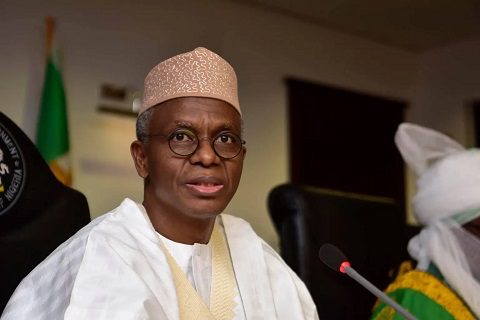
FG Paying Bandits, Empowering Them – El-Rufai Cries Out

Former Kaduna State governor, Nasir El-Rufai, has made a damning allegation against the federal government.
According to him, FG is paying bandits in Nigeria.
He said the policy of negotiating and compensating armed groups was a national directive championed by the Office of the National Security Adviser.
Speaking during an appearance on Channels Television, the former governor argued that the best way to handle bandits is to kill them and not negotiate.
He said, “What I will not do is to pay bandits. They are paying bandits. They are empowering bandits. This is what this government has done. We have the evidence. They are paying bandits. They are empowering bandits.
 
“It’s a national policy driven by the Office of the National Security Adviser, and Kaduna is part of it. Many states are objecting to that. But that is the policy now.”
El-Rufai maintained that dialogue with terrorists is dangerous.
“My position has always been that the only repentant bandit is a dead one. Let’s kill them all. Let’s wipe them. Let’s bomb them until they are reduced to nothing. And then the 5% that still want to be rehabilitated can be rehabilitated,” he declared.
He argued that the so-called non-kinetic strategy only strengthens criminal groups.
“You do not negotiate from a position of weakness. You don’t empower your enemy. You don’t give him money to go on and buy more sophisticated weapons. That’s why the security problem has not gone away. It will not go away. As long as this policy continues,” he added.
The former governor also cited intelligence and media reports to back his claims.
“Just last week, SBM published a report that showed that the security situation in Kaduna and Zamfara has actually deteriorated under this government’s watch. A week earlier or two weeks earlier, Sahara Reporters published another credible report that actually, insecurity has been increasing. What the government has been doing both at the national and state levels is buying the media from reporting it,” he said.
Categories
Entertainment News

El-Rufai Visits Obasanjo In Abeokuta (Photo)

On Sunday, Nasir El-Rufai, the immediate past governor of Kaduna State, visited former President Olusegun Obasanjo.


El-Rufai visited Obasanjo at his home in Abeokuta, Ogun State.


This was disclosed by El-Rufai’s media aide, Muyiwa Adekeye, via his X handle.


The post, which had pictures from the visit, was captioned, “Former President Olusegun Obasanjo today welcomed Malam Nasir #elrufai to his Abeokuta home.”


The visit is coming after the Awujale of Ijebuland, Oba Sikiru Adetona, installed El-Rufai as the Gbobaniyi of Ijebuland.


El-Rufai said he’s the first Nigerian outside the Southwest to be conferred with the chieftaincy title.


The former governor had posted on X, “WEEKEND ANNOUNCEMENT: I am also privileged to be the first Nigerian outside of South-West of Nigeria to be conferred with a chieftaincy title by the Awujale in his nearly 64-year reign.


“I am to be recognized as the Gbobaniyi of Ijebuland. I am grateful to Kabiyesi Awujale for the recognition and thank all those who have wished me well for this.


“Please join me, Jimi, and our families and friends in prayers for a hitch free event, and good health, long life and prosperity of His Majesty Awujale and all of us. – Nasir @elrufai”