Categories
News

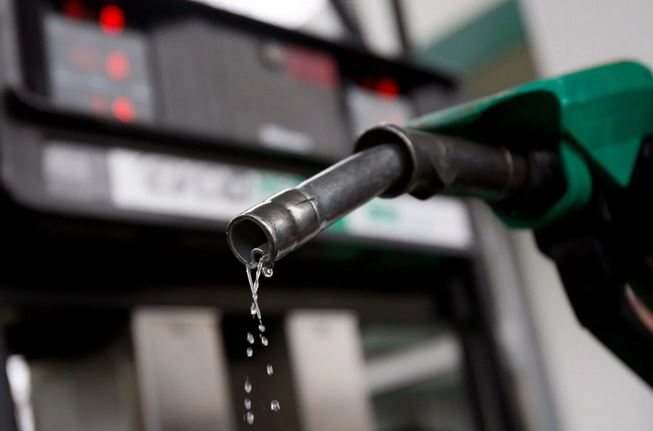
Fuel Price Reduction: Dangote Refinery, Petrol Marketers Clash Over Reason For Drop

Dangote Refinery and Nigerian petroleum product marketers are at odds over the cause of the recent drop in petrol prices in the country.

Daily Post reports that Nigerian filling stations dropped fuel prices in Abuja to between N940 and N945 per litre, down from N945 and N955.

The drop in petrol price came at a time the federal government announced the suspension of its planned 15 per cent import duty on petrol and diesel to encourage local production.

In an exclusive interview with Daily Post, the spokesperson of the Independent Petroleum Marketers Association of Nigeria, Chinedu Ukadike, linked the latest PMS price drop to the policy reversal.

He explained that that proposed 15 per cent import tariff would have led to indirect inflation and an increase in petroleum pump prices.

According to him, the 15 per cent import duty on petrol is an affront against the forces of demand and supply in a deregulated petroleum downstream sector.

“You understand me that if the 15 per cent import duty on petrol and diesel was implemented, that is an indirect inflation, an increase in pump price on petroleum products.

“There is no way in a deregulated economy where you will not allow the forces of demand and supply to control the market.

“So now that the federal government had looked deeply at the 15 per cent tariff, it was suspended for the reason that this was going to kind of trigger inflation.

“So, we, the independent marketers, are happy that our voices were heard.

“And this will also make the competition healthier and ensure the total compliance of the PIA.

“That is why you see the prices going down.

“And it will go down more because the crude oil in the international market is going down,” he told Daily Post.

However, Dangote Refinery, in a statement released on its X account, attributed the recent petrol price drop to its gantry price cut this month.

The 650,000 barrel-per-day refinery clarified that the reduction in petrol is not linked to the suspension of the 15 per cent import duty.

Daily Post reports that the 15 per cent import tariff would have placed Dangote Refinery at an advantageous position in the market at the expense of higher petrol prices for Nigerians.
Categories
News

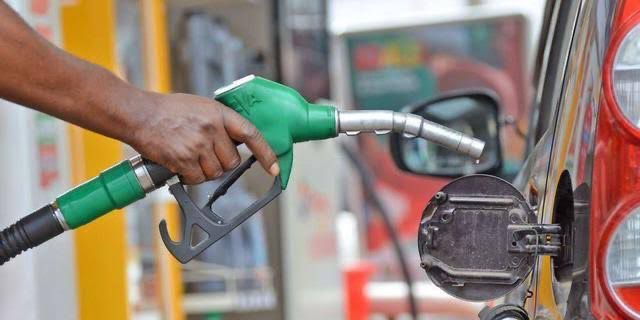
BREAKING: Nigerian Filling Stations Reduce Fuel Price As Landing Cost Drops

Filling stations across Nigeria have reduced the pump price of premium motor spirit following a further drop in the landing cost of petrol below Dangote Refinery’s ex-depot price.

According to Daily Post, it was gathered on Wednesday that NIPCO, AA Rano, Eterna, and Empire Energy filling stations across locations in Abuja have reduced their fuel pump price.

NIPCO and AA Rano dropped their fuel price to N940 per litre, down from between N950 and N955.

Similarly, Eterna and Empire Energy retail outlets dispense at N945 and 955 from N955 and N959, respectively.

This means that the filling stations in Abuja reduced their petrol pump prices between N4 and N10 per litre.

It was earlier reported that NNPCL retail outlets in Abuja adjusted their pump price downward to N945 per litre, up from N955.

Meanwhile, at other filling stations, including MRS (Dangote Petrol) and Ranoil, retail petrol prices have remained unchanged at N950 and N955 per litre, respectively, as of Thursday morning.

“We may reduce our price in the evening or so, but at the moment we still dispense fuel at N950 per litre,”
an MRS filling station manager in Abuja told DAILY POST in anonymity.

This comes days after energy prices data released on November 3, 2025, by the Major Energy Marketers Association of Nigeria showed that the price of the landing cost of petrol dropped N827.04 per litre.

This is a drop from N829.77 recorded at the end of last month.

Checks on petrol ex-depot prices showed that Dangote Refinery stood at N872, Pinnacle (N872), NIPCO (N870), BOVAS (N870), Aiteo (N870), and AA Rano (N870). This made Dangote Refinery’s N2 more expensive than depot owners such as NIPCO, AA Rano, and BOVAS, according to Petroleumpricing.

Also, the petrol landing cost at N827.04 per litre is N44.96 cheaper than Dangote Refinery’s ex-depot price for petrol, which stood at N872 per litre.

This comes as President Bola Ahmed Tinubu announced that he has given approval to a 15 per cent import duty tax on petrol and diesel to encourage Dangote Refinery.

The decision by marketers and stakeholders confirmed it would increase imported fuel prices when implemented in the coming days.

Categories
News

Fuel Price Increased by 33% in July – NBS

It has been revealed that the national average retail price of Premium Motor Spirit (PMS), commonly known as petrol, rose by 33.02% year-on-year (YoY) to N1,024.99 in July 2025 compared to the same period in 2024.
This is according to a report by the National Bureau of Statistics (NBS).
On a month-on-month (MoM) basis, the average retail price decreased by 1.22% from N1,037.66 per litre recorded in June 2025.
According to the NBS Petrol Price Watch report for July 2025, Jigawa State recorded the highest average retail price at N1,107.52, followed by Lagos and Sokoto at N1,100.29 and N1,100.00 per litre respectively.
Conversely, Zamfara, Yobe, and Kogi states recorded the lowest prices at N884.63, N950.60, and N986.67 per litre respectively.
The report also showed that the North West zone recorded the highest average price at N1,035.85, while the North East zone had the lowest at N1,017.65.
Meanwhile, market checks indicated that petrol prices have continued to drop due to falling crude oil prices. Data obtained yesterday showed crude oil at $63.55 per barrel, while Brent crude stood at $67.69 per barrel.
Current pump prices were reported at N865–N875 per litre in Lagos and N890–N910 per litre in Abuja.
Categories
News

NNPC profit crashes 80%, fall to ₦185bn from ₦905bn

The Nigerian National Petroleum Company Limited (NNPC Ltd) has reported a massive decline in its profit after tax, which fell from ₦905 billion in June to ₦185 billion in July, marking a sharp 79.6% drop.

Details of the company’s monthly financial and operational report, released late Thursday, show that revenue in July stood at ₦4.41 trillion, lower than the ₦4.57 trillion recorded in June.

According to historical data, NNPC posted a profit of ₦926 billion in April and ₦1.05 trillion in May, before sliding to ₦905 billion in June. The July result represents the company’s weakest performance in recent months, despite a slight rise in production.

The report also highlighted statutory payments of ₦7.97 trillion between January and June 2025, underscoring the company’s continued contribution to government revenue.

On infrastructure, NNPC said the Ajaokuta-Kaduna-Kano (AKK) and Obiafu-Obrikom-Oben (OB3) gas pipeline projects are progressing, with completion levels at 96% and 83% respectively.

The 113-kilometre portion of the OB3 pipeline has already been commissioned and is transporting about 300 million standard cubic feet of gas per day (mmscf/d) from producers including AHL (250 mmscf/d), Platform, Chorus, and Xenergi (50 mmscf/d).

Upstream operations were reported to be stable, with pipeline availability maintained at 100%.

The company also disclosed that additional subcontractors have been mobilised to speed up the mainline works on the AKK project, while a revised strategy has been adopted to fast-track completion of the OB3 River Niger Crossing.

Despite the profit slump, NNPC said it remains focused on sustaining crude oil and condensate production, enhancing facility uptime, and strengthening collaboration with stakeholders to improve operational efficiency.